From June 13, 2018
Culture rot in the West has deep roots, at least as deep as the French Revolution. The 19th century came up with Marxism, Darwinism–and spiritualism, a new “religion” based on communication with the spirits of the dead.
A major factor in the rise of spiritualism was the devastation caused by World War I, which shook many people’s Christian faith right down to the ground. These were Christian countries killing each other’s young men by the millions: something must have gone very, very wrong. So a lot of people started looking for answers… in spiritualism.
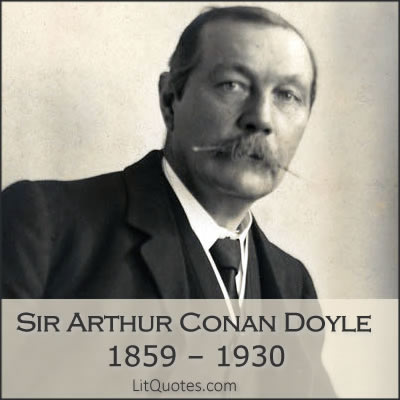
Among the chief proponents of spiritualism was Sir Arthur Conan Doyle, the man who created Sherlock Holmes. Doyle also believed in fairies. I don’t write this to show contempt for him. Doyle was emotionally shattered by the war, losing a son, two nephews, and a brother, and spiritualism was his way of trying to cope with it.
In 1926 he published a novel of spiritualism, The Land of Mist, featuring Professor Challenger, the hero of The Lost World (https://en.wikipedia.org/wiki/The_Land_of_Mist). In this novel Challenger, scientist and skeptic, is converted to belief in spiritualism. It doesn’t make for very edifying reading.
In Chapter XII we find an account of a seance in which a medium summons up the spirit of a “Pithecanthropus,” a prehistoric ape-man which has since been upgraded to Homo erectus, a human. The original science that reconstructed Pithecanthropus is today presented as a comedy of errors. But in 1926 it was settled science.
Here’s a footnote by Doyle, discussing the incident in Chapter XII.
“The account of Pithecanthropus is taken from the Bulletin de l’Institute Metaphysique. A well-known lady has described to me how the creature pressed between her and her neighbor [at the seance], and how she placed her hand upon his shaggy skin. An account of this seance is to be found in Geley’s L’Ectoplasmie et la Clairvoyance…”
This illustrates G.K. Chesterton’s maxim that when a man ceases to believe in God, he doesn’t believe in nothing; he’ll believe in anything. You can think of as many more illustrations as I can.
Conan Doyle wound up believing in a lot of things which Sherlock Holmes would have sneered at. We shall be more charitable than Holmes. Spiritualism swept through British popular culture and is, of course, still with us today. Along with equally queer beliefs in Man-Made Climate Change, gender fluidity, and utopian socialism. One wonders what the churches have been doing, all this time.
Chesterton was right.
New Age, Occult and various Paranormal schools of thought seem to always end up on a very predictable course.
It is said Mary Todd Lincoln conducted seances in the White House. When Queen Wilhemina slept in the Lincoln bedroom she said she heard a knock at the door, opened it, and Abe Lincoln was standing there – she fainted. When Winston Churchill stayed there he says he saw the ghost of Lincoln also. The Bible talks about Satan masquerading as an angel of light and also the demons. Since they are deceivers, it seems they are the cause of these “spiritual ” experiences. Some exigete the passage of Samuel being called up by the witch of Endor as really a demon, not Samuel himself.
Paging “Janowrite”–she’s our resident expert on ghosts.
The Bible strongly condemns seeking to communicate with the dead. That is a very serious sin, in biblical terms. Nothing good will come of this, yet the practice continues, at times gaining considerable popularity.
Recently, I saw a podcast of a well known actor, who professes to be a Christian, telling how he has come to use spirit mediums, justifying this because that sort of thing happened in the Bible. Well yes, it did happen in the Bible, but it was never an approved practice. King Saul resorted ti this, shortly before his death. It’s not a clever move.
Proverbs 14:12 tells us: “There is a way that seems right to a man, but its end is the way to death.” If you look at various religious movements, over the years, which tend to have poor reputations, frequently there is some sort of spiritistic element involved in their founding.
Spiritualism became a craze during WWI. People were trying to cope with the overwhelming loss of so many young lives, and the “mediums” really flourished.
Leave it to the forces of evil to encourage a devastating war, and then to profit from the grief.
That’s the way the evil one works.