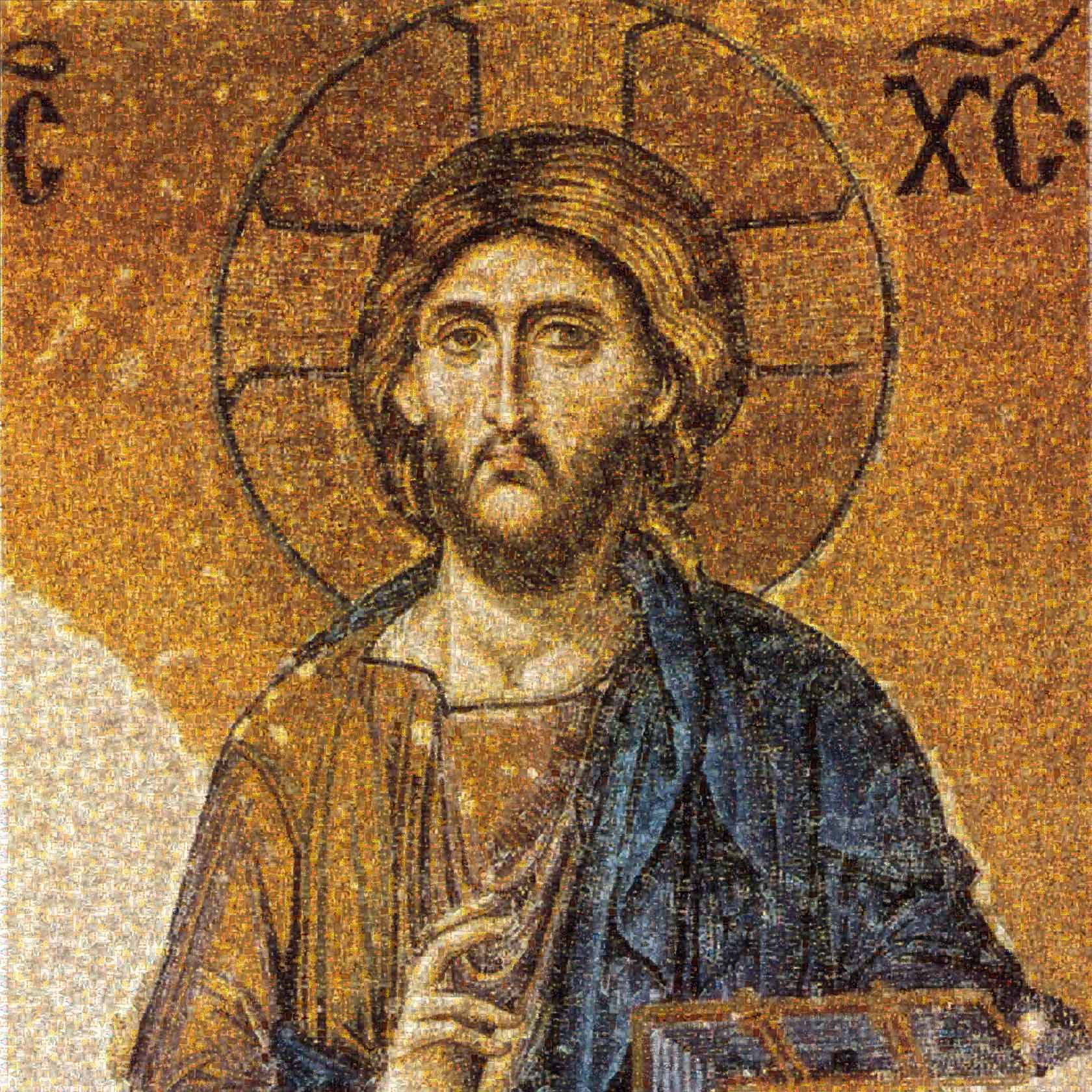
Mary Magdalene, on Easter Morning REPRINT

 From April 5, 2015

Try to imagine that morning.

The Passover is finished. It’s the day after the Sabbath, very, very early in the morning. Jerusalem is quiet, seeming almost eerily quiet after all the recent uproar.

Mary, from the town of Magdala, has followed Jesus Christ everywhere. She has seen him crucified, taken down, dead, from the cross, and placed in a tomb. She is numb with grief. Almost automatically, she proceeds to the tomb–donated by Joseph of Arimathea–to minister to Jesus’ body. That work could not have been done yesterday, on the Sabbath. There are wounds to wash, spices to apply.The Bible says two other women came with her to do this.

Try to imagine this: the Sanhedrin put a guard at the tomb, claiming they didn’t want Jesus’ followers to steal the body and then claim He was risen. But when Mary and the others arrive, in the grey dawn, the guards are unconscious and the great stone used to seal the tomb has been rolled away.

It must have taken some courage to pass through that dark doorway into the tomb itself. There the women found Jesus’ body gone. An angel, or maybe two angels, appeared and told them, “He is not here.”

The story gets slightly confused–naturally! Matthew reports that the three women, after meeting the risen Christ, ran to tell the good news to His disciples. This is repeated in Mark, with the addition that Mary Magdalene was the first to see Him. Luke reports that the disciples did not believe Mary and the others: “their words seemed to them as idle tales.” Both Luke and John report that Peter went to the sepulcher and found only Jesus’ grave clothes there, no dead body.

Now try to imagine this, from the Gospel of St. John (20:11-18).

After finding their Lord’s tomb empty, somehow Mary became separated from her companions. It’s easy to imagine her wandering about with no clear idea of going anywhere. She has seen an angel, but it doesn’t seem to have registered with her.

She meets a man whom she supposes to be the gardener (for the tomb is in a garden). He has come to work early. He asks her, “Woman, why weepest thou? whom seekest thou?”

Naturally, Mary believes someone pried open the tomb and stole Jesus’ body. These last three days (and Day Three has only just begun) have been too much for her. Although Jesus Himself said all of this would happen, her mind rebels, just as Peter’s did. No! No! None of this was supposed to happen! It’s all wrong!

She begs the gardener to tell her where they’ve put the body.

Then he speaks her name. “Mary.” And her eyes clear, and she sees. This is not the gardener. This is the Son of Man, and He is risen.

Can you imagine her amazement? And her ecstatic joy? She must have been half-crazed with joy and relief, and maybe more than half. Can you blame the disciples for not believing her, when she told them Christ was risen, and that He had spoken to her? How could she even speak coherently?

Of course the accounts in the Bible don’t tally 100%. How could they? The witnesses to these things were beside themselves–first with grief and horror and woe, and then with joy and triumph and astonishment. They saw Jesus tortured and killed. And then they saw Him living–even ate with Him, and touched Him.

But it was Mary from Magdala who was the first of all the human race to experience the birth, as of an explosion which creates a new sun that shines forever, of a new beginning to history. “So when this corruptible shall have put on incorruption, and this mortal shall have put on immortality, then shall be brought to pass the saying that is written, Death is swallowed up in victory. O death, where is thy sting? O grave, where is thy victory? …But thanks be to God, which giveth us the victory through our Lord Jesus Christ.” (I Corinthians 15: 54-57)

Imagine Mary’s Easter morning.

Someday each of us shall meet that same gardener; and when He speaks to us, we shall know His voice.
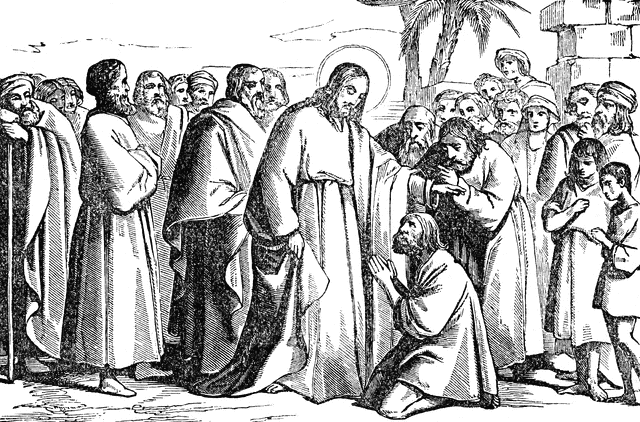
The Raising of Lazarus

From March 30, 2018

I love to post this clip, every Eastertime, from The Greatest Story Ever Told, of Jesus raising Lazarus from the dead. “I am the resurrection, and the life…” This is Jesus Christ the Lord: His works testify that He is indeed who He says He is.

The screenplay adds a nice little touch of irony. Here, the first of the disciples to understand what he has just seen, and to run to Jerusalem to tell everyone about it… is Thomas! Not in the Bible, of course.

The Stories I Don’t Cover REPRINT

See the source image

Christ Pantokrator–Ruler of All

From February 27, 2018

There are stories floating around out there today that I just can’t bring myself to cover. There’s a limit to how much I can subject myself or my readers. Great evil and great madness are afoot, much of which borders on what H.P. Lovecraft called “the perfection of the hideous”–and I suspect a lot of this stuff would be too hideous even for him.

I reached that decision after encountering a report that “many men,” instructed mostly by pornography, “now prefer sex-bots to real women.” And that’s real good for us, says the guy who sells them. If he plays his cards right, he might get a seat on the World Happiness Council.

We need to cling to this: that God sees everything, and that He sees also the things that we can’t see. And does things that we can’t see Him doing. His enemies march boldly back and forth upon the earth, bragging about all the things they’re going to do, just you wait, it’s gonna be great…

If this were a chess game I was watching, I would be dismayed.

But in the end God says “Checkmate!” and one by one, and two by two, the enemy’s pawns and pieces vanish from the board, never to be seen again. Game over. God wins.

We are to be as watchmen, says Ezekiel. We are to report what we see; it may be some people will listen, and remove themselves from the path to disaster. But there are times when we needn’t dwell on the unedifying details.

God the Father will put all things under Jesus Christ, His Son, as king of kings and lord of lords, the only potentate whose right it is to rule.

Hang on to that.

‘Humanizing Christianity’ REPRINT

From November 17, 2018

Secularists love to pat themselves on the back for “humanizing Christianity.” Excuse me for a moment: this deserves an appropriate response.

What do they mean, they “humanize Christianity”? I think it means they invent a new-improved model–with Christ taken out of it and replaced by man-made idols, the State and Science, and humanist pseudo-sacraments: abortion, combating “Man-Made Climate Change,” same-sex “marriage,” sex change operations, hate speech trials, and every conceivable variety of fornication. They take away the judgment, take away accountability to God, and set up their political masters and scientific oracles as gods.

How does a secularist even know what’s right or wrong? Mostly they’re content to keep some of the moral law handed down to the human race by God, to the Jews first, and then the Gentiles. But no secularist can actually explain why it’s wrong to commit a murder. We can, but they can’t. For convenience’s sake they retain much of the law and tradition amassed over the centuries by Jews and Christians, who received it from a righteous and infallible God who is a person, who made them in His image, and who loves them.

Yeah, they made Christianity nicer. That’s why more people were murdered by their own governments in the 20th century alone–Red China, the Soviet Union, Nazi Germany, and a host of others–secularist governments all–than were killed off by all the religions of the world put together in all the other centuries put together. This century is only 18 years old: give it time to come up with new and exciting deviltries all its own.

It is true that God endows all people, even atheists, with common grace, which is an inborn attraction to what is right and good. And so it was always possible for people who had never heard of God’s laws to keep those laws regardless. Common grace is the law written on our hearts. Humanity wouldn’t have survived for two hours without it.

The words of Jesus Christ and His apostles don’t need “humanizing,” and never did.

God defend us from being conformed to this fallen world.

Are We Really Deserting Christ? REPRINT

From August 28, 2016

Linda sent me a dcclothesline article today with the alarming headline, “More Americans Than Ever Are Leaving Christianity” ( http://www.dcclothesline.com/2016/08/28/more-americans-than-ever-are-leaving-christianity/ ).

One sentence, regarding the findings of a recent Pew Poll, jumped out at me: “[The] biggest cultural shift has been among young people.”

That made me remember a 2008 study by Professor Rodney Stark, director of the Institute of Studies of Religion at Baylor University. Dr. Stark, whom I interviewed at the time, said that throughout American history, it has never been unusual for young Christians to leave the church, only to return when they’re a good deal older. So I think we ought to take that into consideration.

But there are other factors.

Chiefly, our public schools, our colleges, and our popular culture labor night and day, every day, to pry young people away from Christianity. We shouldn’t be surprised that this much indoctrination really works. And Christians should not be sending their children to those schools and colleges.

Also, America’s mainline/flatline Protestant churches have virtually ceased to be churches. Instead of God’s word, they devote themselves to fund-raising, entertainment, story-telling, and all kinds of interfaith frolics–as abundantly chronicled in this blog, throughout the year. Is it any wonder they’re losing their grip?

America needs to be re-Christianized: no two ways about it. This is a job that can’t be done by all too many of our churches, and which will be strenuously resisted by our beloved educators.

Of course, to be unaffiliated with a church does not mean a person has ceased to be a Christian. If Jesus has left the building, so should you.

In my Bell Mountain books, First Prester Orth has a vision for the Temple: that instead of a building, a hierarchy, etc., it ought to consist of God’s people nourished on God’s word, with its walls the four corners of the earth and its roof the very heavens: a church not made with human hands, which human hands cannot destroy.

I believe we can be sure that Jesus Christ Our Lord, the King of Kings, will not let His Church go extinct.

But He may very well decide to change it.


The Difference Between Us Reprint

From November 30, 2017

See the source image

What is the difference between Christianity and humanism? It’s easily explained.

Humanists believe in the perfectibility of man by man; and we, as Christians, don’t.

Plato, Rousseau, the modern Left–they all think that if we only get the right science behind it, spend enough money, and apply the requisite measure of brute force, we can solve any human problem. All we need is another law, another set of new regulations, another bureaucracy to put it into play, round up all the dissidents, and bob’s your uncle: Utopia is achieved.

We believe in an ongoing process of individual sanctification, accomplished by God’s grace and by faith in Jesus Christ. We may not reach perfection, but we can get better than we were. As for Utopia, that doesn’t come until Jesus returns and establishes His kingdom on the earth. We do not believe that human nature is just a more complicated form of Play-Doh, to be shaped as desired by anyone clever enough, strong enough, rich enough, or ruthless enough to do it.

But their belief in their own godlike powers, their own wisdom, pretty much explains the whole history of that horrible 20th century. Always breaking eggs to make the perfect omelet, but never getting there no matter how many they break.

See? I told you it was easy.

What’s Missing from the Easter Message? REPRINT

From April 5, 2012

The Episcopal Church has sent me a copy of the annual Easter Message from Presiding Bishop Katherine Jefferts Schori. It’s 383 words long, in eight paragraphs.

Not once in this message has the Presiding Bishop seen fit to mention the name of Jesus Christ.

Oh, she drops hints that Easter maybe sort of, kind of, have something to do with Jesus. In the next-to-last paragraph she says, “I would encourage you to look at where you are finding new life and resurrection, where life abundant and love incarnate are springing up in your lives and the lives of your communities.” It is just conceivable that this could be a roundabout approach to Jesus—albeit an approach that never quite gets there. And she concludes, “Give thanks for Easter. Give thanks for Resurrection. Give thanks for the presence of God incarnate in our midst.” God makes it into the very last line of the message.”

Some Thoughts on ‘The Chosen’

The Keys to the Kingdom: A Gentle But Firm Correction to ...

Jesus and His disciples

We spent the day this weekend watching three episodes of The Chosen, Season 4.. Why not? It gives us some quality time with Jesus, and we appreciate that very much.

But when all is said and done, The Chosen is a “Bible movie,” which means the screenwriters will add some things that aren’t in the gospels. That makes me fidgety.

Without committing a spoiler, I must still say that I object to a scene we saw yesterday. If this incident really happened, it should have been mentioned in the Scripture. But I feel certain that it was invented by the writers to make a point.

Later on, when Jesus and His disciples visit their friend Lazarus and his sisters, Mary and Martha, in Bethany, we are given a hint that Lazarus has already been touched by the illness that will take his life; and Jesus see this, but says nothing about it. We know from the Gospel that Lazarus dies, his body is entombed–and Jesus raises him from the dead.

It’s not that the earlier incident I’ve alluded to fails to raise an important point. It doesn’t. I understand why the writers invented and included it. But even so, viewers who are not familiar with the Bible may not know that this was an invented incident: it didn’t happen. I think the writers should have found some other way to make their point.

It’s not just me being picky, is it? Shouldn’t the Bible, as written, be sufficient for our needs? We are committed to the proposition that the Bible tells the truth. Saying something happened, when it didn’t, makes me uneasy.

I hope I hear more about this from some of you. Again, I have not described the incident in question because I don’t want to influence your perception of it.

Yes! Yes! Yes!

A Cradle Held Him but a Tomb Could Not​ - This weeks church sign Saturday is located in Harrogate, TN to First Baptist Church of Harrogate. ​

“Courageous Christian Father” posted this picture a sign at the First Baptist Church in Harrogate, Tennessee:

“A Cradle Held Him But A Tomb Could Not”

Let’s keep that in mind, very much in mind, shall we! Not that we mean to ignore the world nooze–but the real news, the Good News, is the birth of Jesus Christ… which we mark as a historical event a week from now.

Up against the evils and stupidities of a fallen world, we plead Jesus Christ the Son of God, who was and is and shall be, Amen.


‘Light of the World’

I don’t know how many times I’ve posted this hymn, and I hope you don’t mind hearing it again. I felt a need for it today. This world needs the light of Jesus Christ: nothing else can lift the darkness.

Light of the World, by Charles Wesley; performed by Maddy Prior and the Carnival Band.