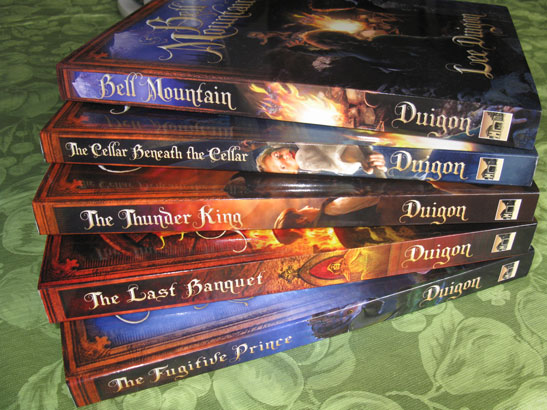
Well, at least I can transport my own picture from
the “Bio” on this site, to this page. We advance by little tiny steps.
Among the most unreadable books in existence are those in which the protagonist is merely an avatar of the writer himself, powered by wishful thinking: like, here I am as the smartest guy in the book, the handsomest,
the sexiest, blah-blah. And all the other characters
are merely names on paper, because the writer is so exclusively interested in himself.
To make your story live and breath, your characters have to live and breath. In that sense, there’s no such thing as a “minor character.” That doesn’t mean that, every time a new character appears, you have to tell his whole life story. He may only be there to say “Here are the gumboots that you ordered, madam,” and then exit.
I first noticed this technique years ago when I was reading a lot of Dick Francis’ mysteries. Every character who appeared, even those for whom a name wasn’t necessary, the writer dabbed with just enough color to make him or her come to life.
I found a wonderful example of this last night, in Inspector Ghote’s Good Crusade by H.R.F. Keating (1966). Here, India’s most famous detective is interrogating a cook whose great concern is to tell the inspector whatever he thinks the inspector wants to hear: he does this because he’s afraid of the police, and doesn’t even notice when his answers are the exact opposite of answers he’s given just moments ago. It drives poor Ghote up the wall, but makes for wonderful entertainment. The cook is only around for a page or two, but he’s a minor character I’ll never forget.
This art requires some subtlety, and a lot of practice. It won’t do, just to tack on something like, for instance, “Here are the gumboots that you ordered, madam,” said a delivery man with a tattoo of a lobster on his cheek. But even that is a step in the right direction. It’s something the writer has to work on before he can master it.
As you can see, I have utterly failed to post my picture in the upper left-hand corner of the page. Well, live and learn.