Writing Tips: Minor Characters Are Not So Minor

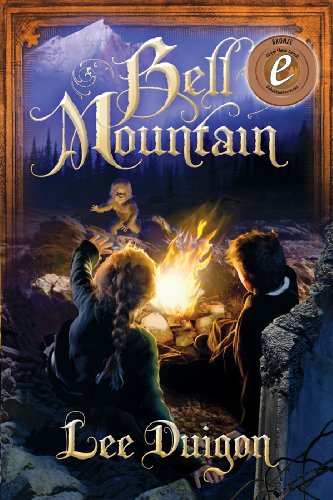
Bell Mountain (Bell Mountain, 1) - Kindle edition by Duigon, Lee. Religion  & Spirituality Kindle eBooks @ Amazon.com.

If you’re writing a novel, you might want to have the whole thing planned out in advance before you start to write it. But I don’t do it that way.

Ask yourself this: Are you a “minor character”? Your book will be full of them. Maybe it’s someone who comes onstage for just a moment to say “Here are the gum boots that you ordered, madam,” and then exits, never to be heard from again. It’s a minor character, and you don’t even need to provide him with a name.

But he has one. He has a life. In his own way, which may never show up in your novel, he has importance.

And if it turns out that you’ll need him again–well, there he is.

This happens a lot for me, in my books. A character has a walk-on, but it turns out to be much more than that: he may even develop into a major character. Orth started out as just a henchman of Lord Reesh; but now he’s Lord Orth, the First Prester. Duke Esdras, confined to a wheelchair, will produce the climax of my current book, Ozias, Prince in Peril. I needed someone to do that, and there he was. Most of your minor characters will remain minor–but you never know. Don’t be too quick to dismiss them!

[And yes, I still have no access to my stats page, no idea of how many views I’ve got today, and heaping piles of frustration.]

‘Where Do My Characters Come From?’ (2016)

Image result for images of the throne by lee duigon

Abgayle graces the cover of The Throne

Let’s face it. Half the fun of writing fiction is coming up with characters. But where do those characters come from?

Where Do My Characters Come From?

Some of them, I dream of. I dreamed of Gurun and put her in The Last Banquet. Other characters come in because there’s a job in the plot that must be filled.

But however you come by them, write your characters as if they were real persons–not just stage props to make your protagonist look good. Using “minor” characters as props for the hero is as good a way as I know to write a book that sucks.

Look at it this way: are you a minor character?

‘Not-So-Minor Characters’ (2015)

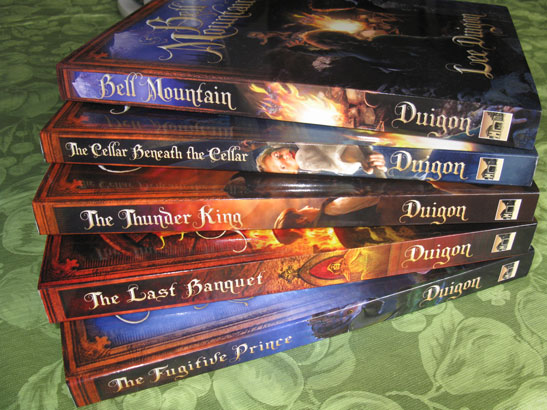
Image result for images of bell mountain series by lee duigon"

Chock-full of really cool characters–my books

Just about the most annoying books you can read are those in which the hero is obviously a stand-in for the writer himself, and the other characters are only there to make him look good. Oh, fap!

Not-So-Minor Characters

If you’re going to do that, you might as well go into politics, where it’s expected. Capitol Hill always has room for one more fat-head.

Highly recommended: the Inspector Ghote novels, by H.R.F. Keating. You can learn a lot from these–or just kick back and enjoy them.

‘Not-so-Minor Characters’ (2015)

See the source image

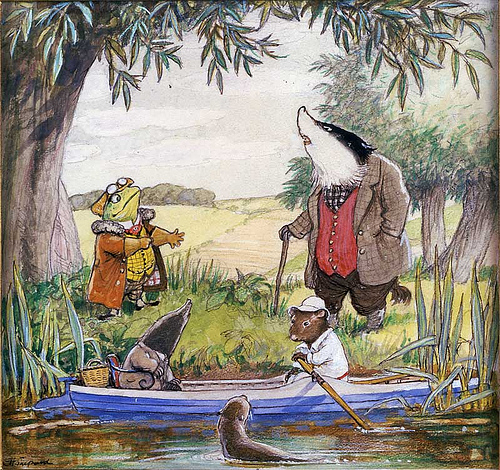
Just try telling Toad that he’s a minor character…

How would you like to be told, “You’re just a minor character”? Well, fictional people don’t like it any more than you would.

Not-So-Minor Characters

Just image someone telling you that you only exist to make him look good. What could be more insulting?

In writing fiction, as in life, treat your so-called minor characters–I prefer to think of them as supporting roles–as you would want them to treat you.

Because without them, you haven’t got a story.

Not-So-Minor Characters

Well, at least I can transport my own picture from

the “Bio” on this site, to this page. We advance by little tiny steps.

Among the most unreadable books in existence are those in which the protagonist is merely an avatar of the writer himself, powered by wishful thinking: like, here I am as the smartest  guy in the book, the handsomest,

the sexiest, blah-blah. And all the other characters

are merely names on paper, because the writer is so exclusively interested in himself.

To make your story live and breath, your characters have to live and breath. In that sense, there’s no such thing as a “minor character.” That doesn’t mean that, every time a new character appears, you have to tell his whole life story. He may only be there to say “Here are the gumboots that you ordered, madam,” and then exit.

I first noticed this technique years ago when I was reading a lot of Dick Francis’ mysteries. Every character who appeared, even those for whom a name wasn’t necessary, the writer dabbed with just enough color to make him or her come to life.

I found a wonderful example of this last night, in Inspector Ghote’s Good Crusade by H.R.F. Keating (1966). Here, India’s most famous detective is interrogating a cook whose great concern is to tell the inspector whatever he thinks the inspector wants to hear: he does this because he’s afraid of the police, and doesn’t even notice when his answers are the exact opposite of answers he’s given just moments ago. It drives poor Ghote up the wall, but makes for wonderful entertainment. The cook is only around for a page or two, but he’s a minor character I’ll never forget.

This art requires some subtlety, and a lot of practice. It won’t do, just to tack on something like, for instance, “Here are the gumboots that you ordered, madam,” said a delivery man with a tattoo of a lobster on his cheek. But even that is a step in the right direction. It’s something the writer has to work on before he can master it.

As you can see, I have utterly failed to post my picture in the upper left-hand corner of the page. Well, live and learn.