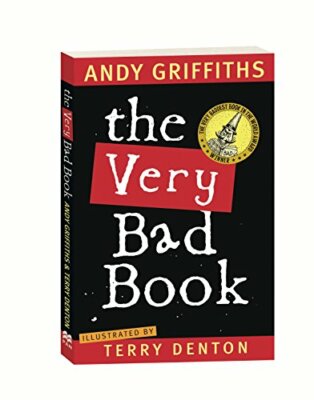
I admit that I would not open this book, believing as I do that the title captures something very easily achieved by many persons.
Almost everyone thinks he or she could be a writer… “if only I had the time.” Yeah, it’s preposterously easy! Especially novels. Anyone can write a novel.
Like so:
You wouldn’t believe so many literary crimes could be committed in just one book. Mark Twain was hard on James Fenimore Cooper, but some of the books that are pitched to me put Cooper’s errors in the shade.
P.S.–The computer is rebelling this morning and has so far refused to post a picture. I’ll keep trying. Welcome to the Age of Nothing Works.
That list of writing horrors in your original post is a classic! 😁
Teach an adult school class in Creative Writing, and there’s no telling what you’ll see.
I have a hymn request: “Your Grace and Mercy.”
I’ll get busy with that right now.
And, make sure you don’t use an editor or have anyone else read your manuscript.
F. Scott Fitsgerald was not a big name when he was alive. He ended up a drunk in Hollywood doing screen plays but nothing much to admire from them. Sometimes greatness is in the eyes of the beholder.
Yes, I know this post is aging a little, but I have a question and figured it was about the best place to ask it, considering this is the latest one that deals with writing (and considering you, Lee, have written novels inside and outside the genre).
What differentiates a Christian story versus a story whose ideals and morals run parallel with those of Christianity? I’ve read “Christian” stories that seemed like anything but, but because it had angels or demons in it, it got placed that section of the bookstore. Or the book had some offhand reference to God/Jesus/prayer so that got thrown in with the others. And I’ve read books where the heroes are actually heroes, and while they make mistakes they never actually do anything that’s so horrifyingly objectionable or irredeemable that negates their “hero” title.
So, what is it? What’s that spark/breath that really turns it from “Good Moral Story” to “Good Moral Christian Story”? It can’t be just the mention of Jesus and God. It’s not even a fantastic allegory (nod to Aslan and C.S. Lewis, of course). If the characters are too good to begin with, they never learn anything worth the telling of the story in the first place (all too common with female characters nowadays, that are told–yes, told, not shown, not showing it–“you were amazingly astoundingly awesome all along, and it’s time everyone else took notice of it” crud that is trying to pass for storytelling).
I’m really scratching my head over this. Probably overthinking it.
Oddly, now that I have typed this, I am reminded of a South Park episode from forever ago that poked fun at this only with music, not writing, where the kids wrote and recorded a crappy, dirty love song and inserted “Jesus” into the lyrics (name, not spirit) hoping to get a platinum record out of it on the Christian charts.
What makes a Christian story Christian?
First, don’t go by what they do in bookstores. Very little thought goes into that. Maybe no thought at all.
There’s all sorts of “Christian” stuff out there, especially in arts and entertainment, that’s Christian in name only. I’m sure you don’t need any help in recognizing CINO products.
Some of this is in the eye of the beholder. Plutarch, for instance, was an out-and-out pagan, yet many Christian readers, over the centuries, have found him admirable. Can we call that “common grace”?
I can’t give you a hard and fast definition of a Christian story. Some of it has to be in the eye of the beholder. Some of it, more or less obviously, is CINO. And some of it is Christian in spirit even if the author never explicitly mentions Jesus or the Bible.
I try to write my books in such a way as to make them compatible with a Biblical, Christian point of view. But here I’m telling a fantasy story set in a world that doesn’t exist, which has its own arc of history that’s very different from ours, and so naturally the terminology used by inhabitants of this imaginary world… well, those are going to be imaginary, too.
But I still try my best to remain within the spiritual dimensions of God’s Word.
Lee’s books operate in a parallel reality. The situations are parallel to Christianity and it’s obvious that there are characters who want to please God. Christianity is never directly mention, so far as I know, but the material has a ring of familiarity to Christian readers. I would imagine that a reader completely unaware of Christianity might find some of it mystifying.
IMO, this is a good approach, because it deals with the moral issues, but no one can feel that they are being preached at; it’s impossible to convert to the faith practiced in Obann, and likewise impossible to invite someone to that faith. But it can serve as an example. Jack, with unwavering faith and Martis, who turned his life over to good causes; all are very similar to examples we would read about in the Bible.
For just reading pleasure, it’s hard to beat the book of Acts. The Bell Mountain books remind me of that some level of action as the book of Acts.
You make a great point, Torrie. In fact, I am aware of the South Park episode to which you refer, and always found that concept quite amusing. The Bible, itself, deals with some topics which are not very Christian. There are murders, seductions, betrayals and any number of unsavory acts mentioned in scripture, because it deals frankly with life as it is lived in a fallen world. Some churchgoers might not even be aware of some of what is covered in scripture.
Books written with a Christian readership in mind should promote Christian values. That would strike me as a given, but there are people who claim to be Christians, but whom do not necessarily live their lives in line with Christian values. A friend of mine once courted a worship leader, who wanted to marry him, but reserved the “right” to cheat on him at will. Christ is her judge, but I’m keeping my distance from people who would want to bring such practices into the fold. (BTW, my friend wisely chose to keep his distance from her, once she told him that.)
As Lee mentions, there are many works which are Christian in name only. If I were to write and subsequently publish a book, presenting it as Christian would be a daunting proposition. Remain[ing] within the spiritual dimensions of God’s Word is a good way to look at it. I can’t think of a better definition.