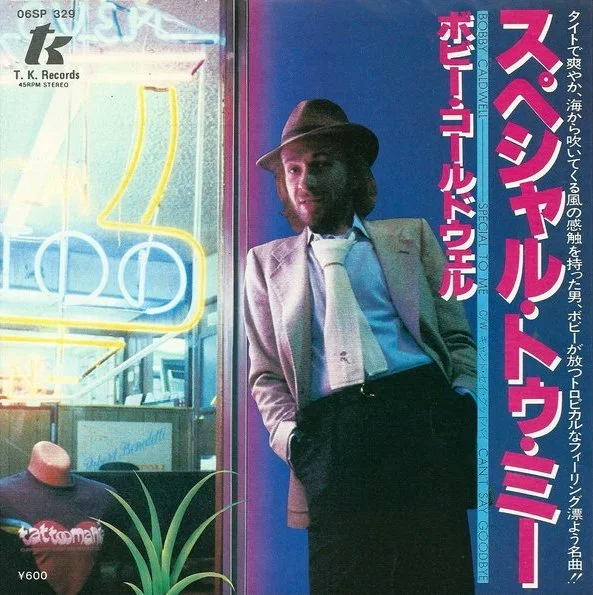
They love him in Japan, too!
How many politicians would it take to match the late Bobby Caldwell for bringing people together and making them happy? The whole business of “Race” just flies out the window.
Democrats, if white and black people can come together–as they do over Caldwell’s music–you’re toast. Say goodnight and pack it in. “Divide and rule” only works when people detest each other: largely aided and abetted by the Democrat Party.
[They didn’t know he wasn’t black. Watch what happens when they find out.]
The Bible plainly declares in many places there is only one human race – we have all come from one blood. Races developed through time and produce their own unique culture. A lot of racism is more of a culture clash than a racial one, especially now that interracial marriages are more common.
Very true. I’ve lived in areas that were predominantly Northern European and Scandinavian, and other places where there were Blacks, Hispanics, Asians, Italians, Germans all in one area. While there are cultural differences, people are individuals, and full of surprises.
The Denver of my adolescence and young adulthood was truly a diverse place. There was a significant Hispanic population, a lot of people of Italian heritage, a black community and there were a fair number of German surnamed people, probably from families that had fled Kansan farm country, during the Dust Bowl years. There were Japanese kids in my school, probably because there had been an internment camp in southeastern Colorado, and some of the internees came to Denver after the war, to start anew.
There were stories of hardship, but also of triumph, and the work ethic I learned while living there was invaluable. There were a lot of different ethnic backgrounds in Denver, but it was a place where hard work paid off. While I was born in the Midwest, my character was shaped in that melting pot of the northern suburbs of Denver, and Adams County, CO.
What You Won’t Do For Love was a great song. I loved it in ‘79, and I’m delighted to hear it, to this day. Caldwell did a great job, and like many people, I was all but certain that this was a black artist.
When black people discover that he was Caucasian, they may be delighted because they realize that in order to deliver that song with such emotion, he and they had to have some common ground.
Round about 1970, I got an FM radio for my bedroom. I would turn it on and listen to the music of the day. I mostly liked Soft Rock, Country Rock, Jazz and Soul. Back then, the Hot 100 had a lot of Soul tunes which crossed over. I heard Marvin Gaye, Isaac Hayes, The Temptations, The 5th Dimension, and numerous other artists from the world of Soul music, and I never thought one thing about it, other than that I liked it.
Neither did any of my friends. We all listened to the same handful of stations in the Denver market, and all heard the same songs, and I can’t remember anyone even making a distinction regarding the ethnic origin of these songs. There was a song called Show and Tell, by an artist name Al Green which runs through my mind to this day, over 50 years later. None of my peers saw this as Black music or White music. We saw it as music we liked.
In 1977 I went to an Earth Wind & Fire concert, in St. Paul, MN. No one gave me a second look, but why should they? There were a lot of black people there, but there were a lot of white people there as well. Never, for one moment, was there a feeling of racial tension at this gathering where perhaps 10,000 people gathered to enjoy music they liked. 47 years of identity politics, since that time, could not improve upon that situation.
Music comes from our emotional center. I’ve played music since childhood, played live performances for money and played for enjoyment. When my heart is not in it, I may not all the right notes, but it doesn’t sound nearly as good as when my heart is in it. Fortunately, the chance to play with other musicians, in front of an audience usually puts my heart squarely into it. For Caldwell to have sung What You Won’t Do For Love with such feeling, requires that his heart was there. He was tapping into what exists in every human heart. You could relate to that song, no matter where you were from.
Hit songs frequently transcend language barriers. English speaking performers will hear their audiences singing along, phonetically, when playing concerts in Japan. That happens frequently. Then thereas this guy from Denver who can follow many of the lyrics to Mas Que Nada, a Latin Jazz tune from Brazil, with Portuguese lyrics. I don’t understand a word they are saying, but I used to sing along, because the song sounded great, and moves my spirit, to this day.
BTW, What You Won’t Do For Love sold well in Japan, too. How much do you wanna bet that listeners in Japan sang the lyrics phonetically?
One last thought about the universal appeal of music, and then I’ll shut up. When I was in grade school, Surf Music came along, bright twangy guitars playing rapid fire, instrumental songs, usually in minor keys. A Lebanese-American fellow by the name of Dick Dale played an old Mideastern folk song by the name of Miserlou, as a Surf piece, and became a sensation. Surf groups popped up, and even high school aged kids were finding success, with songs like Mr. Moto and Pipeline.
Like all things, it had its day, and was then forgotten. In 1993, a movie called Pulp Fiction (which I neither endorse of recommend) featured some of these old Instrumental Rock songs, and interest in this music was renewed. What had changed, was the age of instant communication and the emergence of the Internet as a consumer product, just a few years later. What we found out, is that these Surf instrumentals had been wildly popular in Soviet Bloc countries, and there was a groundswell of enthusiasm no one in the US had even been aware of.
People in these places brought their own culture and musical scales to the table, and there are Surf bands from the Balkans, and former Soviet Bloc countries playing their own Surf compositions and using scales that are not commonly used in the US, such as Hungarian minors and Double Harmonic Majors. (No, I’m not kidding, there are actually double harmonic major keys.) So music which emanated from SoCal beaches, and Hollywood recording studios not only appealed to people on the other side of the globe, but was kept alive for decades and even improved upon, by people who had to put a lot of effort into even obtaining these recordings.
Music has power. Way to go, Mr. Caldwell