The Key to Cyber-Popularity!

Looking Through A Keyhole High Resolution Stock Photography and Images -  Alamy

I’m already getting tired of trying to highlight key words by typing them in boldface. It feels like I’m writing a freakin’ comic book. “Hey, Superman! Do you know Lex Luthor is in town?” Feh.

Ah! But I’ve read about studies that show that unless you employ only the simplest words, hardly anyone will want to read you. Or even talk with you. Advance beyond the sixth-grade reading level, and it makes their heads hurt.

Back in high school there was a kid who used to yell at me every time he saw me, “Yah, Mr. Big Words! Big words! Yah!” This went on for several years. I didn’t even know his name. He only stopped when I promised to beat him senseless the next time he did it. One can only take so much.

Well, it seems his attitude has now become part of our dying culture. This is how you have to write, or no one will read you. No more big words.

All this cyber-stuff was supposed to raise us up and make us smarter. Instead, it dumbs us down.

Enough! On behalf of the English language, and all who treasure it, I declare defiance.

Coruscation! Orgulity! Penultimate! Chastisement! Polyglot! Effulgence!

(“Damn the torpedoes–full speed ahead!”)
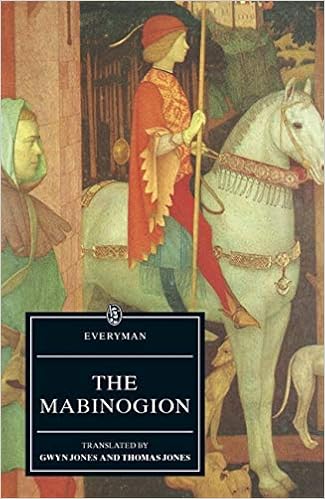
Why Won’t Kids Read?

Amazon.com: Mabinogion (Everyman's Library) (9780460872973): Jones, Gwyn,  Jones, Thomas: Books

This is a huge topic, but I’m going to confine myself to a single anecdote.

One day, substitute teaching for a third-grade class, I found the regular teacher had left me a bit short of lesson plans. I would have to fill the time somehow. So I told the class, “If you can pay attention, I’ll tell you some stories you haven’t heard before–stories of knights, and King Arthur, and monsters, and other worlds–everything that once made life so interesting. And I think you’ll like them.”

I told them stories from The Mabinogion, a collection of Welsh legends compiled some 800 years ago, although the stories themselves are surely older than that. All right, I edited out the saucier parts. But I kept the adventure, the humor, and the marvels–and next thing we knew, the day was all but done. The children loved those stories!

The point is, the most powerful motivation for reading is a lively desire to find out something. To know the story. To learn how to do something. For amusement, escape, comfort, enlightenment. It’s all written down–in books. Stuff you never dreamed existed. Things to set your imagination on fire. Any kind of story that you want to hear, any kind of information that you need to acquire. It’s all in books.

If you like reading, you’ll read. And the more you read, the easier it is.

They throw a lot of boring books at you in school; I’ve been there, I know. I plodded through those, but on my own time, sought out the books I really wanted to read, and read them.

Too many children have never experienced the pleasure, the fun of reading. And I think that’s what they have to get hooked on.

That’s where to begin. Read aloud to little kids, and they’ll eventually want to read themselves. But you do have to begin at home, well before they go to school.

Don’t leave them at the mercy of the social media.