‘City of Boneheads’ (a Novel for Not Very Bright Teens)

As someone who writes novels for young people, I try to read as much Young Adult fiction as I can stomach. Occasionally I discover something really good. But not this time.

City of Bones, by Cassandra Clare, was a New York Times best-seller in 2007 and went on to win dozens of awards. I’ve learned that an award from the American Library Assn. usually denotes tacky or unwholesome subject matter.

This particular book embodies most of what’s wrong with YA fiction. Dividing readers into age-group classes is a dumb idea. We don’t have Old Adults or Middle-Aged Adults fiction, or Doddering Adults With One Foot in the Grave Already fiction. Why set up a literary bantustan for younger readers?

(But didn’t you just say you write “novels for young people”? Yeah, I do–in the sense that I don’t presuppose the reader knows or cares about certain matters that only seem to become important after one has passed the age of 50. I also leave out profanity, graphic violence, and sex scenes. The reality is that my publisher disapproves of such things in a novel. I have learned to live without them, and my books are much the better for it. I strive to write material that any reasonably intelligent person from 12 years old and up can enjoy.)

Cassandra Clare is not an awful writer. She knows how to set a scene and how to keep the story flowing. But she writes down to her audience, as if readers under the age of 21 just aren’t able to think outside a narrow “teen culture” box–a little coffin for the brain. Her dialogue is dreadful–what you might expect a clever extraterrestrial to write after spending some decades monitoring MacDonald’s commercials. It would be a better book if the characters never spoke. She even succumbs to the temptation to make her rigidly teenage protagonists superheroes with cool powers. I hate superheroes with cool powers. And there’s a lot of technicolor violence.

After some 200 pages of it, I doubt I’ll have the patience to read all the way to the end of this 500-page monstrosity.

And I can’t think of any reason why you should, either.

An Award-Nominated Stinker

As regular readers of this blog know, I have recently won my very first literary award. But I’m really starting to wonder what that means.

In cycling down Memory Lane of late, I blew out both tires on a pothole called Shadowland by Peter Straub, nominated for a World Fantasy Award in 1980. This was his first novel after best-selling Ghost Story.

Pee-yu!

Amazon.com reviewers (most of them) give this turkey four stars. It sold like hotcakes back in 1980. I ought to know; I was one of the suckers that  bought it.

Shadowland is intended to be a story about two kids who discover that their Uncle So-and-So is not just a famous stage magician, but a real sorceror with real magic powers. At least I think that’s what it’s about, because Wikipedia says so. The writing is so disjointed and murky, I really didn’t know what it was about.

When he isn’t being obscure and confusing–was he trying to do that on purpose, to make people think he was an intellectual?–Straub swan-dives into the out-and-out ridiculous. How ridiculous? One scene winds up with the Twelve Apostles dancing around and singing “We had fish for supper!” On second thought, that’s worse than ridiculous. Why did he have that scene in there? Don’t ask me–I only tried to read the bloody thing.

And yet most amazon.com reviewers think Shadowland is worth four out of five stars, and it almost won a World Fantasy Award. Just to get nominated for that is a major coup; it’s like an Oscar nomination.

Imagine if they gave an Oscar nomination to Mandingo for Best Picture, or M. Night Shyamalan for Best Director.

Go figure…

Don’t Their Parents Care?

This week on News With Views I published a column, “This Best Book is the Worst” ( http://www.newswithviews.com/Duigon/lee215.htm ), about a book called Boy Meets Boy that was chosen Best Book for Young Adults by the American Library Assn. A brief descriptive blurb will suffice: “Paul’s simple high-school life is confused by his desire for another boy who seems unattainable, until Paul’s friends help him find the courage to pursue him.”

I thought that was pretty sickening. But a reader from New Zealand has alerted me to an even filthier book that also won a big award, the New Zealand Post Children’s Book of the Year. This is a book about teenagers at a boarding school, boys having sex with their male teachers and with each other, taking a whole lot of drugs, cursing and getting cursed at… I mean, what’s not to like? It’s called Into the River–which is possibly the best place to toss it.

This is Young Adult fiction, these days: a boiling cauldron of filth. Earlier in my lifetime, anyone who tried to purvey to minors the kind of stuff that gets Best Book honors today, would have been arrested and thrown into jail.

And my question is, simply, this: Don’t the parents care? Are you guys all right with your 14-year-old sons reading this stuff? You seem to be all right with your children being “educated” by persons who think this garbage belongs on a students’ recommended reading list. Is this what you want being pumped into your children’s minds?

Oh, we care! We care plenty! But we continue to send our kids, five days a week, to schools where Boy Meets Boy and Into the River are on the reading lists, on the shelves of the school library with golden stickers on their covers, and deeply imbedded in the ideology of our children’s “educators.”

It just doesn’t look like caring.

India’s Greatest Detective

One of my all-time favorite mystery series–I can’t believe I haven’t mentioned it before–is H.R.F. Keating‘s novels featuring Inspector Ganesh Ghote of the Bombay CID. Written over a span of 45 years (1964-2009), and winning several major awards along the way, these books are a treasure. You may not have heard of them–which means you have quite a treat in store, once you start reading them. Most of them seem to be available via amazon.com, and you might also try your local library.

Ghote is hard-working, dogged, modest, humane: if he’d been born in America, he would have been Columbo. He goes up against fiendishly clever criminals, wooden-headed superior officers, rich and powerful witnesses and suspects who think they’re above the law, and not-very-helpful assistants. He is a loving but often hard-pressed family man. I promise you’re gonna love this guy!

My favorite of the series is The Body in the Billiard Room (1987), in which Ghote is “assisted” by a retired ambassador–a person of great importance, whom he can’t get rid of. This character insists on introducing Ghote as “the Great Detective,” continually embarrassing and exasperating him by expecting him to perform like Sherlock Holmes or Hercule Poirot. There’s an awful lot of humor in this book, but a touch of pathos, too: the old ambassador’s whole way of life–he is a relic of the British Raj–is passing away. No writer ever did a better job than Keating (d. 2011) at combining those two elements.

Then there is Sergeant Desai–incompetent, lazy, corrupt–who “helps” Ghote in a number of investigations. The wretched man provides wonderful comic relief.

I could go on and on about these books–their adroit use of local color, their ability to transport you to India, their satisfying solutions to often complex mysteries. But I won’t. Just go out and get one! You can thank me later.

Bring Back Rick Brant!

My anniversary present yesterday was Stairway to Danger (1952), a “Rick Brant Electronic Adventure” by Hal Goodwin writing as John Blaine.

This series was once the best of young readers’ fiction, from 1947 to 1968–24 books in all. Probably most of you have never heard of them. Well, it’s time you made their acquaintance.

In addition to writing really cool books, Hal Goodwin traveled to just about every place on the globe, serving with a variety of government agencies–the Civil Defense Administration, NASA, the U.S. Information Agency, and NOAA, to name a few. He was in on the major scientific breakthroughs of the era. Stairway to Danger, for instance, introduced Hal’s readers to cybernetics and transistors–not exactly household words in 1952!

Goodwin actually went to all the places he wrote about, and participated in all the science that he wrote about–so his Rick Brant books have a ring of authenticity you can’t find anywhere else.

Of course, they show their age, in that Rick, a teenager, lives in a stable family headed by a father whom he loves and respects. Imagine that! As big a fan as I am, I can’t say I’ve found any overtly religious content in these books. But I can’t imagine them doing a Christian reader any harm. And I can easily imagine today’s immoralists really hating them, which is probably a good reason to like them.

Hal Goodwin soon realized that these books gave him a format in which he could tell pretty much any kind of story he liked. So he let his imagination rip, and Rick and his friends wound up doing archeology in the back country of the Philippines, finding a lost city in the Himalayas, fighting a sinister case of barratry at the Jersey shore… (Oops, the computer has no idea what “barratry” is, so I’d better tell you: it’s insurance fraud on the high seas, and it can get nasty sometimes.)

You can get these books used and not very expensive via various online outlets, including amazon.com and alibris.  Do yourself a favor, and pick one up today.

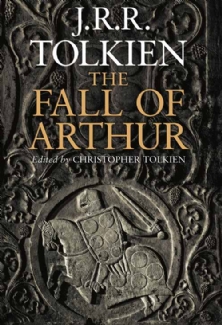
Review of Tolkien’s The Fall of Arthur

FallOfArthur.jpg

Does King Arthur Matter Anymore?

Thoughts on The Fall of Arthur by J.R.R. Tolkien

Edited by Christopher Tolkien

(Boston/New York: Houghton Mifflin Harcourt, 2013)

For a thousand years, the story of King Arthur and his Knights of the Round Table, after the Bible, was the story of Western civilization. Before the invention of the printing press, these tales were translated into English, Welsh, French, German, Spanish, Icelandic, Italian, and Russian, and hand-copied into books all over Europe. The first book printed in English was Sir Thomas Malory’s Le Morte D’Arthur (“The Death of Arthur”) in 1485.

For a thousand years monks, bards, painters, novelists, composers, and historians have added to it, modernized it, and decorated it. I grew up hearing these stories from my mother, who had heard them from her father. I think it would be safe to say that practically everybody in the English-speaking world, years ago, had some acquaintance with King Arthur.

More Culture Rot: Mainstreaming S&M

Remember 50 Shades of Grey? That series of puerile novels about a romance between a perfect hunk macho rich-as-Croesus sock puppet, who likes to slap women around, and a gorgeous young moron who likes to be slapped around… Yeah, it’s still out there. And now it has some competition.

Appearing on the shelves of my neighborhood supermarket today was The Submissive, by one “Tara Sue Me.” This is billed as “a must read if you loved 50 Shades of Grey” –that is, if you are a moral imbecile with incredibly poor taste in literature–and “even better than 50 Shades of Grey,” meaning worse.

In this piece of garbage, the beautiful young airhead falls into a romance with a handsome perfect richer-than-Croesus young hunk named F. Scott Fitzgerald… Oops, I mean “Nathanael West.” The real Nathaniel West was a novelist and screenplay writer, famous for his short novels, Miss Lonelyhearts and The Day of the Locust. The only reason I can imagine for “Tara Sue Me” to name her fictional nobody after a real person is pure ignorance. So steer clear of cheap novels featuring characters with names like Yuri Andropov, Laurence Olivier, Eddie Matthews, etc.

Where are all the feminists? These books depict women as totally dominated by certain types of laughably obnoxious men, and loving it. But then feminists never seem to mind anything that truly debases our culture. Hey, they all loved Clinton, didn’t they?

As our civilization rushes to the bottom, merrily giving its approval to “dominance and submission” as just another hip lifestyle, it’s comforting to know that God has other plans for us.

I’m Sick

Yup, I mean it literally–sick as a dog, no figure of speech. So don’t expect too much out of me today. I was looking forward to working on The Glass Bridge, but I don’t think I can manage it now. Maybe this is one of those 24-48-hour bugs that shakes you like a terrier shakes a rat, and then drops you and moves on.

So my ambition for today extends no farther than to read some of the Andre Norton book I got out of the library. Search for the Star Stone (actually two books in one). That’ll be more than I could have done last night.

Andre Norton–remember her? One of the all-time greats in fantasy and science-fiction, flourished in the 1950s and 60s. If you’ve never read Andre Norton, you should remedy that right away. She started out as a fantasy writer, then branched out into science fiction; but to me her science fiction always had an air of enchantment to it. Nobody writes anything quite like it today. Then again, nobody but Andre Norton ever did.


Borrow ‘The Borrowers’

When you were a kid, did you ever wonder how come your chess set, one morning, had only 15 pawns instead of 16? Were your little green army men stealthily deserting? And why did your mother insist you took  her pack of needles, when you never touched them?

Mary Norton solved those mysteries in 1952 with the publication of her award-winning young readers’ novel, The Borrowers, following it up with four sequels. I mention it now because there’s a crying need for kid-lit that doesn’t corrupt its readers or pollute their minds.

I read all the Borrowers books not long ago and enjoyed them tremendously. I wish there were more. Kids will like them–I say “kids,” but I really mean all readers whose imaginations are not yet ossified–for the fantastic situations set out in the stories, the vivid characters, plots that are long on suspense, and pure fun.

Anyhow, it’s the Borrowers who cause small, common household objects to disappear. The Borrowers are these tiny people who live under your floor, or between your walls, or inside your piano–wherever they can remain safe from discovery–and live by “borrowing” your stuff. Their lives can be very snug and cozy, but can also be quite dangerous. Mary Norton’s books follow the hair-raising adventures of a family of Borrowers.

There are also two film versions. There’s one by the BBC from 1993, starring Ian Holm as the father in the Borrower family, and Sian Philips as the housekeeper who tries to exterminate them. We have it as a VHS that some bozos thought would be even better if they constantly interrupted it by comedy bits by an American comedian I never heard of, who isn’t funny. So we have to fast-forward those. Aside from that, it’s a good movie, lots of fun.

Another version, starring John Goodman, was made in 1997, but I’ve never seen that one.

If you’re looking for some high-quality entertainment for your kids (or for yourself), you can’t go wrong with The Borrowers. Borrow these books from your local library. Black-hearted knaves won’t enjoy them, but you will.

A Lurid Tale of Sex, Murder, and Betrayal

Actually I was going to write about my visit to the dentist; but when I saw that nobody at all had visited this blog so far today, I panicked and wrote the above headline to boost readership.

But to be perfectly truthful, I am currently reading a tale of sex, murder, and betrayal–The Fall of Arthur, by J.R.R. Tolkien. Written in 1934 or thereabouts, but never finished, and finally published 40 years after the author’s death  (By Houghton-Mifflin-Harcourt, New York: 2013), this epic poem tells the story of King Arthur and the destruction of his kingdom–by sex, murder, and betrayal.

I’ll get into an actual book review later. For now, we might want to ask why King Arthur matters. After all, these things happened some 1,500 years ago, and historians can’t even agree that Arthur ever existed.

It matters because the story of Arthur demonstrates how utterly dependent we are on God’s grace and how little we can accomplish without it. King Arthur was the bravest and noblest of kings, he had the most beautiful woman as his queen, and the strongest and best knights in the world–and it all went down in a shambles. God only knows how many times this story has been told in fifteen hundred years. Tolkien’s poem is the latest version, but it won’t be the last. We may never find out what really happened to King Arthur, but we’ll surely keep on trying.