Bell Mountain Review by Steve Wilson

Recommendation: Excellent

Originality: 5/5             Writing Style: 4/5              Plot: 5/5                 Characters: 5/5        Aesthetics: 5/5

God is at work in Obann.

A thousand years ago, King Ozias, the last king, placed a bell on top of Mount Yul. Scripture says that when someone rings that bell, God will hear it.

But no one ever has rung the bell.

Until now.

Many people, from the head priest to a small-town teacher, have felt God stirring their heart to ring it, but the only ones obedient enough to answer that call are two children – Jack and Ellayne.

Jack is a poor boy, a child of misfortune; Ellayne is a rich girl, child of the town’s chief councilor. Together they will make it to the top of the mountain and fulfill their calling.

Bell Mountain is such a fun read for people of all ages. It’s interesting and moves at a quick pace with lots of action and adventure. As you read, you’ll meet new creatures, an expert assassin, Helki the Rod, Obst the Hermit, and Wytt the…? (Well, you’ll just have to read about Wytt.)

It’s a perfectly clean read with a ton of depth and good Christian messages. One of my favorite themes was the question of how we should treat Scripture. Is it to be taken at face-value and treated seriously, or is it just a collection of myths and metaphors?

I give Bell Mountain an enthusiastic recommendation of Excellent and will look forward to diving into the sequel, The Cellar Beneath the Cellar.

Bell Mountain is available in print from Amazon.com.

SOURCE

Rabbit Legacy: Book II of Ellen Maze’s ‘Christian Vampire’ Series

Rabbit Legacy by Ellen C. Maze

(TreasureLine Publishing, 2011)

Just when you thought it was safe to take the garlic down from your windows…

Of course, if you’ve read the first book of Ellen C. Maze’s Christianized vampire trilogy, Chasing Beth Rider, you already know that garlic won’t do any good against these bloodsuckers. Nevertheless, by the time that story was finished, it seemed the vampires were pretty much finished, too. But no–in Rabbit Legacy they’re back, and they’re looking for revenge.

The good news is that the sequel has built on the first book’s strengths. It has more depth of feeling, more insight into character, and more boldly faces hard questions of faith and theology. It is in every way a better book.

Can the vampire be saved?

Again, we aren’t dealing with “real vampires” in the Bela Lugosi sense of the word, but rather with a cryptic race called “Rakum.” We learned in Book One that the Rakum originated with a demon and have lived in secrecy among the human race for thousands of years. Maze’s boldness in throwing out all the vampire story conventions has allowed her to do interesting things with plot and character development.

A Superb Sequel Takes Bell Mountain Readers on a Wild Ride by Robert Knight

Sequels rarely equal the first book in a series, with notable exceptions.

Lee Duigon’s The Cellar Beneath the Cellar is one. Duigon, one of the most cogent and entertaining Christian cultural columnists, picks up where his earlier fantasy novel Bell Mountain left off.

It’s fair to say that Cellar might even top Bell Mountain no easy task. Like any worthy sequel, The Cellar is intriguing enough to stand on its own, although I would recommend that readers start with Bell Mountain. As with its predecessor, this new book is geared to young readers but does not coddle them. Thus, it is a joy for adults to read as well.  It could even serve as a guilty pleasure for secular reviewers who set out to trash Christian novelists. But beware, if you are one of them. You just might be bewitched by Duigon’s character-rich adventure and lose some of your armor against the Hound of Heaven.

Since the plot is full of surprises, I will do my best not to spoil it here. And those who want first to read Bell Mountain should stop here, since that book, too, is full of plot twists.

Our young hero Jack and heroine Ellayne are once again immersed in a mysterious mission that might free their country of Obann from the grip of a false religion and evil overlord. Along the way, great and small battles are fought, hearts change and characters grow in wisdom. Trust – or lack of it – is a central theme.  Lord Reesh, the faux keeper of the faith whose manipulations are superbly crafted, demonstrates why villains are so entertaining.

Faced with savage threats not only from their own rulers but from invading hordes of pagan tribes, Jack and Ellayne take us on a wild ride. They are aided and abetted by the reformed heretic and assassin Martis, plus the lovable and still somewhat savage and tiny manlike creature Whit, who wields a sharpened stick with the efficiency of a Samurai. Also, Helki, a giant of a man with a warrior spirit and a father’s protectiveness.

Questions abound. Can the young adventurers trust Martis? After all, he was initially sent to kill them to stop them from ringing the ancient bell atop Bell Mountain.  And what exactly is so important about a “cellar beneath the cellar?”

The benevolent hand of God is palpable throughout the novel, even as the Great Story is told in allegorical terms. Like J.R.R. Tolkien, Lee Duigon weaves Christian sensibility into his narrative without being heavy handed. Like Tolkien, Duigon knows that the most effective apologetic isn’t compelling without a great story. So he delivers one. Again.

SOURCE ARTICLE

A Progress Report

First, welcome to all the new visitors who came here via newswithviews.com . You can also find me at http://www.chalcedon.edu ; and if you’re really interested, visit http://www.chessgames.com and check out some of the discussions on my forum, “playground player.” And now to business:

Book #3 of the Bell Mountain Series, The Thunder King, is in its final cycle of proofreading and should be out in late summer or early fall. I think most of you will find you’ve never read anything quite like it.

Book #4, The Last Banquet, is still being proofed and still waiting for a cover. I can’t wait to see what Kirk DouPonce comes up with this time.

I’m still writing #5, The Fugitive Prince, and I expect to be at it for a while longer. The tricky thing about these books is that I have to wait for the story that the Lord gives me; I can’t force it. As the plot of this involves a great deal of treachery, it gets kind of complicated. And I can already see that regardless of how this story climaxes, I’ll need to write a sixth book.

Which suits me just fine!

Bell Mountain Review by Adam Ross

The first in a series of five (thus far), Bell Mountain marks the fantasy debut of author Lee Duigon, and it is an enjoyable debut too. The story follows two children, Jack and Ellayne, as they attempt to make their way across the corrupt kingdom of Obann to climb Bell Mountain and ring the legendary bell that sits atop its peak. Long ago the bell was built by the last good king, King Ozias, but not many believe in the story any longer.

Prompted by haunting dreams of the bell and a mysterious promise made by God in the ancient Writings, Jack and Ellayne believe that the ringing of the bell will reshape the world forever. This call to climb the mountain and ring the bell is not a quest they would want to do, either. It is believed by many that the ringing of the bell will mark the ending of the world. Will they find their courage to ring it? First, of course, they must get there; the road is fraught with many dangers, like child slavers, barbarians, outlaws, and bizarre creatures emerging from the mists of legend, as well as an assassin sent to prevent them from ringing the bell by the corrupt First Prester of the Obann church.

The book is a solid one, set in a fantasy world that borders on being an alternative, or parallel, world to our own. Duigon is a Christian, and so leans heavily on events and ideas taken from the Bible. This is tastefully handled, however, and he always shifts the stories enough to make them original, while maintaining their familiar echoes. King Ozias, for instance, is something of a King David figure, and I caught allusions to other biblical stories such as Adam and Eve, and Cain and Abel.

READ MORE

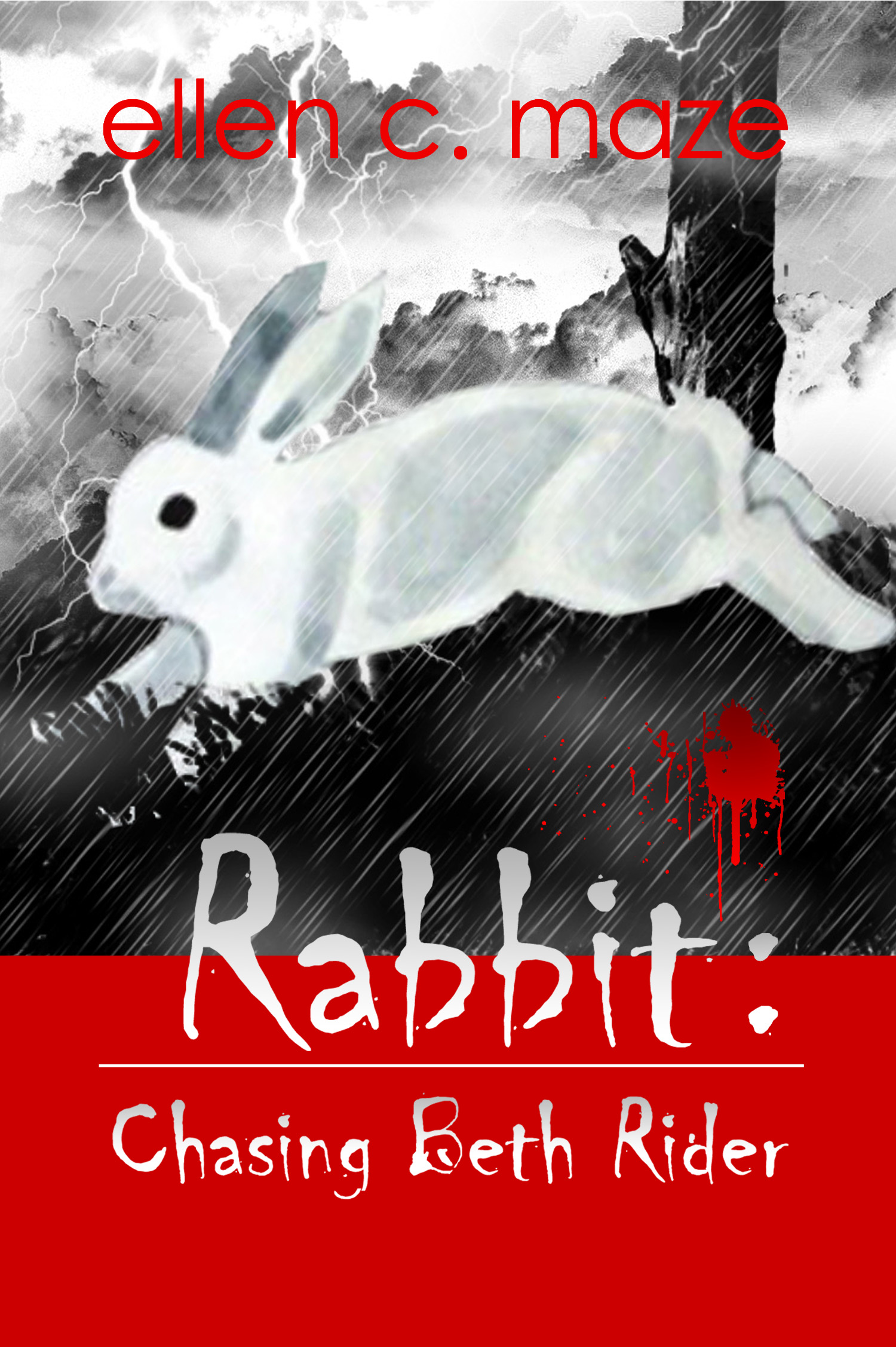
Rabbit: Chasing Beth Rider by Ellen C. Maze

(TreasureLine Publishing: 2010)

For the past two years or so there has been an undercurrent of buzz in the book world as to when we would see the first “Christian vampire novels,” and what they might look like. The subject has even come up recently on my book blog.

Meanwhile, sleazy, slimy, most decidedly un-Christian vampire novels have proliferated (Twilight knockoffs, most of them). With so much of that going on, I had reservations about Ellen Maze’s novel-clearly labeled “Christian HORROR” on TreasureLine’s cover. Frankly, I expected to be saddled with a schlocky, formulaic horror novel with some “Christian stuff” slapped on like a decal.

Happily, I was quite wrong about that.

Why Do It?

Let’s say it right up front. Whatever this book’s shortcomings (and there are a few), Ellen Maze has taken a big step in the right direction. In fact, hers is a pioneering effort, and other Christian novelists ought to be able to build on it-especially if they’re writing fantasy or horror.

Behind this is something very important: the prospect of reclaiming the whole “entertainment” industry for the Kingdom of Christ, starting with print fiction. People in the Western world consume untold quantities of fiction in various forms-novels, stories, movies, television, games, etc.-and the vast majority of it depicts a world that is totally without God, inhabited by characters who have not the slightest sense of God in their lives. This depicts a thoroughly non-religious civilization whose like has never existed on the earth: and consumers of it spend uncounted hours marinating in it. Let the reader imagine its effects on the way such consumers think and live-including the many who identify themselves as Christian.

Perhaps finding a way to write a “Christian vampire novel” is a very little thing. But we know our God delights in producing great effects from little causes.

The Girl at the Top of the Page

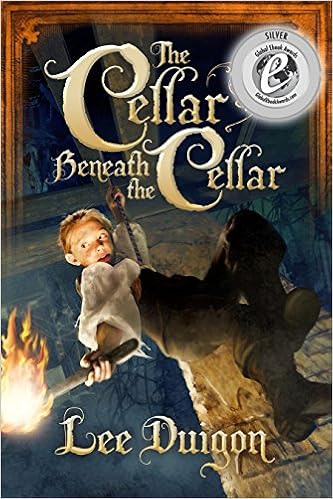
For those of you who were wondering who she is, and haven’t clicked on “Books” (because then you’d know), her name is Ellayne and she is one of the protagonists of Bell Mountain and The Cellar Beneath the Cellar, and the picture you see is actually a piece of the cover of the second book. The cover artist is Kirk DouPonce, who has done a great job on all my covers so far.

As for what Ellayne is doing, hanging from a rope, well, the best way to find out is to read the book. True, you could be cheap and just ask someone else who’s read the book–but then you’d be missing out on a great story (if I do say so myself).

A ‘Christian vampire novel’?

I’m going to write a full-scale book review on this for Chalcedon’s print magazine, Faith For All of Life, but in the meantime I’d like to give readers of this blog a heads-up on Ellen C. Maze’s new vampire trilogy, starting with “Rabbit: Chasing Beth Rider.” (TreasureLine Publishing, 2010)

Some of us have been wondering when the first “Christian vampire novel” would come along. Well, this may be it. In fact, Maze has already written a series of four “Corescu Chronicles” that might qualify.

What makes this book qualify? The “Christian element” of the story is not just tacked on; it is the story.

Some critics say C.S. Lewis beats the reader over the head with the Christian symbolism of his Narnia books, while some others say J.R.R. Tolkien buries Christian symbolism so deeply in his Middle-Earth books that nobody can find it. (Well, I say that.) Ellen Maze does something very different: her Christian element is overt, and the mainspring of the story.

To me, contemporary vampire fiction is the nadir of literature–and I say this as someone who has actually had a vampire book published (“Lifeblood,” Pinnacle Books, 1986). I was pretty much a pagan when I wrote that, and I can’t say “Lifeblood” reclaimed any ground for the Kingdom of Christ. But compared to all the “Twilight” knockoffs floating around today, “Lifeblood” wasn’t so bad. But “Rabbit” is a conscious effort to plant Christ’s banner in the heart of enemy territory, for which I applaud Mrs. Maze.

Rather than steal my own book review’s thunder, let me ask readers of this blog: What do you think a “Christian vampire novel” ought to look like? What should the author do, and what should he or she most definitely not do?

Looking for the King: An Inklings Novel by David C. Downing

(Ignatius Press, San Francisco: 2010)

Aided by three wise men, two young Americans go tearing around Britain in 1940 in search of a legendary Christian relic … That, in a nutshell, is the plot of Looking for the King.

The wise men are Charles Williams, J. R. R. Tolkien, and C. S. Lewis, the most famous members of a scholarly group of friends who called themselves the Inklings. Williams is not as well-known as the other two, who became popular culture icons; but as a close friend of Lewis and Tolkien, and an acknowledged influence on their lives and works, he has been included in the story.

The relic is the Roman lance that pierced the side of Christ as He hung on the cross, confirming that He was dead and that the body could be taken down, as told in John 19:31–37. The king in question is King Arthur: the quest begins with Tom McCord’s research into the matter of King Arthur’s historicity. Apologizing in advance for what may be considered a “spoiler,” the king Tom eventually finds is not Arthur but Jesus Christ Himself.

This book matters not because it’s great literary art (which it isn’t), or an introduction to three fascinating Christian thinkers (which it is), but because in it we can begin to see how the realm of imaginative fiction might be reclaimed for Christ and put to the service of His Kingdom. Reading this novel might start other writers on that journey.

Story Game Q&A

If you have any questions about the story collaboration, please ask them here as “comments” instead of attaching them to the story.