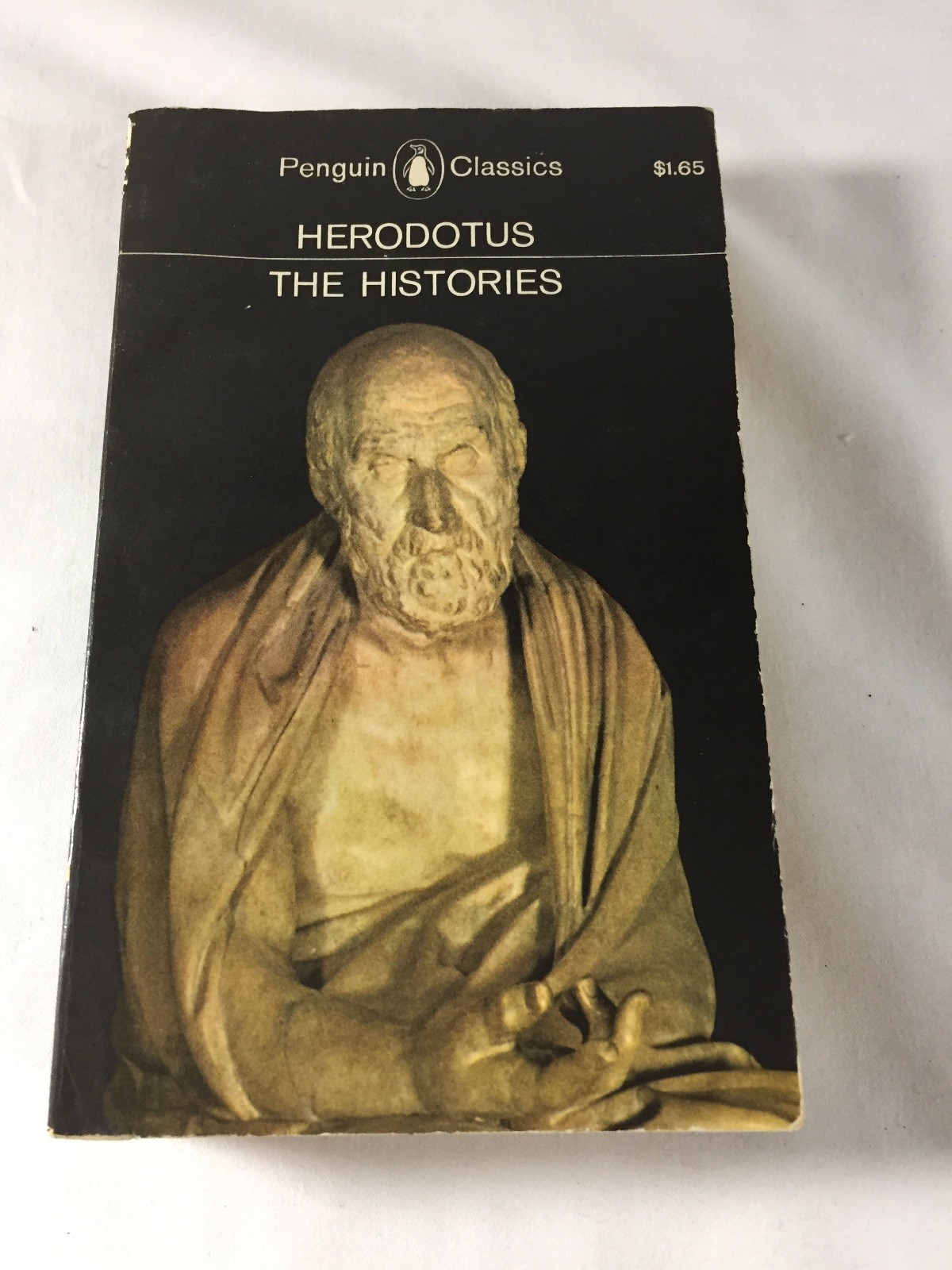
I’ve been reading Herodotus again, who died in 425 B.C. after writing his comprehensive history of the wars between the Greeks and Persians–part history, part travelogue, all entertainment: that’s why it’s been in print for 2,400 years.
The thing that strikes me most powerfully is how unimaginably different his world was from ours. As widely traveled as he was, Herodotus had no idea of lots of things we take for granted. His world was bounded on the south by the Sahara Desert; on the east by the Indian desert; on the north by cold countries where feathers fell from the sky; and on the west by the Strait of Gibraltar. Beyond those boundaries, nothing was known for sure.
North of the Alps, north of the Danube River, Herodotus’ Europe might as well have been on Mars. Those unknown countries–Britain, Germany, Scandinavia, Eastern Europe, Russia–were said to be inhabited by giants, monsters, dog-headed people, and headless people with eyes in their chests. “I do not vouch for the truth of those accounts,” he admits.
I love reading about the giant ants the size of terriers, from which enterprising Indians stole gold dust, the squeaking “troglodytes” hunted by Libyan nomads, the fantastic treasures stored in assorted public places, and the know-it-all oracles whose advice is never understood but always turns out to be right; and colorful historical characters like Cyrus and the other Persian kings, rich Croesus, wise Solon, and all the rest.
Herodotus repeated so many tall tales that it harmed his reputation; Plutarch called him not “the father of history,” but the “father of lies.” But some of the tallest tales–which Herodotus said he didn’t believe, but were worth writing down as he heard them–have turned out to be shockingly true: like the Carthaginian mariners who circumnavigated Africa 2,000 years before Bartolomeo Dias did it, and the Sarmatians’ women warriors who weren’t allowed to marry until they’d killed an enemy in battle.
His was a colorful, crazy world. And you couldn’t find a MacDonald’s anywhere in Scythia.
