They’re Grooming Us, Too

How Provocative Ads Work and 5 Examples of Spicy Campaigns

Please pardon the illustration: I’m trying to make a point.

We don’t watch commercial television, and I’m not about to start now. But friends who do watch it tell us we’re missing a lot of really gross commercials. Men smooching men, women smooching women, lots of leering, etc., etc.

Much has been written, and supported by more evidence than we’d really like to have, about Disney Corp. et al grooming children for sex. And I found myself thinking, “They’re not just grooming children. They’re trying to groom all the rest of us, too.”

I can’t get rid of this thought. Millions of people watch millions of hours of TV, absorbing a staggering amount of sexual messaging. If they didn’t think it was working, they wouldn’t be doing it. But of course they’ve been doing it for years and years: “Sex sells,” is an advertising truism.

The ancient lawgiver, Solon, greatly disliked the first play he saw put on in Athens. Asked why, he answered–to the effect, “All this sleazy stuff you put on stage is going to find its way into our daily business.” He was right about that then; but he’s even more on target now: more than he would ever have believed was possible.

We as a people really need to stop watching this stuff. It gets under an audience’s skin. It pollutes their culture. Need we say it has poured its toxins into our public education system?

I only pray that homeschooling will grow fast enough to save us.

The Courage of Old Age

Solon | Atlantis: The Lost Empire Wiki | Fandom

The Athenian lawgiver, Solon, lived to see his laws broken and his city fall into the hands of a tyrant named Pisistratus. Solon came out of retirement and took every opportunity to criticize Pisistratus, tear into his policies, and oppose him in every way he could.

Horrified, his friends asked him what gave him the courage to oppose the tyrant.

“My old age!” said Solon.

He was right, you know. And we who are today’s elderly ought to look to his example.

We’ve already lived most of our lives, so they can’t take that away from us.

We may not be physically up to marching in a demonstration, but we’re not too weak to say “Get lost!”

We may not be strong enough to fight it out on the streets; but we can absolutely refuse to say the things they want us to say, believe the things they try to force us to believe, and worship the idols they demand we worship. We have read the Bible. We remember Shadrach, Meshach, and Abednego.

If they can’t make us, in our old age and our weakness, bow down to them, how will they control our sons and daughters?

And we can pray, and God will hear us. He can shut this bad stuff down whenever He pleases: the date for that is already on His calendar.

We say with Winston Churchill, “Never, never, never, never give in.”

A Very Different World

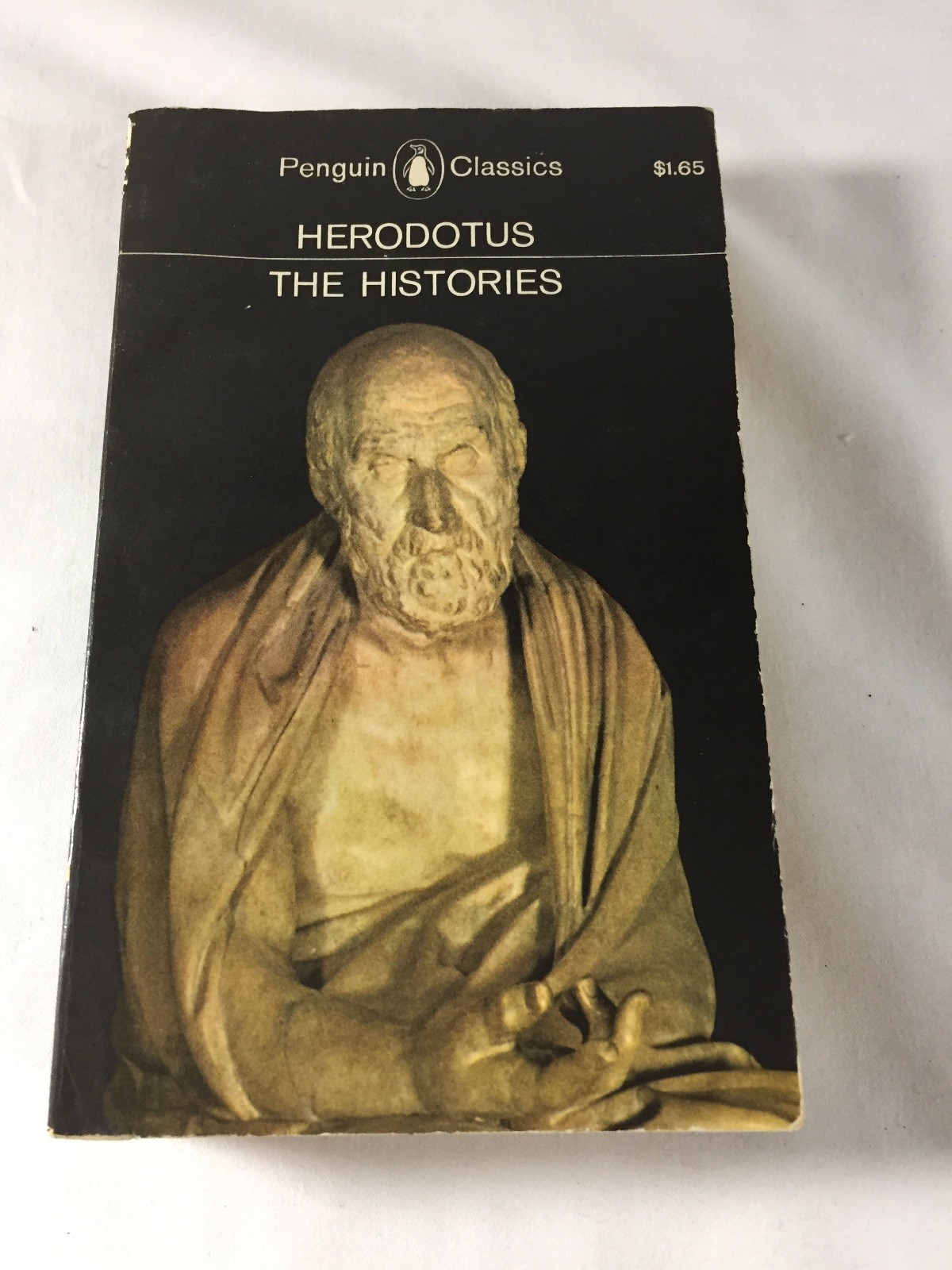
I’ve been reading Herodotus again, who died in 425 B.C. after writing his comprehensive history of the wars between the Greeks and Persians–part history, part travelogue, all entertainment: that’s why it’s been in print for 2,400 years.

The thing that strikes me most powerfully is how unimaginably different his world was from ours. As widely traveled as he was, Herodotus had no idea of lots of things we take for granted. His world was bounded on the south by the Sahara Desert; on the east by the Indian desert; on the north by cold countries where feathers fell from the sky; and on the west by the Strait of Gibraltar. Beyond those boundaries, nothing was known for sure.

North of the Alps, north of the Danube River, Herodotus’ Europe might as well have been on Mars. Those unknown countries–Britain, Germany, Scandinavia, Eastern Europe, Russia–were said to be inhabited by giants, monsters, dog-headed people, and headless people with eyes in their chests. “I do not vouch for the truth of those accounts,” he admits.

I love reading about the giant ants the size of terriers, from which enterprising Indians stole gold dust, the squeaking “troglodytes” hunted by Libyan nomads, the fantastic treasures stored in assorted public places, and the know-it-all oracles whose advice is never understood but always turns out to be right; and colorful historical characters like Cyrus and the other Persian kings, rich Croesus, wise Solon, and all the rest.

Herodotus repeated so many tall tales that it harmed his reputation; Plutarch called him not “the father of history,” but the “father of lies.” But some of the tallest tales–which Herodotus said he didn’t believe, but were worth writing down as he heard them–have turned out to be shockingly true: like the Carthaginian mariners who circumnavigated Africa 2,000 years before Bartolomeo Dias did it, and the Sarmatians’ women warriors who weren’t allowed to marry until they’d killed an enemy in battle.

His was a colorful, crazy world. And you couldn’t find a MacDonald’s anywhere in Scythia.

Never Surrender

See the source image

Solon never stopped speaking the truth–and it worked!

This week I’ve been getting more than the usual number of doom-and-gloom messages from readers. “We’re cooked, we’re finished, bad guys win–game over, man!”

Meanwhile, I am sometimes told that my outlook is not exactly peachy.

In Revelation, the devil, the Beast, the False Prophet, and all their gang, get thrown into the lake of fire and that’s the end of them. They don’t get to come back, ever. This is what God has told us. This is what we must believe.

Only thing is, we don’t know His timetable. The coming of the Lord may be another thousand years from now. Meanwhile, it’s a rough ride (and He warned us that it would be).

So what do we do? Win or lose, we fight. Sun Tzu tells us there are times when you can do nothing else: “On death ground, fight,” he says. And J.R.R. Tolkien used to quote an ancient Anglo-Saxon poem: “Will shall be sterner, heart the bolder, spirit the greater as our strength lessens” (https://www.goodreads.com/quotes/548454-hige-sceal-pe-heardra-heorte-pe-cenre-mod-sceal-pe).

If God’s grace be with me, and for as long as He gives me strength, I’ll fight: never to surrender to the social and political fads, the wicked nonsense of this world, which is handed up from Hell to its servants on the earth–from spiritual wickedness in high places. I will not be browbeaten into saying yeah, sure, I’m all for the whole sexual anarchy bit, transgender included. I will not support abortion. I will not say things are true when I know them to be false, because some tyrant threatens me.

Those of us who are “old” have an advantage.

When Solon the lawgiver was an old man, the Athenians threw out the wise and just laws he’d given them and fell under the hand of a tyrant, Pisistratus. Everyone became very small and quiet–everyone but Solon, who never passed up an opportunity to criticize Pisistratus and his policies. His friends were horrified: they knew what happens to people who diss tyrants. “Solon,” they wondered, “what gives you the courage to stand up to the tyrant?” And he answered, “My old age.”

The rest of the story: as tyrants go, Pisistratus was pretty much top-of-the-line. He came to admire Solon, began to listen to him, and wound up canceling or amending many of his worst public actions because Solon had made him see how wrong they were. Who knows what might have happened, had Solon lived longer?

The rest of the rest of the story: Pisistratus’ successors were made of shabbier stuff than he, and finally had to be assassinated. Should’ve listened to Solon.

So we ought to speak the truth, even if it feels like we’re only shouting into the wind. We cannot know who’ll hear us. We often can’t know how God will use us. He has placed us as watchmen on the walls. As He told Ezekiel, He will hold us responsible for sounding the alarm; but He will not hold us responsible for whoever chooses not to hear it.

Happy Birthday to Me

Today I have become an official and bona fide Old Man–no more pretense of youth. Somehow in today’s mangling of the English language, the word “older” has come to mean “less old than old.” So maybe for a few years I could get away with being “older.”

But no–I am now old, and I mean to make the most of it. And having long watched The Last of the Summer Wine and Waiting for God, these classic British sitcoms have taught me exactly what to do, to make that second childhood as much fun as the first. Maybe more fun: I don’t have to go to school, and no one can make me eat cauliflower.

Yes, I know old age is not all fricasseed frogs and eel stew. For one thing, by now most of the people I have known and loved have gone before me, and almost all of the places that I’ve known and loved have been torn down, wiped out, paved over as if they never were. Like maybe I just dreamed them.

I don’t expect ever to retire. Writers don’t. Anyway, it took me so flaming long to reach the point of actually being a writer, I still feel like I’ve only just gotten started.

Who knows? The way things are going with my country, I may yet get arrested for failing to “celebrate” a same-sex parody of marriage, or the unspeakable crime of Climate Change Denial (which is so insulting to those smart people who know what’s best for us!), or praying.

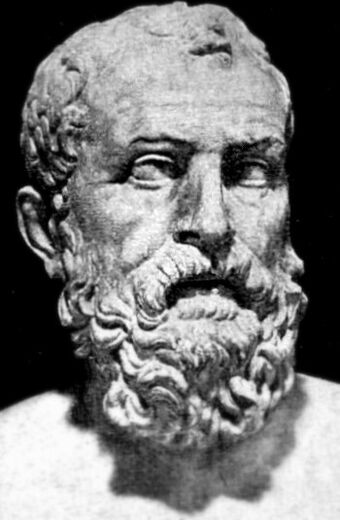
Near the end of his life, the philosopher and former lawgiver, Solon, saw his home city of Athens fall to a dictatorship. So Solon opposed the dictator, loudly and energetically: which made his friends worry about his future. “Don’t you know that dictator is a dangerous man?” they asked. “What gives you the courage to oppose him?”

“Old age,” answered Solon.

May it be so for all of us–because it may be a long, long time before the younger folks can wipe the sleepers from their eyes.