Oh, The Things I Should (?) Have Done!

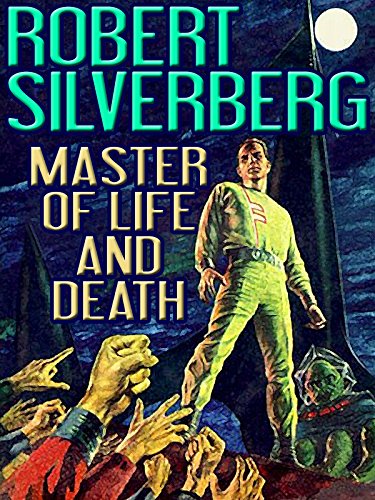
Amazon.com: Master of Life and Death eBook : Silverberg, Robert: Kindle  Store

I read this book while I was still in grade school–Master of Life and Death by Robert Silverberg. Its theme was a harsh government response to “overpopulation.”

Now I’m reading Hell’s Cartographers, autobiographical sketches by prominent science fiction writers who had long careers; and the first essay is by Robert Silverberg.

Fascinating! And it’s a paradox. Silverberg attained financial success as a writer when he was still very young, and yet he was haunted by a conviction that all he’d done was to become a hack who cranked out reams and reams of bilge. And he tells you how he did it! Gee, I never even though of doing most of the things he did to grow his career. And I haven’t yet read how he resolved his inner conflict. All I see is that you can become a big success without doing anything worthwhile.

I suspect that one of the lessons I’ll learn from this book is that each and every published writer must follow his own path to “getting there.” My own path has been long and convoluted: didn’t get a novel published until 1986. If only I’d thought of schmoozing with other individuals in the publishing industry!

But would my own work have been the better or the worse for it?

Once upon a time I wrote a perfectly serviceable thriller that a major magazine would have bought and published–if, and only if, I rewrote it to plug in some sleazy sex scenes. I agonized over this for quite a while; but my wife warned me that if I did it, it would surely come back to haunt me. And how could I ever present such work to my Aunt Betty, the nun, or Uncle Bernie, a Methodist minister? So I didn’t make the changes, and that was that.

Hell’s Cartographers, I think, will be quite an adventure for me.

My Favorite Literary Agent

Hug a Writer Today

Back in the 1990s, when the implosion of the paperback horror market stopped my career as a horror writer, I was desperate to get back aboard that sinking ship and decided I needed a literary agent. I’d had one years before, a famous agent in New York City, but he did nothing for me. I set out to find a new one.

I wound up with Perry J. Browne, who, with his wife, ran the Pema-Browne agency. He wasn’t able to resurrect my career, but at least he always had time to talk to me and I learned a lot from him: mostly about trends in the literary marketplace that were making him think it was about time he retired.

Perry’s chief source of discouragement was the changes in the marketplace, with editors being hired whose best asset was a willingness to work for peanuts, and corporate bean-counters replacing editorial directors whose only concern was to publish the best books they could find.

Remember Tony Hillerman, who wrote a series of Navajo police mysteries? These were highly successful. But Perry knew what Mr. Hillerman’s first editor had to say about these books: “They’d be pretty good if only he’d leave out all the Indian stuff.”

He also knew that my last editor at a certain New York publishing house had a habit of losing manuscripts and fumfering around with the ones he didn’t lose, sloppily “editing” them at the last possible moment–which made for some pretty sloppy books getting published that shouldn’t have been published at all. It was the sort of thing that made retirement seem increasingly attractive.

Perry, you couldn’t get my books published but I’ll never forget your patience, your gentle but necessary criticisms, your stories of the inner workings of the publishing world, and, most valuable, your friendship. You were of the old school–and that was a mighty fine school. I’m proud to have been one of your clients.