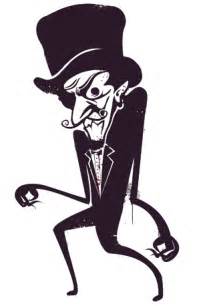
‘Fictional Characters as Real People’

See the source image

It wasn’t easy to find this image. It’s from a movie, The Wonderful World of the Brothers Grimm: Jakob Grimm, deathly ill, is visited by the characters from his fairy tales who need him to get better because they can’t exist without him.

Oh, but they can! They can!

Fictional Characters as Real People

The trick to writing fiction that the reader can believe in is to write about your characters as if they were real people (and about your locations as if they were real places). Bear in mind that all of them have lives that go well beyond the little piece you’re writing about. If they live for you, they’ll live for the reader, too.

One of the things I really enjoy, as a writer, is seeing a character enter a story as a walk-on and then stay in the story, and grow into a major character. Some of your fictional characters can really surprise you–like, I never dreamed, never even suspected, Lord Orth would turn out the way he did.

After I learned how to control a story, I learned I didn’t have to.

Think that over for a while!

How Bad Should Your Bad Guys Be?

Image result for images of villains

People think it’s easy and fun to create villains for your fiction. Fun, yes; easy, no.

Don’t worry, I won’t make one of those political jokes. “I stop one step short of making them as bad as Hillary Clinton.” Oops.

I find that, in writing up villains, the most important consideration is the character’s motivation. What makes him or her do bad things? Here are some of the motivations I’ve resorted to.

The villain honestly thinks he’s doing good. This easily descends into sheer fanaticism, which I don’t think is quite as common in real life as movies suggest. Much better is–

The villain has selfish or personal reasons for doing evil, which he has rationalized into altruistic reasons. This kind of self-deception is easy to find in real life. “I’m doing this for your good!” Haven’t we all heard that a thousand times before!

Burning with lust for someone (or something) that he doesn’t have, and probably can never get, the villain stops at nothing. This was what motivated Lord Reesh in my Bell Mountain books: he had a vision of Obann’s ancient greatness, and the near-fantastic powers wielded by men of those days, and nothing would ever satisfy him but to bring back those times–in pursuit of which, there was nothing that he wouldn’t sacrifice.

The villain is a moral imbecile and simply doesn’t know any better. According to classical leftist ideology, this is always the case–“It’s the unjust society that’s at fault, not the armed robber!” Yeah, where has the system failed you, sunshine?

Simple greed, simple lust for power–I’m from New Jersey, so I’ve seen how often these sordid motives inspire various crimes.

The one thing I try to do, with every villain I create, is to make his actions understandable and acceptable to himself. I believe most bad guys think they’re good guys, even if they have to engage in almost superhuman mental gymnastics to do it. Really, how many bad guys in real life ever sit down and think, “Gee, I really am garbage”? Much more common is, “I got a raw deal!”

So stay away from two-dimensional, sneering, mustache-twirling villains who tie Little Nell to the railroad tracks and kick poor Grandma out of the farmhouse.

Villains who think they’re good are much more fun to write about–and way more true to life! I’m sure you can think of a couple dozen real-life examples inside of ten minutes.

Loving a Fictional Character

King Theoden, from the Lord of the Rings movie (which I didn’t see, but never mind)

There are hundreds of characters in J.R.R. Tolkien’s The Lord of the Rings, but only one that stirs me to the point of tears: old Theoden, King of Rohan. I love this guy! And I do mean love–as if he were my grandfather. How in the world did Tolkien do that?

When we meet him, Theoden is a broken-down old crock who has been skillfully manipulated to sap his morale and make him feeble before his time. But he comes back from that. The hero inside him, once he has been healed by Gandalf, bursts out like a fireworks display. At the same time, he is gentle, kind, and even humble: and everything he does, everything, is motivated by just one thing–by love. Love for his family and friends, love for his allies in the war, love for his country and its traditions. And love for every little thing with which he has been blessed. Love that is willing and able to sacrifice himself for what is right, for what is true.

Tolkien doesn’t tell us so. That never works. He shows it in what Theoden says and does, in his every word and action. Easy to say, but hard to do. If great art was easy, everyone would do it. It really is an amazing feat of art to create a character that a reader can actually love. Lots of authors can create characters that amuse us, or annoy us; but to inspire love is something special.

Hard to do: but for any writer, well worth trying.

How Good Should Your Heroes Be?

The Glass Bridge (Bell Mountain #7) by [Duigon, Lee]

Fantasy fiction is awash with “heroes” who make everything look easy–especially the writing of fantasy. The Clever Thief With the Heart of Gold, The Roistering Barbarian, and the ubiquitous Invincible Female Warrior: please, No mas, no mas! I mean, what kind of a chucklehead do you have to be, to believe in such protagonists?

I would rather pattern my heroes after the heroes of the Bible, like Moses and Abraham, Peter and Paul–heroes who had to accomplish some exceedingly difficult things, and who keenly felt the difficulty, but nevertheless did what they had to do because they had faith in God and tried their level best to obey Him, whatever the cost.

They weren’t supermen. They couldn’t rely on really great kung-fu, powerful magic, super-powers, or any other kind of unlikely boons the writer might bestow on them. And their own personal flaws created more difficulties for them. Think of Moses pleading with God to get someone else to lead the Israelites out of Egypt, and losing his temper when God had him strike the rock to bring out water. No, these weren’t supermen at all. But they got the job done in the end.

When I had the girl, Gurun, in the opening chapter of The Last Banquet, swept down from the north by a storm, to land in a country that was very strange to her, I had no idea that she would go on to be a queen–and a most reluctant one, at that. She can’t even ride a horse without the fear of falling off in front of everybody. None of this was her idea. She wants to go home, but can’t. But what she does is to follow the path upon which God has placed her, in spite of homesickness, and fear, and the very strangeness of it all–without the slightest idea of what her faithfulness and perseverance have come to mean to those around her.

It’s not what Gurun does, but what she is, that matters.

So if you’re writing fantasy, lay off the cliches and let your heroes and heroines be ordinary, believable people who aren’t showing off, aren’t acting like caped super-heroes in a comic book, but are just doing what they do because they have to.

Let your heroes be what we should be–and would be, and will be, if we only keep the faith.

How Bad Should Your Villains Be?

The Last Banquet (Bell Mountain Book 4) by [Duigon, Lee]

Every story needs a villain, unless you’re writing Serious Mainstream Literature that’s just plain boring. But how bad should your villain be?

A lot of it depends on what motivates the character. My No. 1 villain in the first four Bell Mountain books, Lord Reesh, First Prester of the Temple, justified everything he did, including murder, in terms of a lifelong mission to preserve the Temple, no matter what, so that it could lead humanity back to the great heights of culture and science and power which God had destroyed in the Day of Fire. It was sort of like Saving the Planet from Man-Made Climate Change–a wonderful excuse for just about anything he wished to do. This made Lord Reesh a really cool villain.

Succeeding Lord Reesh in the later books, Goryk Gillow betrays his country because he covets wealth and power for himself; Lord Chutt commits crimes–all under cover of the law–because he wishes to restore the old regime, with himself in charge; and Ysbott the Snake does evil because he’s very much a degenerate whose close contact with the Thunder King’s mask has driven him insane. And Lord Orth’s crimes arose from his moral and personal shallowness: but God regenerated him.

Different motivations give rise to different sorts of crime. The more powerful, and the more seductive, the motivation, the bigger (and more creative) the crimes.

The only kind of villain I don’t like reading about is of a type which, I regret to say, is all too common in fantasy literature: the hopelessly stupid villain who’s just plugged in to let the hero show off by defeating him repeatedly.

And I do try to stay away from writing about the ordinary villains in Washington, D.C., who make the news of our real world such depressing reading.


My Fantasy Tool Kit (8): Butt Out!

http://www.realtownblogs.com/members/Judith2/files/98%20pound.jpg[Every now and then I remember the purpose of this blog is to get you interested in my books–so please feel free to click “Books” and look them over.]

If you ever want to write a fantasy novel–or any other kind of novel, for that matter–that’ll be sheer torture to read, be sure to make a thinly-disguised version of yourself the hero of the story.

Not that the reader is going to recognize you. But most readers can recognize pure poppycock when they see it. And few are so dense that they can’t detect irrelevant personal issues from the writer barging in between the reader and the story.

When you’re telling a story, butt out! I take it for granted that no one wants to read about me–not when they could be reading about Wytt or Helki. [You’ll have to read my books to get to know these characters.] Nor do they want to read my opinions on politics or the problems of this modern world that I’m supposed to be taking them away from.

To any writer, the same advice: Get out of the way! Don’t be like the jidrool who gets up and shambles around in front of the screen in the most exciting part of the movie.

If you want your readers to believe in your characters, you have to believe in them first. Don’t make them extensions of yourself or of the people in your lives. Think of them as real. Don’t try to control every little thing they say or think or do. Get so deeply into them that they start to say and do things you never expected.

Yes, I know–if it was easy, everyone would do it. A lot of published authors can’t do it. But you don’t even want to imagine the mountain of wasted paper produced by those would-be authors who don’t even try to keep themselves out of the story. That no one ever spent any money to publish their work goes without saying.

We are always being advised, “Write what you know.” But that’s no way to go about creating imaginative fiction.

Caveat: Let no one take this to mean I endorse the practice of lazily omitting to do research and just “intuiting”–that is, making up–false information about something for which real facts are easily available. For Pete’s sake, do not write about tribal customs of the Navaho unless you first read up on it: the ghost of Tony Hillerman will show the Navaho exactly where to find you.