‘How to Write a Fantasy Novel’ (2010)

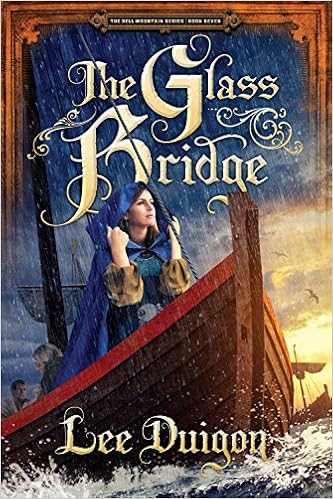
Paperback Bell Mountain Book

This was one of the very first posts to appear on this blog. Originally published in Chalcedon’s print magazine, Faith for All of Life, “How to Write a Fantasy Novel” is meant to shed some light on what we call–without devoting much thought to what we call it–“Christian fiction.”

https://chalcedon.edu/magazine/how-to-write-a-fantasy-novel

After I read Tolkien’s The Lord of the Rings in high school, the only thing I ever wanted to do, as my work in life, was to write fantasy novels. It took me some fifty years to accomplish that.

Anyway, I’ve picked up knowledge along the way, and if you’re interested in trying your hand at writing fantasy, what I’ve learned through experience is encapsulated for you here. (I don’t believe I’ve had the opportunity to use the world “encapsulated” in any of my books. But you may want to.)

Italy’s PM Quotes Tolkien

Tolkien's first words - New Statesman

Tolkien understood the heroic view of life. So does Prime Minister Meloni.

I like Giorgia Meloni: she’s loaded for bear.

The other day I happened upon her using a quote from J.R.R. Tolkien.

I do not love the sword for the keenness of its edge, the arrow for its speed, the warrior for its glory. I love what I defend.

Oh, yes! Oh, yes.

They’ve Warped and Ravaged Another Work of Art

Tolkien's First 'Lord of the Rings' Book Was Published 63 Years Ago -  Variety

Mercifully, Tolkien never had to see “Rings of Power”… unless they have TV in Heaven.

I am a lifelong J.R.R. Tolkien fan, an unabashed admirer of his finished work, The Lord of the Rings. And it makes me see red, to see the liberties taken with his work by philistines and profiteers… who, incidentally, are not making any profit out of it.

Amazon Studios has stuck itself with a bomb, a massive prequel to Tolkien’s saga in which themes he developed in other works have been co-opted by yahoos and turned into this billion-dollar flubster, Rings of Power (https://www.breitbart.com/entertainment/2023/04/04/nolte-amazons-woke-rings-power-lost-63-percent-viewers/). Reviewer John Nolte called it “unsufferably woke and boring.”

Here’s the set-up. Amazon puts up a billion dollars to produce and air this thing over five seasons. Season One, eight episodes, went on the air last year and got off to a flying start–there are a lot of Tolkien fans out there. But by the time Episode 8 rolled around, 63% of the original audience had gotten off in the lifeboats, leaving only 37% still watching. Well, their TV sets were on… who knows if they were really watching?

Tolkien was a conservative Catholic. “Woke” would have made him shudder. To have his life’s work hijacked by a mob of wokies would have appalled him.

Dammit! There ought to be some kind of powerful advocacy group out there to defend the work of artists who are no longer alive to defend it themselves. They’ve gone after Tolkien like Attila the Hun went after Europe. Probably you could get a better deal from Attila. How many ignorant young viewers are going to wind up thinking Tolkien was another jaw-droppingly stupid gank like the rest of their professors at college? Ignorance can be fixed… as long as the truth still survives somewhere. They’re workin ‘ on that, too.


‘”What’s Up, Dawk?'” (2018)

History of the Propeller Beanie and The Ultimate Propeller-Head - Origin of  this Geek Icon and an Unusual Patent

Propeller hats, anyone?

Richard Dawkins doesn’t seem to be the atheist all-star he was a few years ago; must be past his sell-by date.

Well, the criticisms applied to him stick just as well to any of his cohorts.

‘What’s Up, Dawk?’

This post is worth revisiting, though, for its 29 comments. We don’t usually get that kind of response.

‘Loving a Fictional Character’ (2016)

Thursday Movie Blogging: Theoden King May Be My Favorite Character in Peter  Jackson's "The Lord of the Rings"

Here he is in the movie.

I don’t know if I’ve ever achieved this as a story-teller: moved readers to love a character whom I made up. But J.R.R. Tolkien achieved it.

Loving a Fictional Character

Old King Theoden! Some of the things he says and does move me practically to tears. Maybe it’s because I’m so used to covering nooze dominated by characters who would definitely be on the Mordor team if they were in The Lord of the Rings. Where else would you put Chuck Schumer?

We need more models of goodness. Maybe if we had more, it’d start spilling over into our public business.

Worth a try, at least.

Writing in Good Company

Why is Tolkien Scholarship Stronger than Lewis Scholarship? Part 2:  Literary Breadth and Depth | A Pilgrim in Narnia

J.R.R. Tolkien (left) and C.S. Lewis (right)

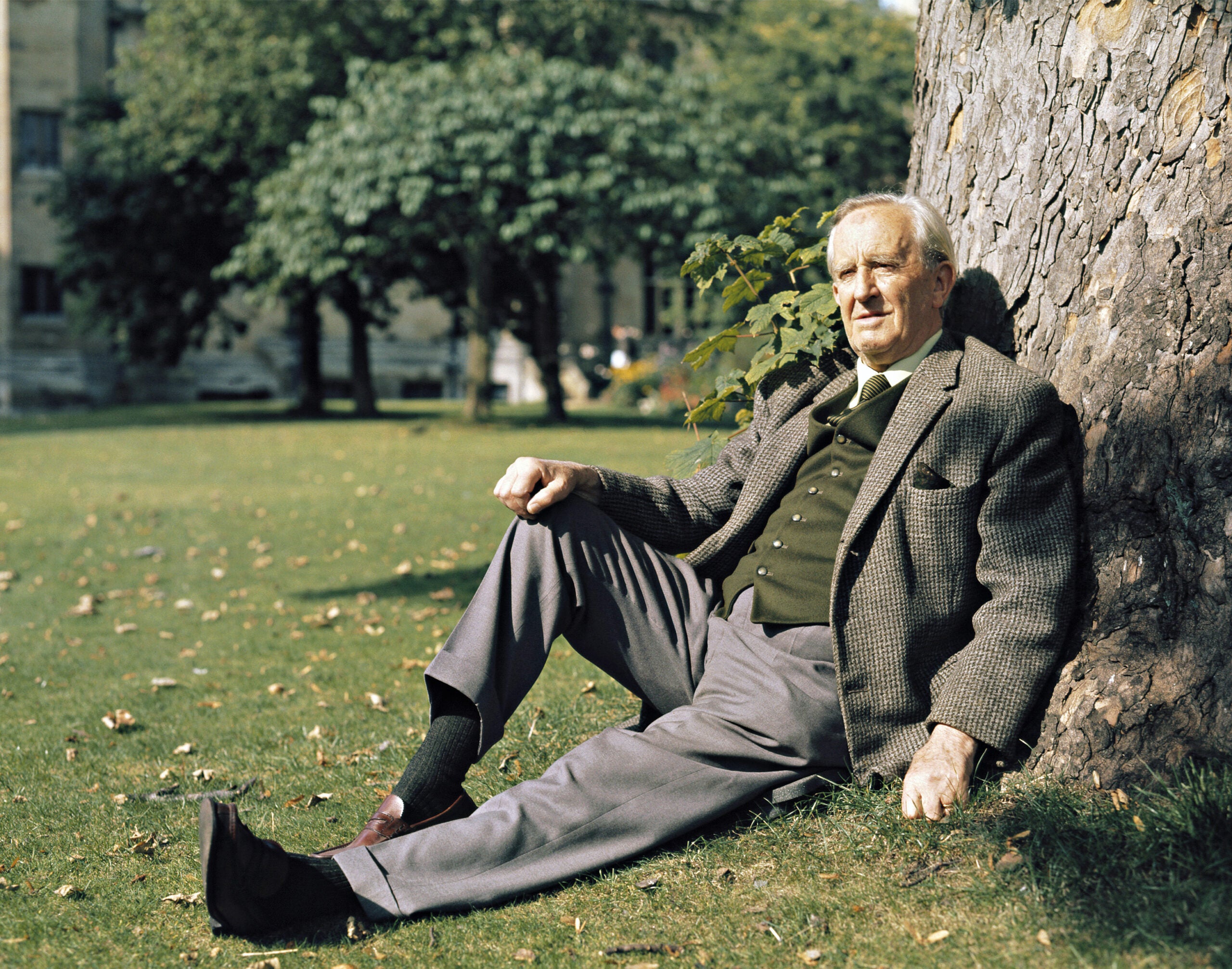
If there’s one thing that anyone who wants to be a writer ought to do, it’s read. A lot. Every day. Don’t stop.

As I race the calendar to finish writing The Witch Box, I find Tolkien’s The Lord of the Rings to be just the company I need. I’ve grown out of consciously trying to imitate him or anybody else (imitating C.S. Lewis really is a fool’s errand); but what helps me in my own journey is the tone of Tolkien’s epic fantasy.

There are books that I love but dare not read while I’m working on a book of my own. That’s because a little bit of those books will inevitably trickle into mine. I can’t help it. I don’t read Thomas Malory, for instance, because it will tempt me to say things like “Now turn we unto Helki…” It just happens, “if you take my meaning” (as Sam Gamgee, the hobbit, likes to say). I can’t stop it, so I have to find a way to use it.

Reading Tolkien as I write my book–or Eiji Yoshikawa, for another: they’re more like each other than you’d think–helps me to have a clearer vision of the scenes I’m trying to write. He reminds me to add details like trees, animals, weather, you name it, that will help me to make the scene come alive for my readers. And one of the great things about Tolkien’s style is, he never loads the reader down with too much detail–which leaves ample scope to the reader’s own imagination. I admire that, and strive to do the same.

This is what seeps into my own writing, done in my own way. And a bit of seasoning always comes in by way of other favorite books. Welsh folklore from The Mabinogion, for instance, plays its part in spicing up my writing. And in juggling the various subplots that go into any novel, who could guide me better than Edgar Rice Burroughs–or Charles Dickens? Sir Walter Scott also springs to mind.

So what I have going for me here is a whole platoon of writers whose work shows me, reminds me, and tutors me in what good writing ought to be. They are my backup, my supply line, my companions on the journey. I couldn’t do without them–

And I’m not about to try.

My Newswithviews Column, March 11 (‘History and… Fantasy’)

My new “Bell Mountain” book, The Wind from Heaven, ought to be coming out sometime this spring. But between now and then there’s a lot of nooze to cover: sort of like wading through a pestilential swamp.

So this week I’ve written about my books.

History… and Fantasy

Sometimes, by the end of the day, all I want to do is crawl into bed and pull the covers over my head. The monsters are out there, ravaging our country. But you don’t win battles that way, and you certainly don’t win wars: and like it or not, we are in a war with Far Left Crazy–a war for the survival of our country, our freedom, and our way of life. They mean to take it all away from us.

Just now it seems we have nothing left but our prayers. They’ve nullified our votes, censored us off the social media. But if all we have is our prayers, then let’s use them. Pray often! Pray hard!

When I Discovered Fantasy…

2 Pellucidar books by Edgar Rice Burroughs - Ace F-158 F-280 | eBay

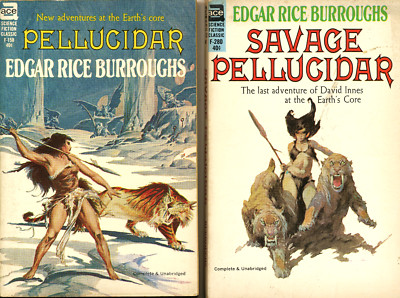
I was 13 years old when a friend lent me his copy of Pellucidar by Edgar Rice Burroughs–adventures in the inside-out world of the hollow earth, complete with dinosaurs and monsters–and it blew me away. I had no idea there were books like this! I couldn’t get enough of them. Happily for me, ERB wrote dozens of books. I’ve still got ’em (paperback price: 35 cents!), and I still read ’em from time to time.

Burroughs introduced me to other worlds, pure fantasy, anything goes. Just like Tarzan went to Pellucidar once.

But then in high school, sophomore year, I read J.R.R. Tolkien’s masterpiece, The Lord of the Rings, and oh, brother! This took fantasy fiction a notch higher. I find it bordering on the impossible, to describe how much I enjoyed it. I spent the next ten or twelve years of my life trying to write a fantasy like Tolkien’s. What the heck, everybody else seemed to be doing it–you never saw so many unsatisfying imitations published.

I learned an awful lot about writing by reading and re-reading Burroughs and Tolkien. I also learned to give up trying to imitate them, and just write like myself: took more than a few years to learn how to do that, too. The end result is my Bell Mountain series.

I envy those of you, out there, who’ll someday discover top-flight fantasy, as I did, and just go to town on it. I know reading isn’t as fashionable as it once was. But as much as I love movies, there’s nothing better than a roaring good book. No special effects genius, no cast of actors, no director can ever quite match what that special book can do with your imagination.

Does it serve God? Does it give God the glory? I’d say that depends on what the reader does with it. Tolkien was a devout Christian, and I’m sure he hoped his books would do that. Just as I’m sure that for many readers, they did.

Finished!

137,854 Fireworks Photos and Premium High Res Pictures - Getty Images

With a prayer, and with a cold wind blowing in my face, I have finished writing Behold! And if this book’s climax is as good as I dare hope–well, kowabunga!

I’m reminded of an essay (or was it a letter?) by Tolkien, in which he described a conversation he had with a stranger about The Lord of the Rings–who said to him, “You don’t think you wrote all that all by yourself, do you?” It was just the sort of thing, said Tolkien, that Gandalf would have said–and he left it at that.

I thank the Lord of All for giving me this book to write, and pray my work will be fruitful in His service. In Jesus’ name, Amen.

‘Tolkien Was Deeper Than I Thought’ (2013)

See the source image

Shortly after publication of The Lord of the Rings, J.R.R. Tolkien had a very strange experience.

Tolkien Was Deeper Than I Thought

He could only describe it by saying it was like actually meeting one of the characters he thought he’d made up–Gandalf the Grey, the wizard. If you haven’t read the book, trust me: this is not the sort of person anyone encounters in real life.

Once you’re able to see the Christianity in Tolkien’s work, you can’t unsee it.

Everyone who works in Christian fantasy owes him a debt.