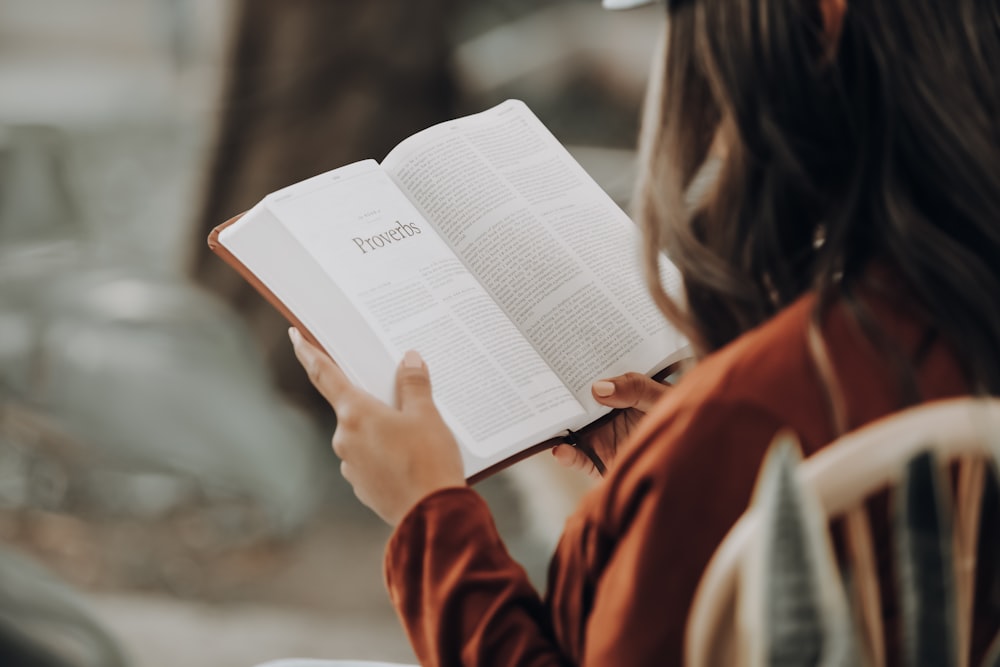
‘I Don’t Read’

girl reading book photo – Free Image on Unsplash

*Sigh* “I don’t read” is not music to a writer’s ears, but I hear it a lot.

Spring is here, it’s getting warmer, and it’s just about time I started writing the next book in my Bell Mountain series. But more and more people don’t read.

I don’t understand this. If books were taken away from me, my mind would starve. Enlightenment. Joy. Excitement. Even escape, at least for a little while. Books provide these things. I couldn’t do without them.

And yet… “I don’t read.” Or else, “I only read things that have to do with my work.” Or even, “I just don’t have the time to read.” As if it were some onerous chore.

I once had a job teaching “developmental reading”–or, more simply, how to read better. It’s not hard to learn. All it takes is practice. But these days I wonder how many students, if any, would sign up for my course.

I’ll keep writing because it’s what I do, it’s who I am. But I wish I knew a way to make reading itself more popular. It’s how the past speaks to us–and the future. It’s how wisdom and experience get passed on from one generation to the next. It’s the only way we have to visit places that don’t actually exist, to learn things that are nevertheless real, and true, despite being cloaked in the imagination.

Give it a chance.

The Art of Reading

The Original Art of Narnia (article and pictures) Pauline Baynes  (illustrator) | Las cronicas de narnia, Ilustraciones de cuentos, Narnia

“I only read non-fiction.”

“I only read comics.”

“I don’t read at all.”

The story-teller’s art is as old as humanity itself; and since the invention of the printing press, the story-teller’s audience has grown by leaps and bounds. Until now.

If you love a movie or a TV show, be it known that somebody had to write it before anyone could film it. And someone had to read it. But fewer and people are reading. Fewer and fewer are getting the stories.

Reading is one of those things you get better at, the more you do it. I can tell you that as a person trained to teach developmental reading. Even without someone to coach you, if you keep at it, reading will come easier and easier to you. And for a good reader, with the right kind of book, it’s like having a movie playing in your mind.

How much the poorer I would be, without reading! Never to have stepped through the wardrobe into Narnia, never to have watched Lord Peter Wimsey solve a mystery, never to have roamed the dead sea bottoms of Barsoom, nor visited The Shire, nor explored the ocean’s depths with Captain Nemo–oh, but I could go on all day!

Just to show you I’m not trying to trick you with a stealth commercial, let me say it out in the open: yeah, you ought to read my Bell Mountain books.

Now, what good does it do to fill our heads with stories that are not true? Always bearing in mind that the parables of Our Lord Jesus Christ were not about real people, real events, and so, strictly speaking, “untrue.”

For one thing, these fictional stories do contain abundant truth. They can serve as parables. They can teach moral truths.

For another, stories, like sleep, can knit the raveled sleeve of care (borrowing a line from Shakespeare). When your life begins to look like the lyrics of the Car 54, Where Are You? theme song, you can escape into your favorite books–or into new stories altogether, to see what you might discover.

The more you read, the more you’ll retain; and the more of your reading you retain, the better you’ll be at expressing your own thoughts. I realize that applies to all reading, not just reading fiction. But it certainly doesn’t not apply to reading fiction.

Reading is good for you! Period. Civilization would never have gotten anywhere without it.


When I Taught Engineering Students

Engineers Students Images, Stock Photos & Vectors | Shutterstock

Many years ago, I had a job teaching developmental reading to college students–not quite the same as “speed reading,” because it also worked to increase comprehension. It was a six-week course, and then I’d move on to another college.

My first gig was at Renssalaer Polytechnic Institute in Troy, New York–and what a view my classroom window had of the Hudson River valley!

Before I could start the class, I had a cordial meeting with the dean. Toward the end, he said something I didn’t expect:

“These are good kids, and very, very smart. But they’re also such stiffs! All science, all the time. Please, see if you can do anything to loosen them up a little.” (I’m glad to be able to report I did. I made my teaching a tiny bit eccentric.)

I remember that conversation because I understand, now, what the dean was getting at. He was afraid his students would grow up to be tunnel-visioned. Unable to relate to life outside their own narrow field of specialization.

There comes a point in real life, and in public life, where decision-makers have to go beyond whatever advice they’re getting from their expert advisors. Because there’s so much that the experts don’t know. Like, how most people live. Designing and building bridges that don’t fall down is important; but understanding and relating to the people who have to use the bridge, that’s important, too. We are not machines, and we have vital needs that mere science cannot meet.

Something to keep in mind, these days…