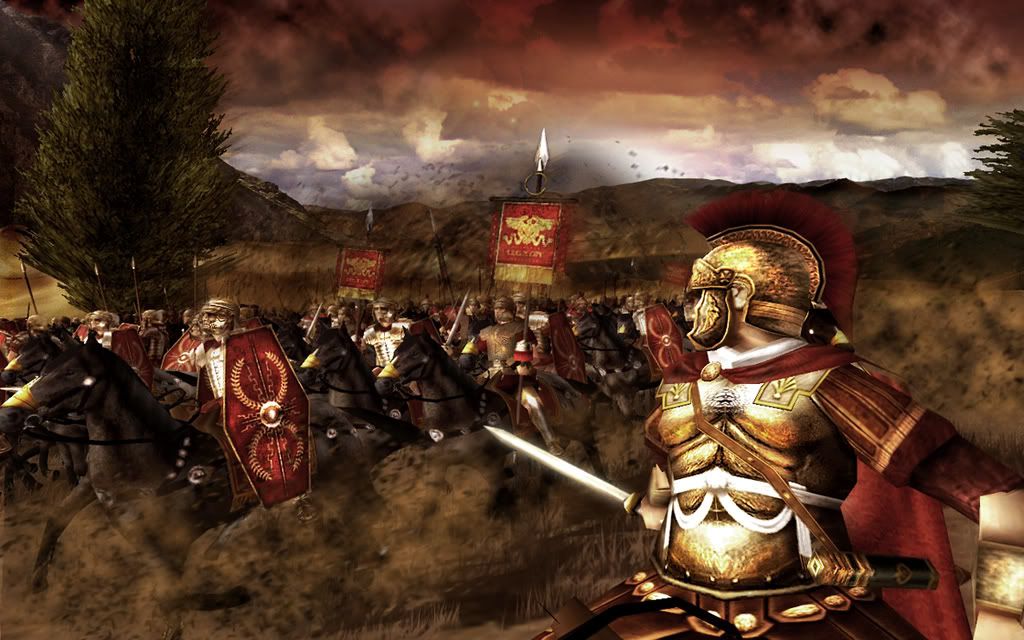
‘The Sword in the Stone: True Story’ (2017)

See the source image

I’ve always wondered how much of King Arthur’s story is historically true. I’ve been studying it since I was a boy, and my conclusion is: probably most of it.

Like, for instance, that bit about the sword in the stone.

The Sword in the Stone: True Story

Alas, I had no idea where to publish my research, and who was going to publish Arthurian research by some guy in New Jersey whose only claim to fame was some short stories in Mike Shayne’s Mystery Magazine? So of course someone beat me to it.

But that only shows that the theory I came up with was both sensible and even obvious–if you knew where to look.

Was This Man King Arthur?

See the source image

In any lifelong search for the reality of King Arthur, one is bound to stumble over someone called “Riothamus,” or “Rigotamus.” In the ancient British language it means “great king,” so it might not have been his name. We might not know his name.

Riothamus is a historical figure, in the sense that historians are confident that he really existed, they know certain particulars of his career, he was mentioned by other historical figures, and he was most active around the year 470–which would put him in the generation preceding Arthur’s (https://en.wikipedia.org/wiki/Riothamus).  We think, we are pretty sure, that he and his army invaded the European mainland to help the Romans against the Goths: and he then either settled in what is now Brittany, or returned to Britain and was killed by traitors there, or else was ambushed by overwhelming numbers of Goths and killed on that battlefield.

He might have been Aurelianus Ambrosius, who preceded Uther Pendragon, Arthur’s father, as the war-leader of the Britons. Ambrosius had much success against the invading Saxon tribes–until he was murdered.

This period of European history, when Rome was falling and tribes, not yet nations, were on the move, is a chaotic jumble and very hard to reconstruct. Arthur could have been Riothamus, if you adjust the dates accordingly. But then where do you put Uther, if you put him anywhere at all?

We live in hope that someday a few more ancient parchments will turn up in unlikely places, and provide some of the information that we lack.

All we can say for sure is that someone in Britain checked the invaders thoroughly enough so that a new nation, England, a Christian nation, could be born strong enough to survive in turbulent times. And that accomplishment has never been linked to any name but Arthur’s.


The Greatest Mystery Novel Ever (Maybe)

I’ve been reading The Daughter of Time by Josephine Tey (1951), and wishing it would go on for several volumes. This truly is one of the greatest mysteries ever written: I guarantee it.

Here, a police detective confined by injuries to a hospital bed, bored beyond endurance, finds escape in trying to solve a mystery from the year 1483: who killed the two little princes in the Tower of London? Was it Richard III, their uncle? Was he the bloodthirsty fiend Shakespeare painted him out to be?

Applying modern police methods to the case, and his own wide experience as a detective, Allan Grant finds his whole grasp of history suddenly unraveling. What starts him off is this picture of King Richard III–the last of the Plantagenets, and the last English king to die in battle.

Take a good look at that face. This portrait was painted from life. Grant cannot believe it is the face of a monster. It’s a face that has seen much trouble, with more looming up ahead, and has known suffering.

I’d like you to compare it with the face of Henry VII, first king of the Tudor dynasty, the man who killed Richard and took his throne.

Seriously–would you buy a used car from this man? He looks like a Democrat. He looks like he’d steal the teeth out of your mouth.

True, God warns us against judging by outward appearances. But that doesn’t mean we must automatically discard first impressions. Sometimes the inner man shapes the outward man.

Meanwhile, I’ll be sorry when I’ve finished The Daughter of Time. I’ve read a great many mysteries, but never encountered another story like this one.