My Enhanced Bio REPRINT

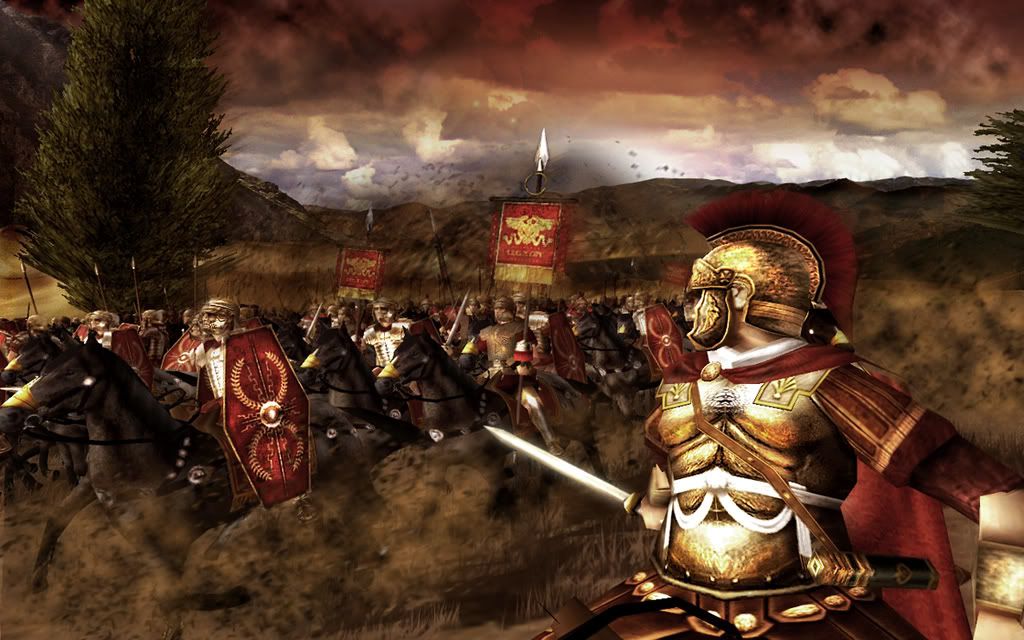
Here are a couple of my friends at Arthur’s court. They let you take pictures now.

From September 4, 2015

I read somewhere that an author can sell more books if he’s had an interesting life. I have decided that makes sense. Herewith is my enhanced biography, full of stuff you never knew about me.

I was born at an undisclosed location, and it was not until recently that I learned my true origins, which I am not at liberty to disclose. To know that I walked the earth would be a mortal disappointment to a certain powerful government.

I was a Navy Seal when they were still known as Walruses. You could look it up. In 1968 we kidnapped Mao Tse-tung, but the White House made us give him back. This incident made me cynical, so I quit government service and went on to visit countries that are not supposed to exist, but do.

For two years I advised the Steward of Gondor, and if he’d taken my advice, they would’ve all saved themselves a lot of trouble.  I have been a vacuum cleaner salesman in Narnia, not one of my more lucrative enterprises, and an estate manager for Lord Greystoke, aka Tarzan of the Apes, in the country just north of Opar–places you won’t find on any map.

I have learned the name of him who comes when you whistle for him, O my lad, and I have visited most of the royal courts mentioned in The Mabinogion. At the court of Arthur, Kay threatened to expose me as a mountebank. Unwilling to change history by damaging Sir Kay, I wandered until I drifted into the country of Obann. There I heard the Bell of King Ozias sound from the summit of Bell Mountain. I return to Obann as often as I can.

I haven’t mentioned any of this stuff in interviews. John Carter says he’ll feed me to the Green Martians if I do.
‘Meeting King Arthur’ (2014)

Arthur Rex : Berger, Thomas, 1924-2014 : Free Download ...

One of oh! so many… Now an oldie

Arthur–who may have been a warlord, not a king–died more than 15 hundred years ago. But his influence on our Western culture is still alive and might never die.

Meeting King Arthur

Of course, given today’s Wokeness, massive ignorance of everything that happened more than a week or two ago, and the fonebone factories that pass for our institutions of learning (LOL), it may be we’ll finally kill King Arthur off. The Picts, the Normans, the Muslims couldn’t do it. But never underestimate the power of ignorance.

‘The Sword in the Stone: True Story’ (2017)

See the source image

I like to post this essay now and then because we need a hero like King Arthur, blessed by God and able to win impossible victories to deliver us from our pagan enemies.

The Sword in the Stone: True Story

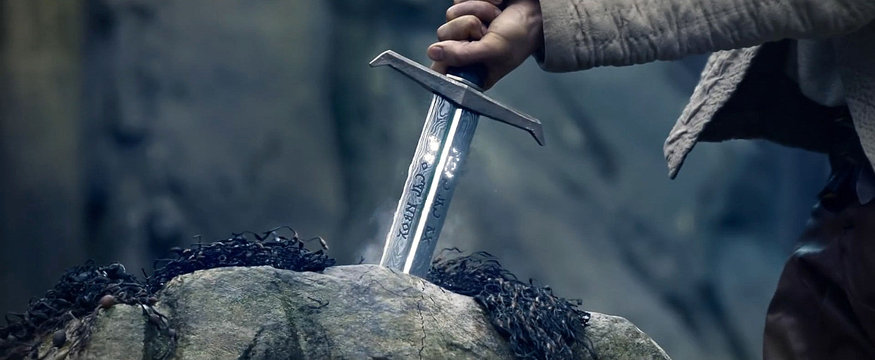
It’s been some years since I came to this conclusion, that the sword in the stone was a true story. It’s become very vivid to me now. Yes, it could have happened that way. In my mind’s eye, I can very clearly see the stunned expressions on the faces of the Sarmatian cavalrymen, veterans and youngsters alike, when they see this nobody, this young man out of nowhere, pull out the sword that they’ve been worshiping, flourish it over his head for everyone to see, and call upon them to rise up against the invaders of their country.

No one does a thing like that without God’s guidance.

see him! I see him on a great horse galloping, leading a desperate uphill charge that will break the pagans’ shield-wall and insure the future of Britain as a Christian land.

It’d make quite a novel.

‘In Search of Merlin’ (2017)

See the source image

It’s the last day of the year, New Year’s Eve–and Merlin has been on my mind. Maybe because so many pictures make him look like Father Time. A lot of people think of him as some kind of Druid sorceror, which almost certainly was not the case. But whatever else he was, Merlin presents us with a historical mystery. But then the whole 5th-6th centuries are rich in mystery.

In Search of Merlin

I study Merlin in the works of scholar Norma Lorre Goodrich, who every now and then breaks into the most incredible assertions without the least effort made to back them up. Take her with a wheelbarrow full of salt.

Merlin’s lifetime saw Christianity in Britain pushed nearly to extinction, only to come back and conquer.

Think about that. It’s a good time for thinking about that.


‘The Sword in the Stone: True Story’ (2017)

See the source image

When all seemed hopeless, along came a young warrior to lead the British people to unlooked-for victories that ensured their survival. And his career started with him pulling a sword from a stone.

The Sword in the Stone: True Story

Some years ago, my own researches led me to believe that the story of Arthur and the Sword in the Stone was… well, true. Arthur was a real person and his dramatic event really happened.

There’s more to history than we can learn from the textbooks.

I’m Following My Editor’s Advice (and King Arthur’s Sword)

John Boorman's Excalibur Isn't Just Another King Arthur Movie ...

Conferring with Susan, my editor, this morning, her advice to me was to top off my sanity tank by letting go of the nooze and working on my book all day. I’ve been doing that, and I feel saner already.

My current villain, Ysbott the Snake, fleeing a well-earned execution, has found a young girl named Qeqa living all alone in a strange, uninhabited sector of Lintum Forest. How has she managed to survive? She claims she’s been protected by “gnomes” who are only visible when they choose to be. It’s got to be a lie–but how else could she be living there? She’s strong and healthy, well-fed… and she just might turn out to be a more dangerous character than Ysbott himself.

Meanwhile, special to Joshua–

King Arthur’s Sword

You can’t spend much time with the Lady of the Lake without encountering a pre-Christian tradition among the Celtic peoples that certain lakes, ponds, and bogs were sacred places endowed with spiritual energy. Celtic chieftains threw valuable items into those pools as sacrifices. Kings sometimes sacrificed their finest swords.

Might Arthur’s sword, Excalibur, have been recovered from such a place? That would certainly explain why people believed the sword to have special qualities. I think that might resonate with anyone familiar with Japan’s sword tradition.

Well, the landlord’s done mowing the lawn, so I’ll go back outside for another session with my book.

‘The Sword in the Stone: True Story’ (2017)

See the source image

I’ve always wondered how much of King Arthur’s story is historically true. I’ve been studying it since I was a boy, and my conclusion is: probably most of it.

Like, for instance, that bit about the sword in the stone.

The Sword in the Stone: True Story

Alas, I had no idea where to publish my research, and who was going to publish Arthurian research by some guy in New Jersey whose only claim to fame was some short stories in Mike Shayne’s Mystery Magazine? So of course someone beat me to it.

But that only shows that the theory I came up with was both sensible and even obvious–if you knew where to look.

‘Review of Tolkien’s The Fall of Arthur’ (2013)

See the source image

King Arthur–whether he was ever really a king or not–eludes historical precision. But for some  fifteen hundred years he was, after the Bible itself, the story, the earthly representative, of Christendom. That he has been almost forgotten, just in the past 50 years, shouts from the housetops the poverty of our culture.

Review of Tolkien’s The Fall of Arthur

J.R.R. Tolkien’s poem, published posthumously by his son, is about Arthur’s fall, and the ruin of his kingdom.

My book review is about the great things that Arthur accomplished, and how his life changed the world for the better.

“Well done, thou good and faithful servant…”

King Arthur’s Sword

See the source image

The Gundestrup Cauldron

Some new archaeological discoveries in France have shed more light on the legend of King Arthur.

Sites dated to around 300 B.C., when France was still Gaul, before the Romans came, include sacred ponds or bogs into which tribal rulers threw expensive items as sacrifices. Items like the Gundestrup Cauldron (above), from Denmark, represented no small portion of the ruler’s wealth.

They also threw in weapons, mostly swords or spearheads. The Icelandic sagas tell us of cheap swords available to anybody, that quickly got bent out of shape if you actually had to use them. But the swords cast into the bogs were kings’ swords, the best that money could buy: famous swords with names and pedigrees.

Young Arthur drew his first sword from a stone, which no one else could do. I believe that what he did was to invade a site worshiped by the crack Sarmatian cavalry left in Britain by the Romans. Originally from central Asia, the Sarmatians worshiped their pagan gods by heaping up a mound of wood or stone or earth, and planting a sword in the middle of it. I believe that what Arthur did was to seize that sword. Instead of killing him on the spot, the amazed Sarmatians became his followers. His knights.

But what about Arthur’s more famous sword, Excalibur? Where did he get Excalibur?

According to Thomas Malory, and for want of any contradictory account, Arthur went with Merlin to a “lake”, and there a hand and arm came up from the water, holding Excalibur: and it was given to Arthur for as long as he lived, although it had to be returned to the lake when he died.

Hmm… Could this have been one of those sacred lakes, a pagan holy place, where ancient British chiefs and kings sacrificed their most costly possessions?

If Arthur had such a sword, he would have aggressively demonstrated the ascendance of the Christian faith by appropriating well-known pagan relics to the service of Jesus Christ. By his time Christianity had made deep inroads into British paganism: in doing as he did, Arthur proclaimed the outcome of that religious struggle–victory for Christianity.

If Excalibur had been  a sacred sword… the whole story begins to make more sense.


Was This Man King Arthur?

See the source image

In any lifelong search for the reality of King Arthur, one is bound to stumble over someone called “Riothamus,” or “Rigotamus.” In the ancient British language it means “great king,” so it might not have been his name. We might not know his name.

Riothamus is a historical figure, in the sense that historians are confident that he really existed, they know certain particulars of his career, he was mentioned by other historical figures, and he was most active around the year 470–which would put him in the generation preceding Arthur’s (https://en.wikipedia.org/wiki/Riothamus).  We think, we are pretty sure, that he and his army invaded the European mainland to help the Romans against the Goths: and he then either settled in what is now Brittany, or returned to Britain and was killed by traitors there, or else was ambushed by overwhelming numbers of Goths and killed on that battlefield.

He might have been Aurelianus Ambrosius, who preceded Uther Pendragon, Arthur’s father, as the war-leader of the Britons. Ambrosius had much success against the invading Saxon tribes–until he was murdered.

This period of European history, when Rome was falling and tribes, not yet nations, were on the move, is a chaotic jumble and very hard to reconstruct. Arthur could have been Riothamus, if you adjust the dates accordingly. But then where do you put Uther, if you put him anywhere at all?

We live in hope that someday a few more ancient parchments will turn up in unlikely places, and provide some of the information that we lack.

All we can say for sure is that someone in Britain checked the invaders thoroughly enough so that a new nation, England, a Christian nation, could be born strong enough to survive in turbulent times. And that accomplishment has never been linked to any name but Arthur’s.