Jesus’ Parables: Study Them

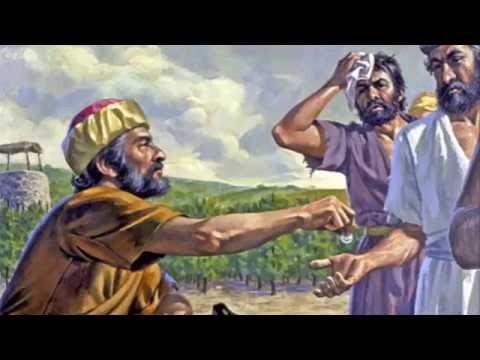
Image result for images of parable of the laborers in the vineyard

I reviewed John MacArthur’s book on the Parables of Jesus for the Chalcedon magazine in 2016. Reading that book was hours well spent.

https://chalcedon.edu/magazine/parables-the-mystery-of-gods-kingdom-revealed-through-the-stories-jesus-told-by-john-macarthur

This is an important book, and written in such a way that any reasonably intelligent adult or teen can understand it. It’s full of unexpected insights, and information about the world in which Jesus Christ lived at the time–information that, once we have it, clarifies much that might have been confusing us.

For instance, I didn’t know that the “penny” mentioned in the King James Bible, far from being the lowest possible denomination of money, was actually a more than respectable piece of change–a silver coin, the Roman denarius. That information changed my whole understanding of Jesus’ parable of the Laborers in the Vineyard.

MacArthur’s book is a great tool for Bible study.

Pagans and Christians

I read a very wise thing in John MacArthur’s Parables. Consider it well:

“The underlying error… the belief that people can gain God’s favor by being good enough–is the central lie that dominates all false religion.”

In pagan religions, worshipers are always trying to buy the gods’ favor, or, as it were, hire the gods as their employees, by promising to do this or that good work, or sacrificing this or that prize animal. And where does it get them?

In Homer’s Iliad, Zeus, the king of the gods, is upset by the sight of Hector fleeing from Achilles. Zeus exclaims, “Confound it, I love that man whom I see hunted round those walls! I am grieved for Hector, who has sacrificed many an ox on the heights of Ida or the citadel of Troy. And now there is Prince Achilles, chasing him round the city of Priam. What do you think, gods? Just consider, shall we save him from death or shall we let Achilles beat him?” (W.H.D. Rouse translation)

And of course, in spite of Hector’s piety, in spite of all the sacrifices he gave the gods throughout his life, it turned out Zeus couldn’t save him, after all.

In contrast to every  religion ever invented by man, Christianity teaches that we cannot hire God, we cannot buy His favor, there is no magic word or special kind of prayer that will compel Him to do our bidding.

Instead, His favor, His grace, our salvation, eternal life, forgiveness of sins–these are all free gifts, given by a sovereign God and paid for, paid for on the cross, by Jesus Christ the Son of God. God saves us; but when we reach for our wallets, we discover the bill has already been paid. By Jesus Christ.

At the root of it, Christianity is very simple. How simple? In Acts 16:30, during a crisis in which he was within an inch of taking his own life, the jailer in Philippi asks of Paul and Silas, temporarily his prisoners, “Sirs, what must I do to be saved?”

And they said, Believe on the Lord Jesus Christ, and thou shalt be saved, and thy house. (v.31)

And that’s the whole theology.

You couldn’t possibly do enough good works, sacrifice enough bulls or rams, donate enough money to the church, to earn, to deserve, eternal life. But God can give it to you. It’s as simple as that.
Two Fine Books About the Parables

I sort of stumbled into this assignment, and wound up reading two books for review: Parables by John Macarthur (2015) and Notes on the Parables of Our Lord (1861) by Richard Chenevix Trench.

I’m not done with them yet, but I can hardly wait to review them. You don’t have to be a theologian to enjoy these books–which is good, because I’m not. What you have, in both of them, is good, solid common sense guided by God’s word and the Holy Spirit.

This morning I read what they had to say about the parable of the laborers in the vineyard (Matthew 20:1-15). It’s the one about the rich landowner who hires men to work in his vineyard. He keeps going back to the employment center, throughout the day, hiring more workers, until, “at the eleventh hour,” with only one hour of daylight left, he hires the last of them.

Then he does something unexpected: he pays all the laborers exactly the same amount, the ones who worked for one hour getting the same as those who worked for twelve.

Hard to understand? Well, yeah–until you read about it in either of these books, each author explaining it so clearly that I couldn’t help saying to myself, “Now why didn’t I think of that!”

Jesus Christ Our Lord wished us to understand his parables, but we also have to put a little effort into it. He wants us to think.

If you get a chance to read either of these books, go for it. You’ll be glad you did.

A Puzzling Parable: The Crooked Steward

In Luke 16 Our Lord tells an audience of Pharisees a rather difficult parable. I’ve read it many times and am still trying to understand it.

In this parable, a rich man finds out that his steward has been cheating him, so he tells the steward to prepare an accounting and then get lost. Faced with the loss of his position, the steward solves his problem by cheating his master yet again. He tells the master’s debtors to finagle their accounts so that they save a lot of money and the master gets rooked again. That makes these persons beholding to the steward so that, when he gets kicked out of his master’s house, they will take him in.

And yet, when the master finds out about this last bit of skullduggery, he commends the crooked steward for having done wisely…

Okay, I’m lost.

So I’m going to study this parable this morning. I now have books about the parables, by Chenevix Trench (19th century) and John MacArthur (modern), and there’s Matthew Henry (Puritan) on the Internet.

Some of Jesus’ parables were simple. Others were very hard, and He had to explain them to His disciples afterward.

I agree with MacArthur that Jesus often wished His hearers to inquire further into the meaning of a parable–which is just what I’m gonna do today.

I’ll be back later.