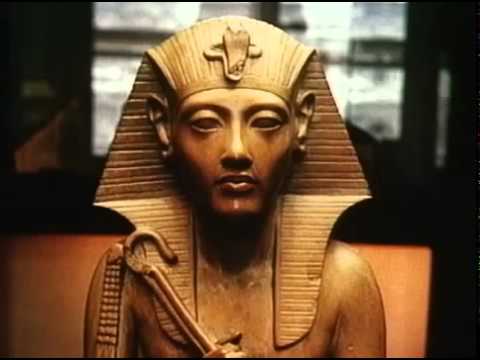
‘Who Was Joseph’s Pharaoh? (2019)

See the source image

Joseph’s Pharaoh? We still don’t know.

We keep asking the question, but we still don’t have an answer: Who was Joseph’s Pharaoh?

Who Was Joseph’s Pharaoh?

Bear in mind that the art of history, as we know it, was not known in ancient Egypt. They specialized in rubbing out names and incidents that those in power chose to forget. We still do that, don’t we?

We would like to know the name of the pharaoh who appointed Joseph his prime minister. God has not decided that we need to know.

(The computer has been battling me tooth and claw this morning. You’re lucky to be reading this.)

‘Who Was Joseph’s Pharaoh?’ (2019)

See the source image

Who was the Pharaoh who took Joseph out of jail and made him the prime minister? We’d love to know that, but the Bible doesn’t tell us.

Who Was Joseph’s Pharaoh?

Each member of ancient Egypt’s royalty had a number of names for different occasions, many of which incorporated the names of their false gods. “He in Whom Senmut Is Satisfied”… is coming for dinner. It gets confusing after a while! Jewish scribes may not have cared to write out all those pagan names. And maybe they thought it didn’t matter.

“Scholars” who don’t believe a word of the Bible get the Wikipedia welcome mat. But that doesn’t mean we have to listen to them. “We don’t know the name of Joseph’s pharaoh, therefor none of those things happened!” They can take that and stuff it.

‘Who Was Joseph’s Pharaoh?’ (2019)

See the source image

Who–me?

Fat-head Bible Scholars Inc. would have you believe that nothing in the Bible is true, none of those things ever really happened. More fool them.

The story of Joseph conflicts with no known facts, shares many similar details with generally accepted history–and there is no reason it cannot be true.

Who Was Joseph’s Pharaoh?

Ah, there’s the rub! Genesis doesn’t tell us the name of the Pharaoh who made Joseph his prime minister.

Well, so what? Egyptian bigwigs, especially royals, had lots of names, used interchangeably depending on the occasion. Ramesses for this, User-Maat-Re for that, Steverino for his niece’s wedding, and so on. The Bible does give us a few Pharaoh’s names; but the ones we’d really like to know–Joseph’s and Moses’ Pharaohs–are not given.

For the Bible’s purposes, the names of those two rulers just weren’t that important.

Who Was Joseph’s Pharaoh?

See the source image

Apparently they don’t let you be a Bible Scholar unless you show them that you don’t believe a word of it.

Among the historical enigmas that the Bible serves up to us is the identity of Joseph’s Pharaoh, the one who made Joseph a ruler in Egypt. We don’t know why the Bible doesn’t give us this pharaoh’s name–although bear in mind that every pharaoh of ancient Egypt was known by several names: Ramses II, for instance, was also User-Maat-Re and several other names. Egyptian royal names were also, usually, religious statements: “Son of Ra,” “Son of Thoth,” “He with Whom the Goddess Mut Is Satisfied,” etc. Jewish scribes might not have been comfortable, writing down such names. Given all the difficulties that they faced, can you blame the scribes for just writing “Pharaoh”?

It would be interesting (to say the least) to know which particular Pharaoh made Joseph his prime minister. So every now and then I look it up, to see if any new discoveries have been made.

If they have, I haven’t been able to discover what they are. What I do discover–in Wikipedia, for instance–is an unquestioned assumption by “scholars” that the story of Joseph isn’t true. Indeed, they’re calling it a “novella,” a conscious work of fiction, a la Stephen King, cooked up by Jewish scribes living a thousand years after the events in the story.

Is it possible there was once a severe famine in Egypt, the record of which has not survived the passage of three or four millenia?

Is it possible that Pharoah, whoever he was, appointed a non-Egyptian, whom he trusted, to be the chief executive officer of his realm, with a special duty to prepare for the famine and try to ameliorate its effects? And is it possible that this high official, upon his appointment, was given an Egyptian name and title–so that no one in Egypt would have called him “Joseph” anymore? In fact, a number of pharaohs did make such appointments.

Of course those things are possible. There is nothing in the story of Joseph that makes it impossible. But what will ever satisfy Bible Scholars that any story in the Bible is true? A signed cuneiform affidavit by Hatzy Tatzy, high priest-king of Uruk, confirming his dealings with one “Joseph the Hebrew, son of Israel, prime minister of Egypt under Pharaoh Rutin Tutin III”? Would that do it for them?

Anyway, nobody was writing any “novellas” in 600 B.C. They hadn’t yet learned how.