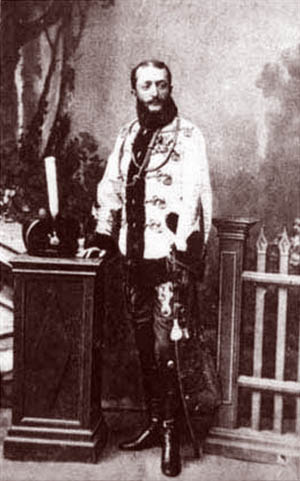
Nineteenth-century Russian princes could do things that only big-name Democrats and politically-approved scientists can do today. That is, cheat like mad and get away with it. Even in chess.
Enter Prince Dadian of Mingrelia, who published 38 games he played against some of the top players in the world, winning every single one of them. Modern chess historians smell a rat.
Dadian is believed to have composed chess games that were never actually played, or to have had them composed by others, and then published them as brilliant victories. Chess players in the 19th century, as a class, were usually short of money (“The fame I have. It’s money that I need!” said Wilhelm Steinitz). The prince helped them out, it is strongly suspected, by paying them to lose games to him–even going so far as to write their moves for them in advance. He would also pull strings–again, not proved, but very strongly suspected–to have uncooperative chess stars kicked out of resorts like Monte Carlo.
He would fit right in today. He’d probably be hawking Climate Change instead of chess; there’s more money in it. Or else he’d be president of a teachers’ union.
We didn’t invent cheating in our era. We just made it more lucrative.
