Scholar on the Plagues of Egypt: ‘Pure Fiction’

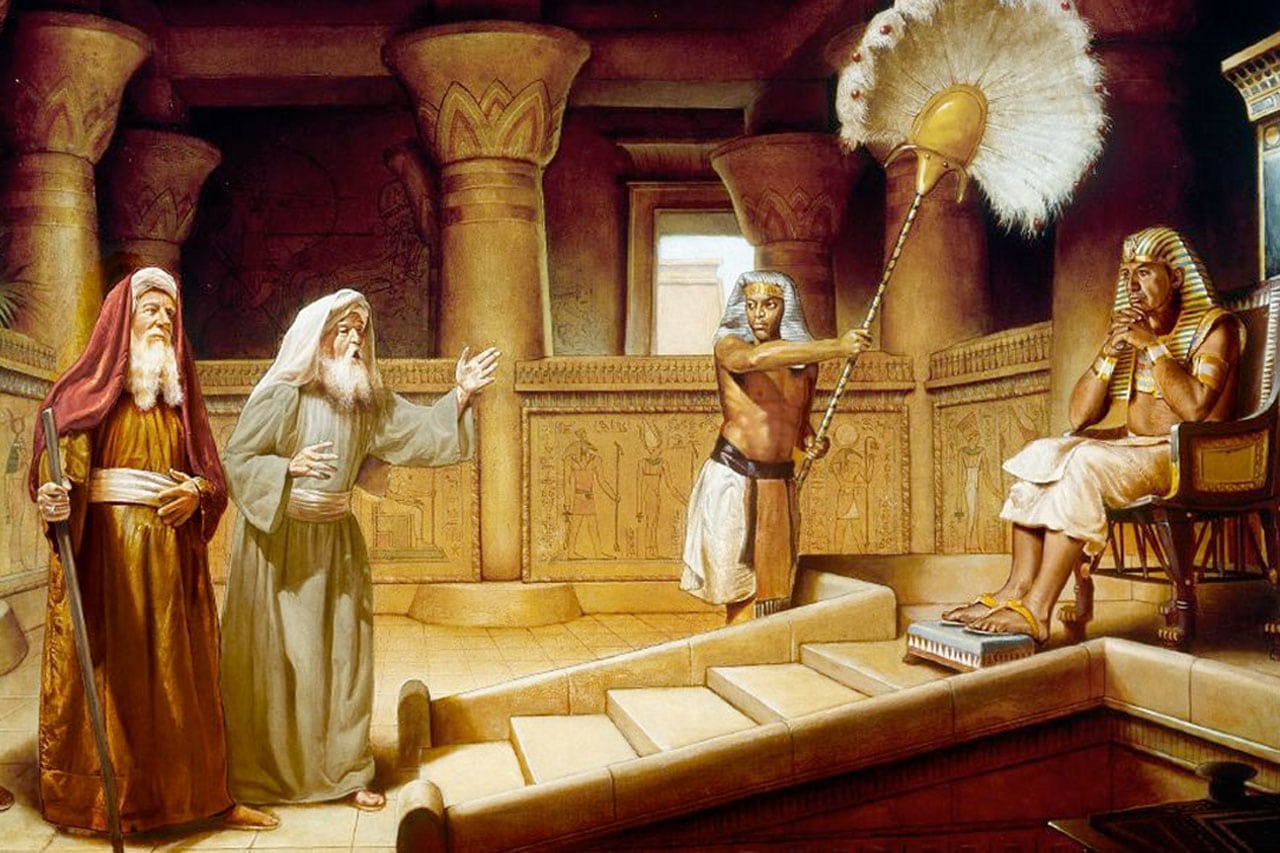
God Sends Moses to Pharaoh | Renner Ministries

There are a lot of things we know from history. But the things we don’t know vastly outnumber them.

Yesterday evening I was in bed, taking a nap after supper, while Patty watched a documentary on the catastrophic volcanic eruption at Thera, sometime between 1642-1540 B.C. Right there we have a 102-year finagle factor.

Some scholars were trying to tie the Thera disaster to the plagues of Egypt related in the Bible. They thought the effects of the eruption could account for most of them. But of course, one of the scholars added, the whole Biblical account of Moses and the Exodus was…ahem!… “pure fiction.” He said it like he knew it for a fact.

It troubled me to hear that. Here we’ve got these sages who are held up to us as persons who know what they’re talking about. It’s almost a given that “Bible scholars” don’t believe the Bible.

In the 18th century, Bible scholars didn’t believe an Assyrian Empire ever existed. Dead wrong. In the 19th century, they didn’t believe there’d ever been a Hittite Empire. Wrong again.

Given the scope of the disaster, the Thera eruption has very little documentation. The physical evidence is very strong, but it seems the people who experienced this horrific event were too busy trying to stay alive–or too busy dying–to spend much quality time writing about it.

We don’t know which Pharaoh ruled Egypt in Moses’ time. The Egyptians excelled at declining to document events that made them look weak or helpless. Maybe Thera had something to do with the plagues, and maybe it didn’t.

I take the Bible as truth, even if I don’t always understand it. But it seems we’re living in an age of unbelief: and I would say that accounts for all the sorrier aspects of this age. And as for the stuff our Wise Men do believe in–well, look at it. You don’t know whether to laugh or cry.

I believe the Bible. Period.

 

‘Conspiracy Baloney Aimed at Our Lord’ (2016)

See the source image

“Scholars,” eh?

I thought you might enjoy the discussion which followed this post, two years ago. If you want interesting conversation online, you’ve come to the right place.

Conspiracy Baloney Aimed at Our Lord

I happened to be leafing through the latest issue of Biblical Archaeology Review last night. With Herschel Shanks retired as editor-in-chief, the new regime has filled the magazine with ads for books to Reputable Bible Scholars Inc. alleging there was no such person as Jesus Christ–or at best, he was just a nice guy who ran afoul of the Romans.

They are evangelists for atheism. And paganism.

What do they get out of it? Search me.

They Keep Trying to Put Jesus Back in the Tomb

So there was this “early Christianity,” see, the original stuff that came without “such stumbling blocks as blood atonement and resurrection,” and it was only later that all that stoopid stuff got tacked onto it, Jesus was just a nice guy who taught nice things…

We have heard this before.

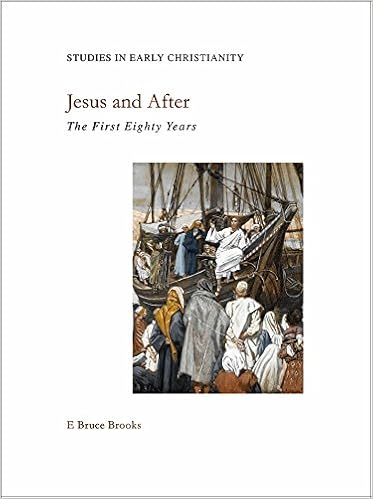
Jesus and After: The First 80 Years is another one of those books by another one of those Reputable Bible Scholars, just another face in the crowd on the false prophet express,  that seeks to make Christianity palatable to atheists and abortion-loving, transgender-touting Democrats. In the words of the Editorial Review on amazon.com, here we are offered “a Christianity for modern grownups who don’t have to believe that God created the laws of physics only to capriciously suspend them; who don’t need to depend on ancient superstitions about sacrificing goats or people to ‘save’ or protect themselves.”

“And if Christ be not raised,” wrote St. Paul, “your faith is in vain; ye are yet in your sins.” (1 Corinthians 15:17)

Oh, but that’s one of those things that was added later! It isn’t scientific, dude!

And waddaya need atonement for, when there’s no such thing as sin?

I’m surprised they want to keep anything pertaining to Christianity, there’s so much they want to throw out.

But we are talking about people who look in the mirror when they pray.

Is the Book of Daniel a Hoax?

Image result for images of daniel

My daily Bible readings have brought me around once more to the Book of Daniel. There is language in there that I find hard to understand. Like, for instance, the “seventy weeks” in Daniel 9.

I should’ve just gone to my Strong’s Concordance, where I would have learned that the Hebrew word here means “a seven” or “sevens,” and can be used to denote a set of seven, or even as a figure of speech. But no, I was lazy, I was already on the computer and didn’t feel like going to my bookcase, so I looked it up in Wikipedia instead.

Silly me. I had momentarily forgotten that Wikipedia habitually cites the supposed authority of “Bible scholars” who don’t believe the Bible is the Word of God. So the Wikipedia article was focused on proving that the Book of Daniel is a hoax.

Follow the logic. Accurate prophecy is impossible. Therefor, the prophecy found in Daniel can only have been written long after the events it pretends to foretell actually took place. I guess that would apply to all prophesies in the Bible, invalidating the whole book.

In his Jewish Antiquities, written in the First Century, in Book 11, Chapter 8, Paragraph 5, the Jewish-Roman historian Josephus relates that when Alexander the Great came to Jerusalem (where the city authorities, although good and loyal subjects of the Persian king, decided it would be futile to resist the conqueror), the priests “showed him” the Book of Daniel, in which his successful conquest of the Persian Empire was predicted.

Alexander visited Jerusalem around 332 B.C., about 200 years earlier than the date assigned to Daniel by Big Shot Bible Scholars Inc. So they say Josephus is hoaxing us, too. He wrote primarily for a Roman audience, with the expectation that important Jews would read it, too. It’s difficult to imagine what purpose such a lie would serve if told to either audience.

I think I prefer to stay with St. Paul, and “let God be true, but every man a liar” (Romans 3:4).