Sorry, but I have to take a break from writing about current events. There’s too much going on out there, all of it bad.

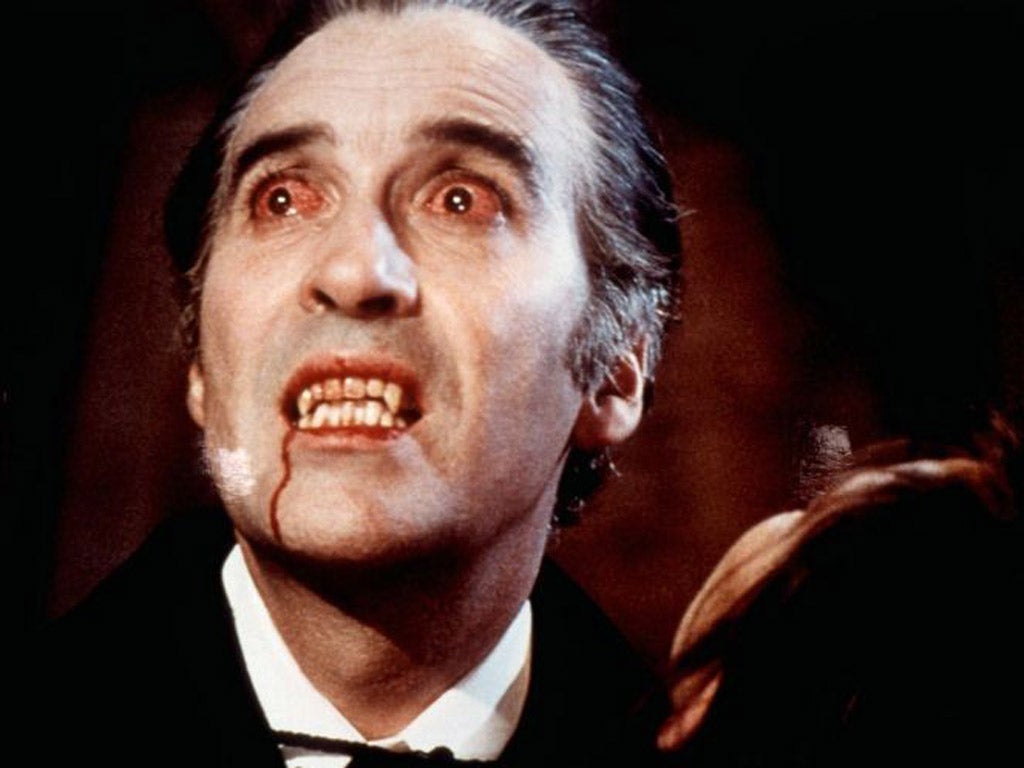
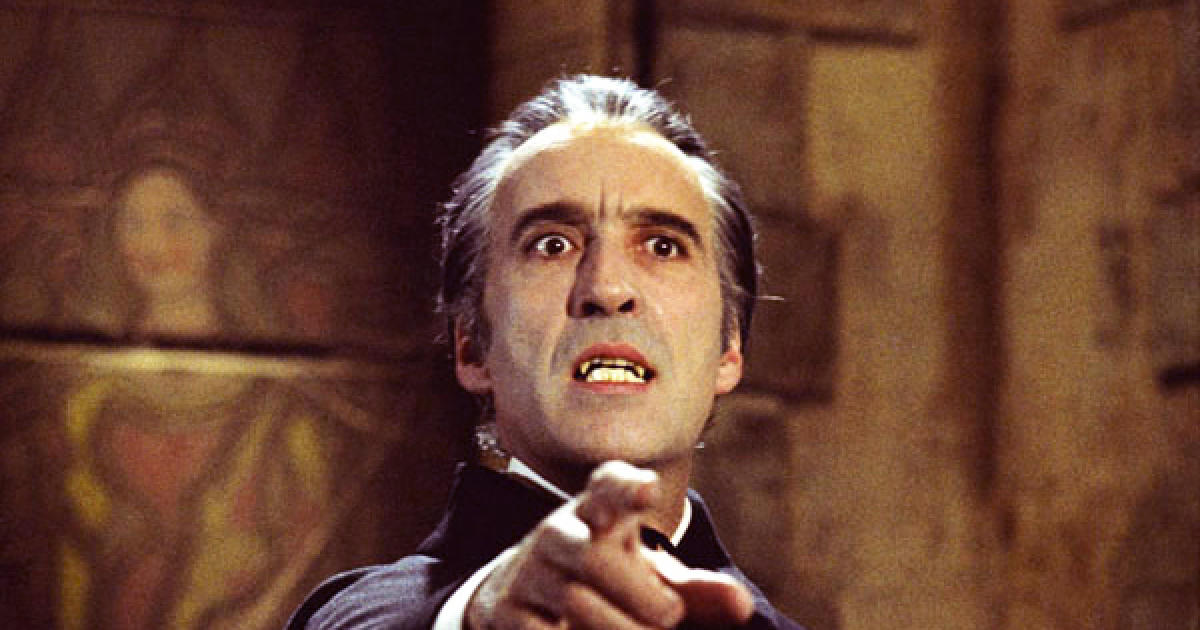
Christopher Lee as Dracula, via Hammer Films. Thanks for the memories.
The great Christopher Lee died recently; and as a salute to him, I decided to re-read Dracula, by Bram Stoker. The ground-breaking vampire novel, first published in 1897, became one of the pillars of our popular culture when it was adapted for the movies–most famously played by Bela Lugosi, and later, and very often, by Sir Christopher.
But how many of you have actually read the book?
So you open it up and take a look, and sneer, and think, “Sheesh! Does it get more 19th century than this? I mean, letters, diary entries–what’s wrong with chapters?”
It doesn’t matter. This is one of the best and scariest horror novels ever written, to this day. And while there have been a lot of very good film adaptations–check out the one starring Louis Jourdan as the Count: my wife watched it alone at night and got the heeby-jeebies, big-time–not one has quite done justice to the novel.
Stoker uses some mundane writing tricks that we all can learn from. He has a keen eye for the physical setting of any scene, and the skill to use it. By using letters and journal entries, he can shift from one point of view to another while always remaining in the first person. Notice that the chief villain, Count Dracula, and the chief hero, Professor Van Helsing, are the only characters who never speak to us directly. I am sure this technique is not as easy as it sounds.
The first few chapters, in which young lawyer Jonathan Harker is first a guest, then a prisoner, and finally an item on the menu in Castle Dracula; and the nature of his predicament only becomes clear to him gradually and horribly–well, if that’s not the best horror-writing ever in the English language, I don’t know what is. If that scene with Dracula’s “wives” doesn’t scare you, what will?
Dracula is full of unforgettable scenes: poor Lucy, Dracula’s first victim in England, now an un-dead vampire herself, prowling the London parks at night to prey on small children; Dracula recalling his ancestors’ glorious wars against the Turks; Harker, having only just recovered his health and his wits, and newly married, suddenly breaking down because he sees the Count right there on a London pavement…
You may wonder why I read stuff like this. Don’t we have enough real-life horrors to contend with?
More than enough, says I: hence Dracula. The Count is an imaginary horror. He is successfully dealt with: good defeats and then destroys evil. That never happens in the headlines. Far, far easier to dispose of Dracula than of the Democrats! Drive a stake through Dracula’s heart, and he’s history. But how do you get rid of the Clintons?
I first read Dracula when I was a young teen. Since then I have come back to it occasionally, with years intervening. And each time I come back, it gets better and better. I always enjoy it more.