Literary Crimes

I recently read a fantasy which made me wonder what the editors were thinking, and whether they were editing at all, or just tossing paper airplanes. I’m not going to give you the title of the book or the author’s name, because I don’t wish to hurt this person.

How could they have let pass so remarkable a phrase as “these dastardly henchmen of the wicked Lord Boombatz”? Were they reading the manuscript in their sleep? Or did someone threaten to injure them if they didn’t publish this book?

When you write fiction, don’t tell the reader what kind of person a particular character is. Let the character’s actions and words show the reader what his nature is. This is a law of the art.

I am unsure whether to call adjectivitis a crime or an affliction. It is certainly an affliction to the reader. Think of the book you are writing as a bowl of clam chowder, to be served to the reader, whom you are also asking to pay for the privilege of eating it. Do you really think the chowder would taste better with a couple of handfuls of black pepper, red pepper, salt, garlic powder, and Mrs. Dash?

Do not steal easily identifiable themes from long-established, very popular literary classics. The existence of this law never stops any ninny from filling his book with know-it-all Elves, roly-poly Hobbits, and other items shoplifted from the Tolkien store. Nor is it at all creative for you to write about  children tumbling into a fantasy world through some unexpected portal in a big old house. This is like stealing a BMW with vanity plates and joyriding all over town until the cops catch you, which won’t take long at all.

Do not see-saw back and forth between one style and another–especially in dialogue. When a character on Page 46 says, “I tell ‘ee, Marster Jeb, us’ll go a far wee tiddle,” he must not reappear on Page 47 and say, “Fie, my lord! Thou dreamest.” This is to afflict the reader.

If you’re interested in writing, and have tried over and over again to get some of your work published, and always get rejected, you’re probably wondering, intensely, “How come a book full of literary crimes gets published? I could write something better than that with half my brain cut out!”

Well, I’m afraid I can’t answer that question. Maybe the editors and publisher were threatened. Or bribed. Or seriously ill, and didn’t know what they were doing. Maybe they owed money or favors to the author’s in-laws, one of whom just happens to be a major mafioso.

So, sure, if you want to write a book that’s just one literary crime after another, go right ahead, no one’s stopping you. You might even get it published–and if not, you can always publish independently. Your book might even become wildly popular and make you tons of money, like Fifty Shades of Grey.

But it’ll still suck.

A final encouraging word: All of these literary trespasses are easily avoidable by just about anyone.

Fantasy Novels That Didn’t Quite Make It

Someone, I think it was Mickey Rooney, once said, “If I have seen farther than others, it’s because I’ve stood on the shoulders of giants.”

But sometimes you can do all right standing on the shoulders of midgets, too.

Here are a few old fantasy novels you’ve never read and never heard of,  but which have nevertheless inspired some very famous novels.

The Hamster, the Alchemist, and the Sock Drawer by G.M. Karz was almost certainly the inspiration for C.S. Lewis’ Chronicles of Narnia (starting with The Lion, the Witch, and the Wardrobe); but in Karz’ case, the various elements of the story never quite came together. There’s something unconvincing about a hamster that inspires awe, and a whole public school class of 12-year-olds accidentally entering another world while putting Limburger cheese in the headmaster’s sock drawer.

A Game of Throneberry, by Imhotep B. McGonegal, tries to re-interpret the 1962 New York Mets’ baseball season as Shakespeare’s plays about the Wars of the Roses. The Mets in 1962, their first season, lost their first twelve ballgames. Then along came Marve Throneberry and they got it together to win 40 games while only losing 120. But I dunno: presenting Marvelous Marve as a kind of modern-day Richard III, drowning poor Elio Chacon in a great big barrel of wine hidden behind the set of Kiner’s Korner–really, I can’t imagine what Mr. McGonegal thought he was doing. Inspiring today’s Game of Thrones franchise?

In The Slobbit, Prof, B.Y.O. Boose created a fantasy world centered around extremely slovenly little people called Slobbits. A Slobbit named Bulbo accompanies a group of leprechauns on their way to slay a dragon. It’s difficult because Bulbo is always losing things. Scholars believe this little-known tale prompted J.R.R. Tolkien to write The Hobbit. Could be, could be…

Last but not least, we have The Wizard of Pfudd by Priscilla Chumply, an obscure 19th century fantasy that introduced the whole idea of an entire nation being duped by a fraudulent wizard–although poor Miss Chumply undermined her own work by writing all the dialogue in garbled Classical Greek. Many modern masters of fantasy have been inspired by Pfudd, but none have ever admitted to it.

I Invent a New Kind of Fantasy

That disgusting video by Rihanna (see yesterday’s post, “Abomination Video”) must have really gotten to me. I can set it aside while I’m awake; but while I’m asleep, it unsettles my dreaming mind.

With this amazing result: Last night I dreamed up an entirely new sub-genre of fantasy. I’m gonna make a fortune!

You’ve heard of “Grimdark,” right? The big new thing in fantasy: Grim + Dark. Everybody in the story is bad, and the baddest of the  bad guys wins. Along the way there’s lots of violence, crime, cruelty, loveless sex, etc. (As every true interllectural knows, whatever is good, beautiful, positive, morally upright, and edifying is bogus, nothing but cheap “sentiment”; but whatever is evil, ugly, useless, immoral, and corrupting is “realistic.”)

Well, move over, Grimdark–’cause here comes Glumdark!

In Glumdark fantasy, which I invented in my sleep last night, all the characters are sad and the saddest of the sad guys wins–I mean, loses. In my dream was a Glumdark story in which all the characters had terminal diseases, and their space program was a bust because the zillion-dollar rocket went about 30 feet up and then crashed in my back yard. One of the characters checked into a motel and found his bed was full of bugs. Everybody cried a lot.

I realize this has been pioneered in later productions of The Hallmark Hall of Fame, bravely-dying-glamous-celebrity subgenre, but it needs to be brought into fantasy before it can really stretch its wings. Make way for the Invinclble Female Warrior who gets mauled to death by a squirrel, the All-Wise Wizard who makes a fool of himself on Jeopardy, and the star-crossed lovers who wind up fat, frowzy, and hating each other. And so on.

Like Grimdark, Glumdark makes fantersy much more realistic and interrlecturally respectable.

I mean, why be happy? Eh?

When is a Good Book not so Good?

I doubt there is another author living who has won the Nebula Award (best science fiction published in the US), the Hugo Award (best science fiction published anywhere), and the Newbery Medal “for the most distinguished contribution to American literature for children.”

In 2009 Neil Gaiman won the Newbery Medal for The Graveyard Book. I have just read it. I found it to be highly creative, expertly written, a fast read, and very interesting. It also won’t bring you one inch nearer to Christ’s throne, and I cannot recommend it to young readers, or to adults whose minds are easily unsettled.

In accepting the medal, Gaiman told his audience that he’d patterned his book on Rudyard Kipling’s The Jungle Books. That’s easy to see. One can also detect borrowings from Dracula, from H.P. Lovecraft, and from other sources. That doesn’t make it unoriginal. No one ever wrote a worthwhile book that wasn’t inspired by another book that the writer found well worth his while.

In a nutshell, here’s the story: A serial murderer tries to wipe out a family, but the baby boy escapes miraculously and is “adopted” by the ghostly inhabitants of a nearby cemetery–just as Kipling’s Mowgli was adopted by the wolves. A vampire becomes the child’s guardian, just as Bagheera the Panther guarded Mowgli. They name the baby “Nobody,” Bod for short, and he can never leave the graveyard because the murder is still out there somewhere, waiting for him.

This is a fun read, no doubt about it. But it’s also 100% pagan. I wound up asking myself, “How could someone born and raised in a country that’s been Christian for 1,500 years write something like this?”

I mean, dude, check out your theology! No mention of God, no hint of salvation. You die and you become a ghost and you stay in your graveyard for all eternity. Whether you’ve done good or evil, the outcome is the same.

To the pure all things are pure (Titus 1:15). If you are firmly established in your Christian faith, you can enjoy something like The Graveyard Book, get some nice cheap thrills out of it, and go on to something else. It won’t hurt you. But there’s no way I’d give it to a youngster still in the formative stages of his faith (but aren’t we all?), because it’s so easy to get deflected and bamboozled by a lot of wow-i-never-thought-of-that! that wouldn’t even raise an eyebrow of anybody over 40.

O Britain! Whose missionaries carried Christianity to the ends of the earth! Is this what you have come to–cheap thrills dressed up as literature? St. Alban and St. Patrick and St. Bede, St. Edmund, St. Oswald, and St. Kentigern–behold your children in a Godless age.

We here in America pray for Britain, Lord, our mother country: knowing that things which are impossible with men are possible with God.

One of the Best Fantasies Ever (But Handle with Care)

Everyone has heard of Peter Pan; but I wonder how many of you have read the book, Peter Pan, by James M. Barrie, published in 1904.

Please forget the Disney cartoons and stuff like that. Barrie first wrote Peter Pan as a play for children. When it was resoundingly successful–it’s still performed today–he wrote it up as a novel.

I promise you, you’ve never read a book like this. Barrie was highly educated, witty, clever, intelligent, and quite successful in his own time; but he was also a very weird dude. As an adult, his best friends were young children. He was briefly married, but the marriage didn’t work. He spent most of his time playing with other people’s children–inventing games for them, telling stories: all perfectly innocent. But also kind of strange.

Peter Pan reads like it was written by a four-year-old boy with a fully adult grasp of the language and culture–which may not be too inaccurate a description of Barrie himself. Its lesson, stated often and in so many words, is that children are “gay and innocent and heartless.” It’s that “heartless” bit, so masterfully executed here, that blows the reader away.

Peter Pan and his fairy sidekick, Tinker Bell, get up to some pretty naughty–one might even say wicked–behavior. As a perpetual child whose conscience has never begun to develop (a Victorian presupposition), Peter cares about no one but himself, is interested in no one but himself, and yet utterly charming. These are characteristics he shares with the traditional image of a psychopath.

As if he himself were Peter Pan, Barrie effortlessly (well, it seems effortless!) takes the story in any direction he wants it to go, whether it makes sense or not. Some of his throwaway lines will take your breath away: for instance, after lavishing praise and love on Mrs. Darling (Wendy’s mother) throughout the book, Barrie remarks, “Mrs. Darling was now dead and forgotten.” Whew!

Warning: This is an altogether pagan book. There is not a vestige of holy truth in it. The Victorians considered themselves a Christian people, but sometimes the mask slipped. Peter Pan is a witness against them. That the book is a work of rare artistic merit shows how wonderfully we can misuse the gifts God has given us.

Not to be a prig: Peter Pan is a fantastically entertaining book, a fantasy whose throttle is wide-open from cover to cover, and a literary classic. Reading it will not put the Christian on the sliding board to Hell.

In fact, the totality of Barrie’s vision here ought to prove deeply instructive.

Under the seduction of make-believe, and flying, and fairies and all the rest, lies only death. That’s what the vision all boils down to in the end, and Barrie was honest enough to show it.

Or maybe he was so truly Peter Pan that he just didn’t care.

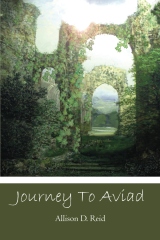
Book Review: ‘Journey to Aviad’ by Allison D. Reid

I’ve been looking high and low for fantasy fiction that’s suitable for Christians and their children–stories that edify, rather than wallow in the mire of a dying culture.

Well, how about that! I’ve found one.

Alison D. Reid’s Journey to Aviad first won me over with its near-total absence of fantasy cliches. No Invincible Female Warrior doing jumpin’, spinnin’ kicks. No know-it-all Elves. No little 11-year-old girls wiping up the floor with grown men.

Even better: no writing “ya” for “you,” and no insertion of annoying Americanisms like “you guys,” “okay,” and “yeah.”

You may counter that it’s a fantasy set in a medieval-type world, which is in itself a cliche. I grant the point. But given that one of the main purposes of any fantasy is to aid and abet the reader in a temporary escape from the world of here and now, it’s not surprising to see so much of it set in something like the Middle Ages.

But best of all, Allison Reid’s story honors God and seeks to serve Him. Here, His name is “Aviad”: but we can recognize Him as the God who reveals Himself to us in the Bible.

Indeed, Ms. Reid boldly goes so far as to identify the God of her imaginary world as a Holy Trinity. Who else has dared to tackle this concept? She discusses it coherently, too.

I’ll try to steer clear of spoilers, but I do want to mention a couple of highlights.

*The heart-cry of a brave young warrior, a servant of God, who is losing his faith: “The fingers of evil reach far, and deep. I can see their workings all too readily. The dark minions call out, and they are answered and aided. Every day they grow in number and strength. Those of us who can see through the darkness, those of us who are willing to stand against it–who answers when we call out in desperation? The most righteous people I have known… where are they now? What help has come to them?”

Which of us has not felt this very thing?

*An attack on a nearly defenseless little town by monstrous Trolls–very nicely done, and quite exciting.

*An interesting exploration of the concept of “the right kind of prayer.”

Because Journey to Aviad is so clearly the first book of a series, the ending of the story is not really an ending. It leaves you hanging. I wanted to keep on reading, but Ms. Reid has not yet finished writing the sequel.

The book has a few flaws, which I mention only in a spirit of constructive criticism. Actually, there’s nothing wrong with it that ordinary editing couldn’t fix. But Journey is self-published, which also means self-edited: and we are none of us the best editors of our own work.

So the pace could stand some picking-up, and characters ought not to waste time telling each other about things the reader already knows. (Don’t go into “Here’s what happened to me…” when the reader has already seen what happened.) And if the writer is trying to describe a complicated situation, there has to be a better way of doing it than allowing a princess to discourse about it to some common folk whom she’s only just met. Don’t turn any of your characters into talking heads.

But the flaws could all be fixed without major rewriting. And again, as a committed booster of plain English, I would not let my characters say “nay” when a simple “no” would do.

Journey to Aviad is available from amazon.com in both paperback and Kindle formats. I am glad I read it, and I look forward to the sequel.

Fictional Characters as Real People

We haven’t been talking much about fantasy-writing on this fantasy-writing blog. Oh, we discuss plenty of out-and-out fantasy–like the campus rape culture, Global Warming, microaggression, income equality achieved by the brute force of government: stuff that has no basis in reality whatsoever. Why, just today, one of the Red Pope’s henchmen blasted “Climate Change deniers.”

Sometimes I just can’t stand it anymore. So on to something more constructive.

The picture above (if it comes out!) is from The Wonderful World of the Brothers Grimm, showing Jakob Grimm (Laurence Harvey) sick in bed, to the point of death, being visited by all the characters in his fairy tales. This is what I’m getting at today.

If you’re writing a fantasy (or any other kind of story) that you want your readers to believe in, you have to believe in it. And the thing that makes any novel fly is characters. You have to believe in your characters.

Teach yourself to see each and every one of them as a real person–someone who has a whole life in addition to the tiny bit of it that you’re writing about.

That does not mean you have to map out a cradle-to-grave biography for every walk-on character. That’s a primitive technique that can easily lead to overloading a story with irrelevant information. You don’t have to actually know that character’s whole life: just be fully aware that he or she has one.

The needs of the plot, if you allow it, will generate characters as needed. They come walking into your story from Character-Land, ready and willing to do a piece of work for you.

For instance, in my just-started book, The Throne, I needed a new commander of the Thunder King’s bodyguard–and in walked a big, fierce, superstitious lout named Bassas, fast with his fists, greedy for gold, but with no real idea of how to spend it, and some small scrap of honor left in his soul. I already know I’m gonna love this guy!

True, this is not the easiest thing in the world to do. It takes years and years of practice.

But once you’re able to do it–boy, can you have fun writing!

Not Only Dumb, but Evil

In describing some of the Young Readers fiction I’ve been reading lately, I’ve concentrated on its penchant for literary malpractice. The writers and editors seem to be purposely trying to stunt the readers’ mental growth.

But they’re also throwing poison darts at moral growth.

It’s not just that they have characters inhabiting exotic, imaginary worlds talk like not-very-bright middle school kids who watch too many cartoons. It goes way beyond that.

Granted, if you want to write about the daring adventures of a character who’s 12 years old, you’ll have to find a way to get him out from under the direct supervision of his parents. No parent in his right mind consents to his child being involved in life-threatening adventures.

But in these books–again we resort to Tui Sutherland’s Wings of Fire series by Scholastic Books–adults are not just inconvenient. They’re selfish and cruel, and a menace to their own children. So the juvenile dragons, because every adult dragon’s hand is raised against them, can only look to their age-group peers for love and loyalty. “Don’t trust anyone over 30” has metastasized into “don’t trust anyone over 13.” Even their own parents are perfectly happy to sell them for a cow or two, and the daughters of dragon queens are expected to kill their mothers: it’s the only way a dragon tribe can get a new queen.

In Scholastic’s Spirit Animals series, assorted authors depict an 11-year-old girl using the inevitable jumpin’, spinnin’ kicks to beat up and sometimes even kill adult bad guys. The kids in these books are always coming to blows with adults. Again, grownups are basically bad and you just can’t trust them. Only the kids in your public school class will be true to you.

Gee, that ain’t the way I remember childhood.

These books are important because they are part of the Godless, Christless, hubris-laden pop culture that gets poured into our heads every day. Children are highly susceptible to it. This bilge helps shape a person’s character. It gets mixed into his foundation.

We need to start paying closer attention to what our culture is teaching us. Adults and children both.

Are Unicorns Real?

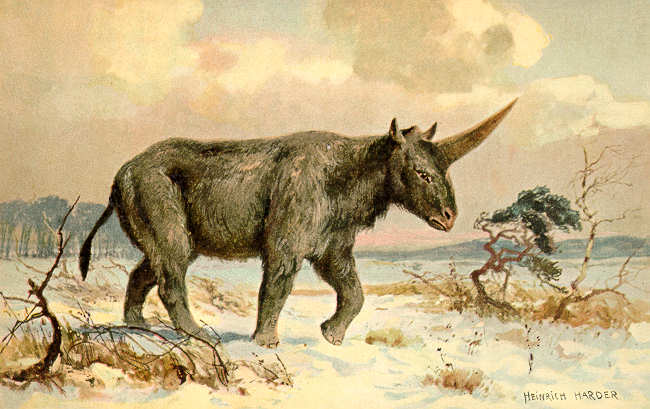
http://img3.wikia.nocookie.net/__cb20111029104346/dinosaurs/images/b/b6/Elasmotherium1.jpg

[Before you answer, “Yes, of course they’re real–unicorns are mentioned in the Bible,” Strong’s Concordance gives us the original Hebrew word as “r’eyme,” literally translated as a kind of wild bull. Why Tyndale and the King James scholars translated this as “unicorn” is not known to me.]

I love cryptozoology, the most ephemeral of sciences. The cryptozoologists have to discover living animals presumed extinct, legendary, or even fictitious. And yet the moment they do discover something, it ceases to be a cryptozoological specimen and is immediately transferred to the realm of regular zoology.

So how about the unicorn? Did such a creature ever exist? People have been writing about unicorns, painting pictures of them, sewing them into tapestries, and grafting them into coats of arms for better than a thousand years. No one has been able to produce a graceful white horse with a long horn arising from its forehead. But in a pinch, would you accept a rhinoceros?

Not just any kind of rhino, but a prehistoric giant named Elasmotherium (see http://dinosaurs.wikia.com/wiki/elasmotherium ) which just might possibly have survived into historic times in Siberia and elsewhere, giving rise to the legend of the unicorn. Oh, please–who would see a unicorn in a big, fat, hulking, clumsy rhino? Elasmotherium had a single horn, five to six feet long, arising near the center of its forehead, rather than from the nose as in living rhinos. Paleontologists say it had long legs, “giving it a horse-like gait.” Hmm… So you slim it down a little, and you see it from a distance–it may not be safe to see it close-up–and what’ve you got?

The Jersey Devil, the mainland Thylacine, the Loch Ness Monster, Smart Growth–Oops, how did that get in there? Smart Growth has no basis in reality. When God creates things, they’re real. When we create things, they tend to be imaginary. The Lord knew what He was doing when He limited us to that.

All the same… Siberia’s a big place, no one’s seen all of it. Maybe, on few nameless square miles of steppe, bordering a nameless forest, seen by no man but a solitary hunter with a reputation as a liar and a drunk, there still survives a tiny population of Elasmotherium. And if Elasmotherium… why not a unicorn? Why not?