‘Protecting Us from Knowing Things We Shouldn’t Know’ (2015)

Image result for images of the chess players by frances parkinson keyes

This was my Newswithviews column for Jan. 29, 2015.

http://newswithviews.com/Duigon/lee287.htm

Why can’t these people leave us alone? Always pontificating about what we should or shouldn’t think, should or shouldn’t be allowed to say, should or shouldn’t be allowed to read–but they are not better than us and they are certainly not wiser than us.

Historical novels, if they are written in good faith, thoroughly researched, and as accurate in their depiction of the past as it is humanly possible to make them, can help us understand the past. Not just know about it, but actually to understand it.

Once upon a time on the radio I heard two Intellectuals complaining about “a bunch of truck drivers” reading history and getting ideas above their station. We should be content to be spoon-fed by Our Betters–

Eeyah! Basta! No more of this!

Because Our Betters most definitely are not our betters.
‘A Treasure Rediscovered’ (2013)

See the source image

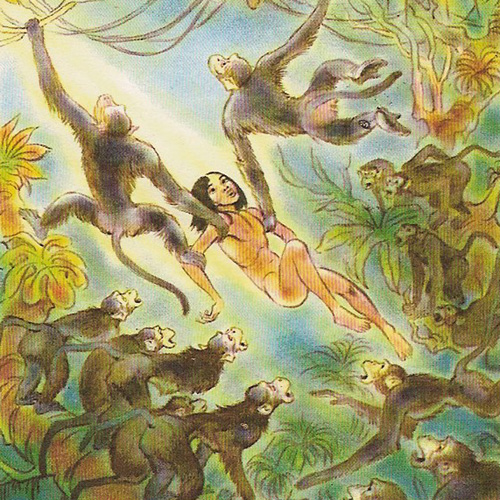
Wow! Here’s one of the illustrations from the edition I had! Never thought I could see these pictures again, just by asking the search engine.

Don’t you love it when something from your childhood, revisited many years later, turns out to be every bit as wonderful as you remembered it? For me it was The Jungle Books by Rudyard Kipling.

A Treasure Rediscovered

Pure storytelling by Kipling–almost a lost art, these days.

Ford Plant Memories

See the source image

Sitting outside in the blistering heat today, writing The Wind From Heaven, called up memories of summers in the Ford plant. My father worked there all his working life, and my brother and I had summer jobs there to pay for college.

Here are the three hottest jobs I ever had.

Anything on the welding section of the assembly line. That place was hot even in the dead of winter; but in the summer, watch out. We were expected to gulp salt tablets and keep on spot-welding. If it got to be 120 degrees, they sent us home. Didn’t want anybody keeling over.

The wheel car. This was a boxcar packed almost to the brim with wheel rims. You climbed into the claustrophobic space on top of the cargo and they put a basket in front of the door, and you put the wheels into the basket until the car was empty. How hot was that? I had shoes with rubber soles that melted.

The water test. You’d think this would be a treat, driving a car through water jets that sprayed it from every direction. All you had to do was make a note of any leaks. But first you had to go out to the parking lot and fetch one of the cars that had been baking there all day. Then you tightly closed all the windows and the vents so you could drive it through the water test. You were expected to resist the temptation to open the windows and let the water in. By the time you emerged from the water test tunnel, you were so soaking wet from sweat, you couldn’t have gotten any wetter if you’d gone through the tunnel on roller skates.

As Rudyard Kipling wrote, “The heat would make your bloomin’ eyebrows crawl.” I don’t know how many times mine tried to crawl away, but I always caught them.

P.S.–They closed the plant some years ago and then dynamited it out of existence to make room for a shopping mall. For those of us who had missed the notification that there was going to be a colossal big explosion, it was a rather exciting Sunday morning.

Our Weather Report

See the source image

The picture is, I admit, overly dramatic. The big heavy branch that the storm tore off last night missed Patty’s car, and a neighbor’s, literally by inches. I had to move it today; it was heavy enough to have done some serious damage.

These last several days have been murder–“the heat would make yer bloomin’ eyebrows crawl,” as Rudyard Kipling said. And when it isn’t as hot as the welding section on the old Ford assembly line, it’s been raining torrentially with scads of thunder and lightning.

Something, I don’t know what, happened on Route 1 during last night’s storm and spilled into our town, which was already halfway flooded. I never saw such traffic in my life–not that it was moving or anything. What was I doing, out in this madhouse? Don’t ask! I made it to the supermarket and their lights were knocked out. Somehow I made it home.

Now I know, because you’ve said so, that some of you get a bit blue when bad weather keeps up for any length of time. Who can blame you? Not me!

Sheesh, hot weather and thunderstorms in July–who would’ve thought it?

Probably Donald Trump’s fault.

Memory Lane: The Colonel’s Den

Image result for images of japanese military relics collection

Imagine that you’re twelve years old, visiting, with some of your friends, their cousin’s house. And you all go downstairs to what in most homes would be a cellar: but in this house, it’s a military treasure trove.

It all belongs to the cousin’s grandfather, The Colonel, relics of a long military career in the Far East. Suddenly you’re in a very different world, a world that might have been  created by Rudyard Kipling or Joseph Conrad. The lighting is subdued, and the walls hung with swords, spears, samurai gear, Japanese battle flags, and exotic weapons whose use you can’t even imagine. There are cigarette lighters made of hand grenades, artillery shells standing on the floor, and a brightly-lit aquarium, built into the wall, inhabited by fish you’ve never seen before. All very shadowy and quiet.

The Colonel himself is a tall, straight figure of a man with an iron-grey crewcut; and although I visited his house many times, I’m sure I never heard him speak. I doubt he ever knew my name.

The collection dazzles me. It would take all day to see it all. One of the Japanese battle flags has a tear in it, and a dark stain that must be old, dried blood. One is not inclined to be frivolous, down here, and loud talk is garishly out of place. I feel as if I will never be able to describe it adequately, however hard I try. But it’s also unforgettable. Almost sixty years later, I can close my eyes and see it.

What it tells me is that the world is very wide, full of peoples and places that I couldn’t hope to list, who fought battles and waged wars that I won’t be able to track down in a hundred books of history. So much vastness, in such a small space!

But The Colonel saw it all. He was there. He doesn’t need to speak: his collection says more than he can ever say.