‘Who Was Joseph’s Pharaoh?’ (2019)

See the source image

Who–me?

Fat-head Bible Scholars Inc. would have you believe that nothing in the Bible is true, none of those things ever really happened. More fool them.

The story of Joseph conflicts with no known facts, shares many similar details with generally accepted history–and there is no reason it cannot be true.

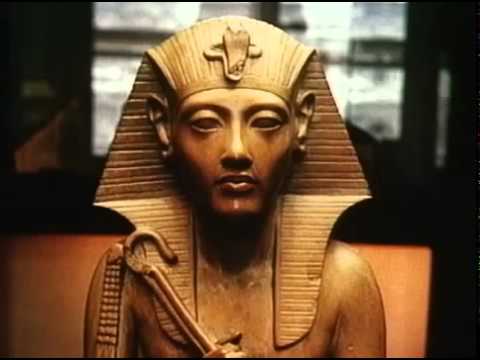
Who Was Joseph’s Pharaoh?

Ah, there’s the rub! Genesis doesn’t tell us the name of the Pharaoh who made Joseph his prime minister.

Well, so what? Egyptian bigwigs, especially royals, had lots of names, used interchangeably depending on the occasion. Ramesses for this, User-Maat-Re for that, Steverino for his niece’s wedding, and so on. The Bible does give us a few Pharaoh’s names; but the ones we’d really like to know–Joseph’s and Moses’ Pharaohs–are not given.

For the Bible’s purposes, the names of those two rulers just weren’t that important.

‘The Vindication of Joseph’

See the source image

When I was a little boy, the story of Joseph scared me, but good. His brothers stuck him in a hole and sold him as a slave, and then he was thrown into jail for something that he didn’t do. What if it happened to me?

R.J. Rushdoony touched upon a key element in the story of Joseph, in this essay reprinted first in 2007.

https://chalcedon.edu/resources/articles/the-vindication-of-joseph

It’s easy to waste a lot of your life, he warned, brooding over past injustices and vainly trying to win back what you’ve lost. Joseph never did get compensated for the injustices he’d suffered. He was too busy saving Egypt. “Trust in God’s ultimate and unswerving justice,” Rushdoony wrote. It’s the only real justice there is.

But God pity us! We’ve made a whole way of life out of obsessing over past injustices, some indeed long past, and demanding…um… “reparations.” Doesn’t seem to matter how long past, or who was actually affected.

Happiness and peace of mind–the world knows how to avoid attaining it.

Who Was Joseph’s Pharaoh?

See the source image

Apparently they don’t let you be a Bible Scholar unless you show them that you don’t believe a word of it.

Among the historical enigmas that the Bible serves up to us is the identity of Joseph’s Pharaoh, the one who made Joseph a ruler in Egypt. We don’t know why the Bible doesn’t give us this pharaoh’s name–although bear in mind that every pharaoh of ancient Egypt was known by several names: Ramses II, for instance, was also User-Maat-Re and several other names. Egyptian royal names were also, usually, religious statements: “Son of Ra,” “Son of Thoth,” “He with Whom the Goddess Mut Is Satisfied,” etc. Jewish scribes might not have been comfortable, writing down such names. Given all the difficulties that they faced, can you blame the scribes for just writing “Pharaoh”?

It would be interesting (to say the least) to know which particular Pharaoh made Joseph his prime minister. So every now and then I look it up, to see if any new discoveries have been made.

If they have, I haven’t been able to discover what they are. What I do discover–in Wikipedia, for instance–is an unquestioned assumption by “scholars” that the story of Joseph isn’t true. Indeed, they’re calling it a “novella,” a conscious work of fiction, a la Stephen King, cooked up by Jewish scribes living a thousand years after the events in the story.

Is it possible there was once a severe famine in Egypt, the record of which has not survived the passage of three or four millenia?

Is it possible that Pharoah, whoever he was, appointed a non-Egyptian, whom he trusted, to be the chief executive officer of his realm, with a special duty to prepare for the famine and try to ameliorate its effects? And is it possible that this high official, upon his appointment, was given an Egyptian name and title–so that no one in Egypt would have called him “Joseph” anymore? In fact, a number of pharaohs did make such appointments.

Of course those things are possible. There is nothing in the story of Joseph that makes it impossible. But what will ever satisfy Bible Scholars that any story in the Bible is true? A signed cuneiform affidavit by Hatzy Tatzy, high priest-king of Uruk, confirming his dealings with one “Joseph the Hebrew, son of Israel, prime minister of Egypt under Pharaoh Rutin Tutin III”? Would that do it for them?

Anyway, nobody was writing any “novellas” in 600 B.C. They hadn’t yet learned how.

Joseph and His Brothers

(I’m still sick, but nowhere near as bad as I was Friday night and most of yesterday.Thanks for all your prayers and good wishes!)

When I was a boy, I was fascinated by the story of Joseph. His brothers pretended he was dead and sold him into slavery, he got thrown into prison for a crime he didn’t do–and yet he rises to the top. God gives him the power to read the future from dreams, and the wisdom to make the most of it.

But really the thing that got me was Joseph’s brothers. All right, Jacob was wrong to make Joseph his favorite; that didn’t sit well with the other lads. I got that. But I was too young to appreciate how much trouble Joseph made for himself by telling his brothers that they were all going to bow down to him, because he’d dreamed it. How to make yourself obnoxious!

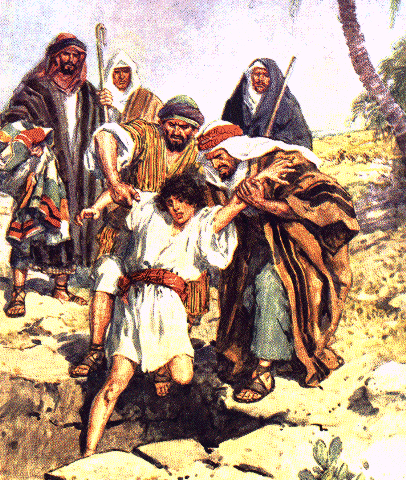
I was afraid of Joseph’s brothers. In my book of Bible stories there was a picture of them, kind of in a huddle, debating whether to kill Joseph or what. If these weren’t bad guys, I didn’t know who were. And they had the power. They had Joseph at their mercy, and could do anything to him that they liked.

Now I’m older, and there’s another part of the story that impresses me the most. The time came when Joseph had his brothers at his mercy. He could have ordered all their throats cut, or had them all sent as slaves to the mines in the desert, and no one would have stopped him. Think of the temptation! “All right, you creeps–welcome to payback time…” You can easily imagine what Joseph would do if he were the (ahem) action hero of a modern movie.

But what he does do is awesome. He forgives them. “And Joseph said unto them, Fear not: for am I in the place of God? But as for you, ye thought evil against me, but God meant it unto good, to bring to pass, as it is this day, to save much people alive.” (Genesis 50:19-20)

[For those who do not know the Bible, Joseph’s being sold into slavery in Egypt, and rising there to the highest office in the land, was the means by which the whole family of Israel was saved in time of famine.]

Joseph is great enough not to be seduced by his own greatness. He humbles himself before God. A great man in this world today would be far too foolish ever to do that. “Hey! I am in the place of God, and I can do anything I want!”

When they finally did bow down and honor him, Joseph raised them up again. And that is awesome.