Our First ‘Dr. Kishore’ Article

2 with Cape ties face Medicaid fraud charges - z* Breaking News Updates -  capecodtimes.com - Hyannis, MA

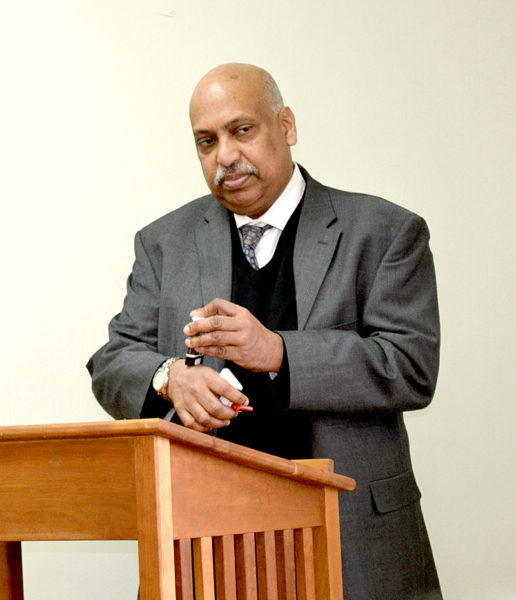
Dr. Punyamurtala Kishore, persecuted hero

This is the first of Martin Selbrede’s 18 articles on the pioneering addiction treatment work of Dr. Punyamurtala Kishore and his persecution at the hands of Massachusetts medical and law enforcement authorities.

https://chalcedon.edu/magazine/massachusetts-protects-medical-industrial-complex

Once they’d successfully “demonized [him] as a monster,” the authorities set about discrediting Dr. Kishore’s character, ruining him financially, and finally packing him off to prison.

His crime: finding a better way to treat opioid addiction instead of just replacing one addictive drug with another.

These are long articles, but they’re important. With opioid addiction claiming thousands of victims all over the country, Dr. Kishore’s sobriety-based approach produced far better results than what the medical establishment had to offer–and for this he was severely punished.

All 18 articles are available at http://www.chalcedon.edu/ .

Jailed–for Succeeding Where the Medical Establishment Failed

Dr. Punyamurtula S. Kishore, Preventive Medicine Physician in ...

Dr. Punyamurtala Kishore

Yesterday we posted a history video about Dr. Ignaz Semmelweiss, who was destroyed by the medical establishment of the mid-1800s for virtually stamping out fatal “child-bed fever” at hospitals under his authority.

Present-day America has its own Semmelweiss. Dr. Punyamurtala Kishore, in Massachusetts, developed a successful system for treating and curing opioid addiction. His reward for that? In 2011 the state shut down all 52 of his clinics and threw him in jail.

https://chalcedon.edu/magazine/dr-punyamurtula-kishore-in-the-eye-of-the-storm

Our managing editor at Chalcedon, Martin Selbrede, covered this bizarre story in deail from its beginning to the present. We have a link to Article No. 15 in the series because it provides links to the earlier articles, in order.

It’s standard practice to treat drug addiction by giving the patient other addictive drugs, like methadone. Dr. Kishore abandoned that, and replaced it with a treatment regime whose goal was not “managing” addiction, but curing it.

Like Semmelweiss, Dr. Kishore had dramatic results to prove his success.

Like Semmelweiss, the establishment–politicians, the “news” media, pharmaceutical companies, and high-ranking physicians–came down on him with everything they had. Semmelweiss died in a mental hospital. Dr. Kishore went to jail. At the age of 65, they had him cleaning streets–which impaired his health.

Unlike Semmelweiss, Dr. Kishore lived through his ordeal and, in the midst of persecution, found advocates and allies. So his struggle continues.

It’s all in Martin’s articles. It may be rather hard to believe–but believe it.

The Man Who Successfully Treated Opioid Addiction–and Wound Up in Jail

See the source image

Dr. Punyamurtula Kishore

If you’re interested in the ever-worsening problem of opioid addiction in America, which President Trump mentioned in his State of the Union speech, and would like to read a deep and thorough treatment of the subject, visit the Chalcedon website, http://www.chalcedon.edu .

Our print magazine, Faith For All Of Life, published a series of 18 articles by our vice-president, Martin Selbrede, on the life and work of Dr. Punyamutula Kishore, whose clinics boasted a success rate of 50 to 60 percent in treating drug addicts–until the state of Massachusetts shut him down, closed his clinics, and sent him to prison. Dr. Kishore is out now, and resuming his work in other states where the government is more receptive: but he has an awful lot of wreckage to clean up.

It’s easy to access Martin’s articles (edited by Susan and me). Just go to Chalcedon’s site, click “Resources,” and search for “Dr. Kishore”–so simple, even I can do it.

Why was Dr. Kishore persecuted? His success rate of 50 to 60 percent rather embarrassed the government-endorsed programs, where the success rate seldom reaches as high as 5 percent. His was a sobriety-based treatment, instead of substituting one addictive drug for another. Martin’s articles tell the whole story. Meanwhile, a feature film has been made about Dr. Kishore and should soon be ready for release.

It’s too big a story for me to sum up here: so if you’re interested, read the articles. I think you’ll be amazed by what you read.