‘Who’s Buried in Alexander the Great’s Tomb?’ (2013)

See the source image

This was big, big news in 1991–the discovery of Alexander the Great’s tomb. No end of excitement!

Who’s Buried in Alexander the Great’s Tomb?

The excitement went away when the discoverer mentioned that mystical talking snakes had revealed the secret to her. Nor did it help her cause, that she couldn’t show the tomb to anybody.

If you’re planning to unveil a centuries-old mystery, try not to rely on the testimony of talking snakes.

A Roman Mystery

A typical Roman dodecahedron

I’ve been reading about ancient Rome all my life, and not until this morning had I ever heard of a “Roman dodecahedron.”

Hundreds of these little artifacts, all of very much the same design, have been found all over northwestern Europe, in countries that used to be provinces of the Roman Empire. Oddly enough, none have been found in Italy. They are often found in caches with Roman coins, leading archaeologists to believe the dodecahedrons must have been valuable.

But no one knows what they were, what they were used for, how they might have been valuable. Theories are all over the place. But we have yet to find a single reference to these doohickeys in any Roman literature. They must have been a part of daily life that people took for granted.

Were they toys? Measuring tools? Game pieces? Lucky charms? No one knows. These things are made of metal, usually brass but always metal, and they’re durable: clean ’em up after 1,500 years in the ground, and they look as good as new.

What do you think these might have been? I’m stumped.
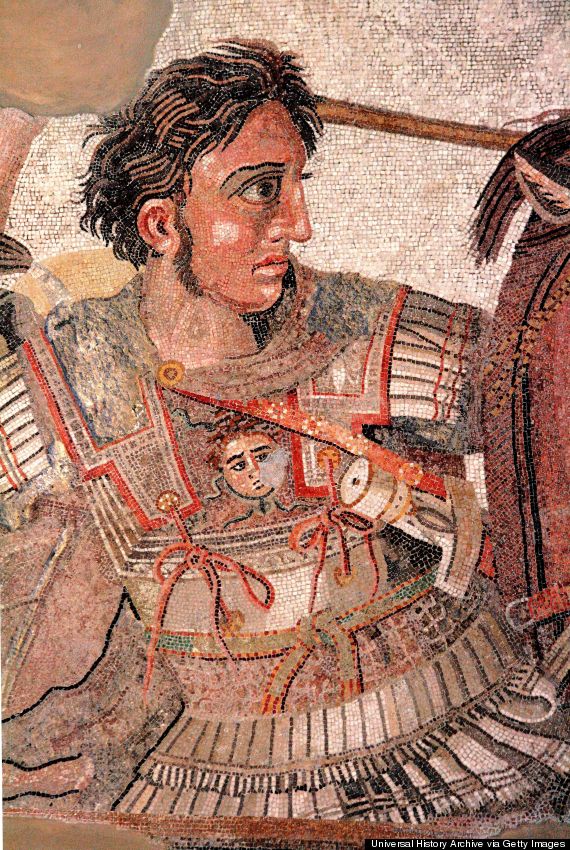
‘Who’s Buried in Alexander’s Tomb?’

See the source image

The ancient world was full of all sorts of neat stuff that you can’t find anymore. All those fabulous treasures that Herodotus saw with his own eyes, and described for us… and the well-preserved body of Alexander the Great.

Back in 1991, a Greek archaeologist made a big splash for a couple days by claiming to have discovered where the body was hidden.

Who’s Buried in Alexander the Great’s Tomb?

It seems reasonable to suppose that if it was still kicking around 500 years after Alexander’s death, it could have survived even longer, provided no one messed around with it. Alexander’s mother hated his father, so she taught him that his real father was Zeus, king of the gods–not that glorified peasant, Philip of Macedon.

It’s not good for anyone to believe things like that.

‘World’s Oldest Writing–and We Can’t Read It’ (2015)

I’m fascinated by the origins of civilization. If it’s “wired in,” why did it take so long to come along–or did it? The Bible hints that it didn’t take so very long. But if it’s not wired in, then why did it ever arise at all?

Anyway, here’s some writing that was carved into a piece of wood at least a millenium before anyone in Mesopotamia ever thought of writing on clay. Don’t you wish we could know what it says?

https://leeduigon.com/2015/10/28/worlds-oldest-writing-and-we-cant-read-it/