‘How Did Civilization Start?’ (2019)

326 Gobekli Tepe Stock Photos - Free & Royalty-Free Stock Photos from  Dreamstime

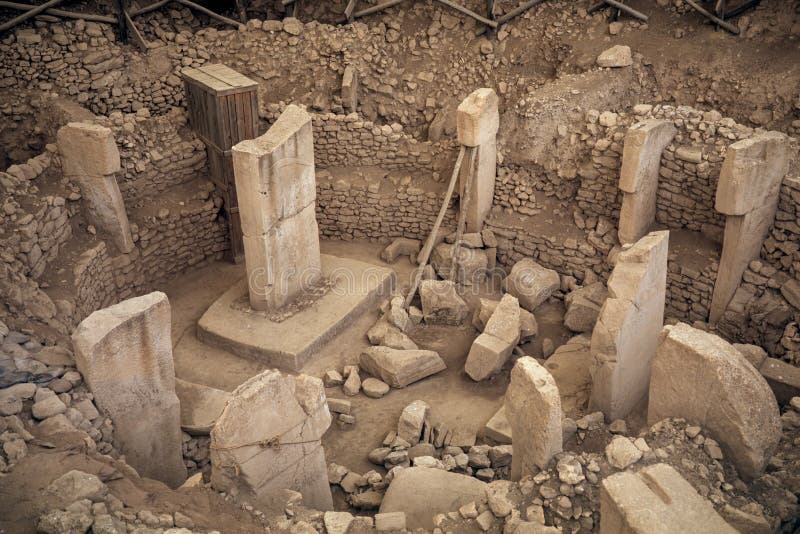
Gobekli Tepe… It has no business being there.

I don’t know how civilization started, but one thing I do know for sure–this dagnabbed computer had nothing to do with it!

How Did Civilization Start?

I’m having rather a hard time with this machine today, it doesn’t want to cooperate in any way. Yes, I know I’ve run this post before. Crikey, I’m lucky I can run any posts at all, the way this thing is acting up.

Maybe computers made some ancient civilizations… fail. Disappear, go extinct, turn into piles of junk.

I wouldn’t be the least bit surprised.

‘Scientific Ninnies’ (2017)

The real-life Indiana Jones uncovering lost cities | CNN

I love reading about archaeological discoveries; but in recent years some of that pleasure has been rubbed away by nincompoops.

Scientific Ninnies

Come on, now! What kind of jidrool believes in socialism and thinks it’s “scientific”? That’s a 19th-century crotchet: that is to say, a perverse or unfounded belief. When socialists finish turning Venezuela into a lost civilization you’ll see what I mean.

So these guys do all the work and brave all the risks of finding this long-lost city in the jungle, and then they piss it away babbling about socialism.

There are reasons why cities and whole civilizations fail and disappear from history. Failure to practice socialism has never been one of them.

‘Creeping Twaddle’ (2018)

Image result for images of mother goddess statuette

Ah, the Feminist Golden Age! Wouldn’t it be wonderful if Science could prove it once upon a time existed?

Creeping Twaddle

Figurines just like the one in the picture above have been found in prehistoric sites all over Southern Europe and the Near East. They have never been found along with writing. That means there’s precious little we can know about them or the people that made them.

That doesn’t stop certain “scientists” from rushing way out on a limb, reconstructing a lost world of “egalitarian agricultural” people ruled over by fat women. Sorry, that’s not science–unless that’s what science has degenerated into, these days. It’s only PC wishful thinking.


‘World’s Oldest Writing–and We Can’t Read It’ (2015)

See the source image

Anybody got a decoder ring?

For most of my lifetime, the Sumerians got the credit for inventing writing. With some modifications, their “cuneiform” system was used throughout the Ancient Near East for several thousand years.

But a find from northern Greece is older than that.

World’s Oldest Writing–and We Can’t Read It

What does it say? What did somebody take the trouble to write down by carving it into a block of wood, maybe seven thousand years ago? Was it a grocery list? A things-to-do list? There’s just no way to tell. Maybe if we had dozens of samples, and a guess that the language was some form of ancient Greek turned out to be right, we might someday apply enough computer analysis to read this.

Who knows? It might be something important.

A Roman Mystery

A typical Roman dodecahedron

I’ve been reading about ancient Rome all my life, and not until this morning had I ever heard of a “Roman dodecahedron.”

Hundreds of these little artifacts, all of very much the same design, have been found all over northwestern Europe, in countries that used to be provinces of the Roman Empire. Oddly enough, none have been found in Italy. They are often found in caches with Roman coins, leading archaeologists to believe the dodecahedrons must have been valuable.

But no one knows what they were, what they were used for, how they might have been valuable. Theories are all over the place. But we have yet to find a single reference to these doohickeys in any Roman literature. They must have been a part of daily life that people took for granted.

Were they toys? Measuring tools? Game pieces? Lucky charms? No one knows. These things are made of metal, usually brass but always metal, and they’re durable: clean ’em up after 1,500 years in the ground, and they look as good as new.

What do you think these might have been? I’m stumped.

Creeping Twaddle

Image result for images of mother goddess statuette

This little stone figurine, which would fit in the palm of your hand, is a not uncommon archaeological find throughout southeastern Europe, Turkey, and the Middle East, going way, way back in time.

Archaeology is meant to be a science. When an archaeologist makes a claim, he is supposed to have evidence for it–inscriptions, pictures, whatever.

These figurines have long been thought to represent fertility goddesses. But in this month’s issue of Biblical Archaeology Review (November-December 2018, Vol. 44, No. 6), we have one from Catalhoyuk, a site in central Turkey which is billed as one of the oldest cities in the world, dating back to some 8,000 years ago. It’s more of a town than a city, with houses all jumbled together, no streets, cryptic paintings on some of the walls, and dead people interred within the floors.

We know very little about the people who once lived here. We don’t know what language they spoke, what they called themselves, what sort of gods they worshipped, what other people called them–hardly anything at all, beyond the mere physical remains of the town. It’s really hard to find out much about any vanished culture when they’ve left behind no writing.

But that doesn’t stop some of today’s archaeologists from generating a new “theory” that the figures represent “older women who had achieved a special status within their egalitarian agricultural community–with fatness as a sign of prestige and special respected status due to age.”

Whoa! We do not know any such thing. This is PC-infected archaeologists sweeping along in their search for a lost feminist Golden Age. Which they seem to have their hearts set on discovering, no matter what.

Wishful thinking and political correctness has become part of the scientific method, these days.

For all we know, the people of Catalhoyuk might have lived under a tyrant who told them when to go to bed at night. Maybe what we’re looking at is a lost civilization that really sucked to live in. Why did they bury their dead under the living room floor? We simply don’t know.

Take your “science” with more than just one grain of salt.
‘The World’s Oldest Music’ (2015)

Image result for images of ancient babylonian harp

A lot of “ifs” went into this, but if all the ifs are right, we can listen to a piece of music from 1,400 B.C.

https://leeduigon.com/2015/11/07/the-worlds-oldest-music/

We have musical instruments from ancient Chinese tombs, which don’t work anymore because they’re just too old, and some rusted-up pieces from Greece and Rome: but this one example just might be real.

If all the ifs are right.

It’s a pretty nice piece of music, by the way. Listen and enjoy it.