You have to hand it to the hognose snake. He’s not poisonous, but he pretends that he is; and if that doesn’t work, he plays dead. It must convince somebody, somewhere.
You have to hand it to the hognose snake. He’s not poisonous, but he pretends that he is; and if that doesn’t work, he plays dead. It must convince somebody, somewhere.
(Enough with the nooze already!)
I love grey tree frogs. They’re very tame, they’ll perch on your finger like a parakeet and eat out of your hand… and they can change color. The frog in this video is green, but by and by he changes back to grey.
I had several of these once. They used to line up on a perch in my lizard cage and sing together. My housemates came after me with torches and pitchforks, so I had to let them go. The frogs, that is–not the housemates.
I know better now. I’d keep the frogs.
The tiger salamander is one of the largest salamanders in North America; and if you find one, and insist on feeding it an earthworm, you may find he’ll bite the hand that feeds him.
Y’know, for the hundreds of hours of my boyhood that I spent looking for salamanders, I never once found a tiger salamander, although they’re supposed to be not that uncommon in New Jersey. Mostly I found just those little redbacks; a tiger must be as big as 20 of those guys.
So I’ve never been bitten by a salamander, but I’ll bet the tiger’s bite packs a wallop. It just might be worth getting bitten if you can have a close encounter with one of these impressive critters. Like, how bad can it be?
We’ve just got to have drama, don’t we? Antarctic exploration has been rather tame since Admiral Byrd’s time… and you know how that dries up the funding.
Voila! The leopard seal is transformed into a life-threatening menace of Antarctic waters! Fall into that water and you’ll be dead before any leopard seal can find you. Look at all the thermal gear the diver in this video has to carry.
These seals eat penguins. I read a lot of books about Antarctica and none of them featured any hair-raising encounters with leopard seals. But now the New Zealand Dept. of Conservation says otherwise.
https://www.doc.govt.nz/nature/native-animals/marine-mammals/seals/leopard-seal/
Well… “a few attacks”… and one, just one, fatality (“snorkeling in Antarctic waters”). We are not told who, if anyone, witnessed these incidents. But we are told to “stay at least 20 meters away” from any leopard seals we might encounter. I don’t expect to run into any in New Jersey.
Why do I think we’re being taken for a ride? And not by any seals, either.
You’d think three lions would be pretty safe together–who would dare attack them?
One angry hippopotamus, that’s who.
The lions wished to swim across a stream. The hippo didn’t like it. One strongly suspects the lions were lucky to get out of there alive.
We don’t have these problems in New Jersey.

I couldn’t help noticing how busy the bees are today with all those little white blossoms on our host of boneset plants. Bumblebees, honeybees, and our tiny native bees–they’re all over those flowers today.
I also noticed the bees were very much at peace with one another. The same plant might have all three kinds of bees working on it at once. True, there’s plenty for all: our boneset plants could provide nectar and pollen for whole swarms of bees. The bees don’t have to compete for limited resources.
But since when has that ever stopped different groups of humans from getting up each other’s noses?
God has given the bees what they need; they find no excuses to attack each other.
Maybe they’re just nicer than we are.
They’ve cut down all our trees, but we still have–in delightful profusion–these little white wildflowers all over the place. The bees love ’em–bumblebees, honeybees, and our tiny native bees.
This plant is called “boneset,” because it was once believed that including its leaves in splints facilitated the healing of broken bones. The leaves can also be used for making tea, said to be a remedy for coughs and colds. I think I’d like to try that, if I only knew how. But what would happen if I did it wrong?
Whatever its practical use, this is a pretty plant and it’s obviously good for the bees. It makes a nice backdrop for writing about Lintum Forest. Our Lord’s handiwork is always an inspiration.
And now I’d better go out and re-fill the bird feeder.
One of my favorite activities, as a boy, was to go out into the woods next door and turn over rocks and logs, looking for salamanders. There were a lot of them around, but it was always a big event when I found a red salamander–Pseudotriton ruber ruber, to the salamander cognoscenti.
The young ones are a brilliant orange-red with black spots; as they age, they grow darker. They aren’t very common, so it’s always worth a “Yahoo!” when you find one. They eat bugs, like the globalists say we should. But I could never get any of mine to eat, so I always had to let them go.
These are gorgeous little animals, they don’t bite, they were twice as big as any other kind of salamander I could find, and it’s a pleasure just to see one. I’ve never found one anywhere in this neighborhood. But there was a little swamp behind the Studnickis’ house (great for ice-skating in the winter) and they seemed to like the damp environment.
My parents never understood why I wanted to bring these home,. but they didn’tc complain about it.
I’ve always liked toads; they have a lot of personality and make pretty good pets. Here’s a toad demonstrating one of the secret techniques of Toad-Jitsu–burying himself in sand to elude a predator.
The biggest, fattest toad I ever saw was camped out under the electric bug zapper by night at the Sea Spray Motel, Beach Haven–snapping up every bug that fell onto the shuffleboard court. Did he have it made, or what?
The second-biggest were the ones in Aunt Louise’s garden: “hoptoads,” she called them. Something about her garden really drew the toads. Well, she was an awfully nice lady. Toads pick up on that.
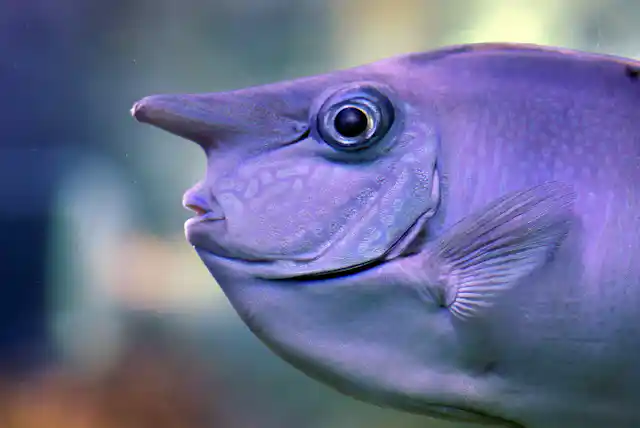
“How the dickens should I know?” growls an irritable Mr. Nature. He’s been working on this blog, too, and it has made him cranky. In a few minutes he calms down.
The answer to the question is, “Well, they sort of sleep, but not like we do.” That is, they rest. They might find a cranny in a coral reef, or an old tin can, and hole up there for a while–where they can breathe more slowly and not have to exert themselves. The hard part of being a fish is there’s always something or someone trying to eat you. So just floating around or lying on the bottom fast asleep is a pretty sure way to wind up out of the saga.
Watch your goldfish carefully and see if they have down time. That’s them sleeping. Sort of.