Jambo! Mr. Nature here, coming to you from Brazil.
What is that? Is it a fox on stilts?
No, it’s an animal few of us in North America have ever heard of, the South American maned wolf. It’s not a wolf, it’s not a fox, it’s just a weird canine that lives in South America. As you can guess by the people calmly watching it, the maned wolf is no threat to human beings. Actually, there aren’t that many of them left.
They don’t bark and they don’t roar: their vocalization sounds like a little bit of both. It seems like it’s safe to leave out table scraps for them.
God’s stuff: endless variation on the basic themes.
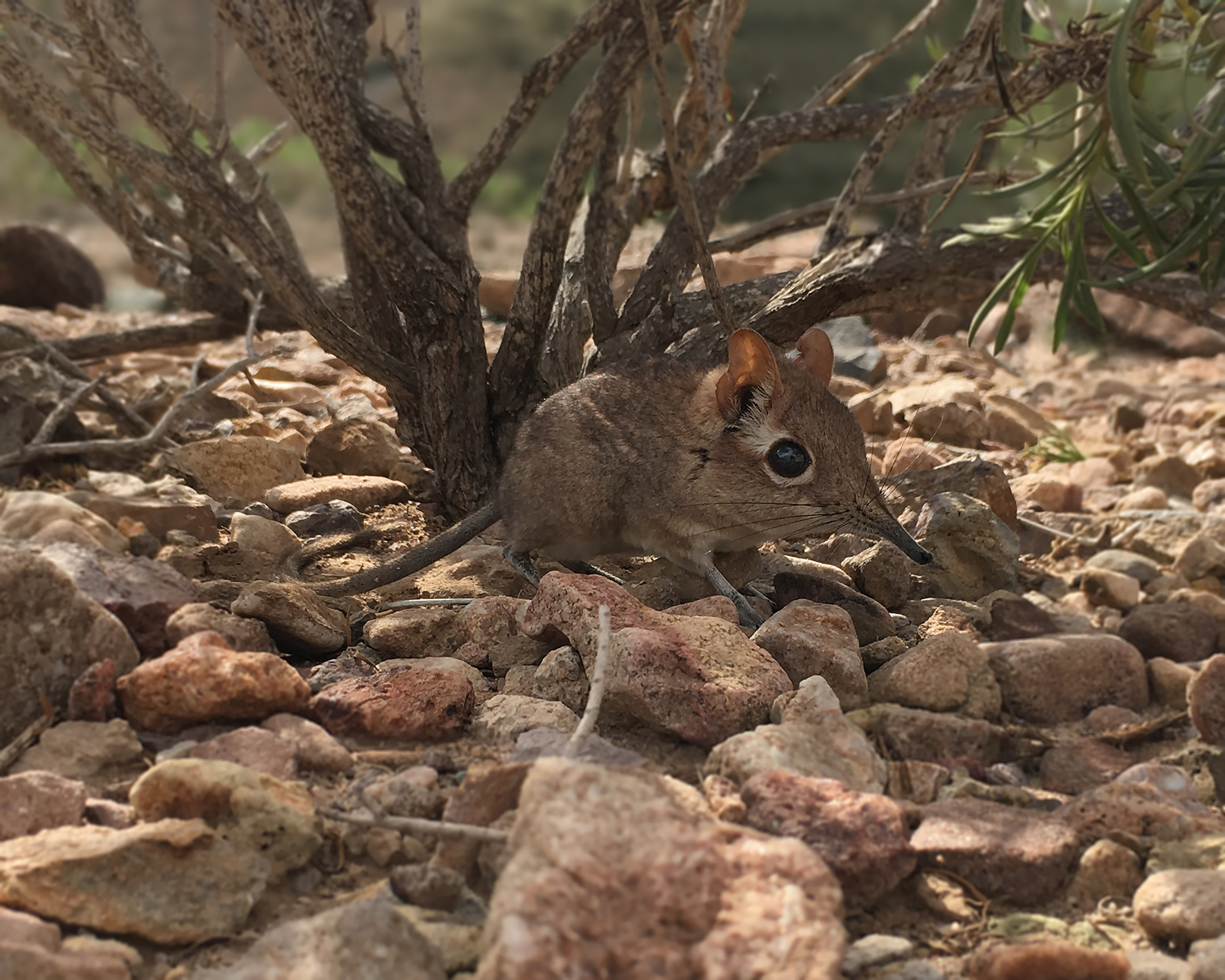
Jambo! Mr. Nature here, in the Horn of Africa–and so is the elephant shrew.
Actually, this cute little guy didn’t “return” from anywhere. He’d never left. But for 50 years or so, scientists couldn’t find any–although the local people said yeah, sure, they’re still around. But now, finally, science has rediscovered the elephant shrew–with the aid of no-kill traps baited with… peanut butter. Somebody had a bright idea!
As tiny as it is, the elephant shrew is most closely related to aardvarks, manatees… and the elephant. Or so they tell me.
And if it had been a cryptozoologist who’d rediscovered it, he would have succeeded himself right out of a job.
Special to Joshua, in case he hasn’t looked for it yet on his own–this is the Japanese giant salamander.
I love this. It looks like a visitor from the Paleozoic Era. In Bell Mountain some fishermen caught something like this and didn’t quite know what to make of it.
These babies get to be four feet long and can weigh up to 80 pounds. That’s a lot of salamander! The one in this video looks to be about half-grown.
Totally harmless to human beings, totally inoffensive, Japan’s giant salamander is a fascinating example of God’s handiwork and deserving of protection.
There’s always something to learn that will surprise you.
Hi, Mr. Nature here–and I was surprised yesterday when I learned that the solenodon–which looks like a kind of rat or possum, but isn’t–is poisonous. A bite from this baby could actually kill you. At the very least, it would make you very sick. This little furry mammal has a neurotoxic venom, as do many poisonous snakes but very few mammals indeed.
What they use the venom for, I dunno. They eat earthworms, insects, carrion, and the occasional frog. Larger mammals eat solenodons. Along with the poisonous bite, I read, goes a rather short fuse–although the one in this video seems amiable enough.
Solenodons are very rare, they live on the islands of Cuba and Hispaniola, and have more than once been thought to be extinct, only to turn up right after their extinction has been published somewhere. They don’t like to be seen and are quite good at avoiding it. Mammals imported from Europe, Asia, and Africa have pretty much wiped out most of the mammal fauna native to the Caribbean.
The Haitian solenodon has a ball-and-socket joint in its snout to make its nose more flexible. That’s helpful in sniffing out yummy worms and grubs. Solenodons don’t see well, but their acute sense of smell compensates for that. And they can run on tiptoe very fast.
You might say these animals are living fossils, left over from their salad days during the Age of Dinosaurs.
There’s no limit to God’s artistry, and we have yet to see it all.
It’s not a rabbit at all, but a pika–furry little animals that live on mountainsides, amid the rocks. We have some in North America.
This is the “Ili Pika,” from a remote region of China. Until these photos were taken, it hadn’t been seen in 20 years. Please ignore the narrator’s blather about Global Warming causing this animal to go extinct. They only say that to make you believe you have to give the government a lot more of your money and expanded powers to trouble your lives.
Yes, it would be a tragedy to lose such an adorable little creature. Maybe a captive breeding program could ensure its survival. If it lived in America instead of China, something like that would already be happening.