A Present for ‘Bell Mountain’ Readers

Finally! A Chalicotherium video that I can post for you.

This is one of the “knuckle bears” seen by Jack and Ellayne at the edge of Lintum Forest. Us Mr. Nature types know them as Chalicotheres. Their fossils are found in North America, Europe, Africa, and Asia. As large animals go, they were very successful.

The big, sharp claws are for pulling down tree-branches so they can eat the leaves.

If I ever see one of these on my bike ride, lumbering off the golf course into the woods, I will know the world is changing.

And you just know I won’t have a camera handy.

P.S.–Last night I dreamed I went to Mars, the Martian civilization was just about identical to our own, and so I went to the movies. And there, as I stood in line at the concession stand, I spied some boxes of “Bell Mountain Candy,” with the books’ cover art decorating the boxes.

I enjoyed that!

I Love My Characters

Image result for images of the cellar beneath the cellar by lee duigon

Ellayne at work

I have to admit an embarrassing thing. I have fallen in love with my characters.

They’re fictional. I made them up. But by now I’ve spent so much time with them, they don’t feel like made-up people anymore. They feel like real people.

Yesterday–sometimes it’s like I just watch this stuff come out of my pen–Ellayne had a set-to with Lord Orth. I love Ellayne because she has so much go to her: you just can’t keep her down. And I love Lord Orth for the totality of his conversion, which took away the gourmandizing theological show-off and left a humble servant of God… who is now more himself than he ever was before.

I love Wytt for his resourcefulness, his complete lack of fear, and his very small size that never stops him from doing big things.

I love Gurun for her courage: here’s a girl who’s deathly afraid of riding a horse, dreading that she might fall off in front of all these men who insist she be a queen; but that doesn’t keep her out of the saddle.

I love King Ryons for his earnestness, Fnaa for his irrepressible sense of fun, Uduqu for his cheerful bluntness, Obst for his devotion, and Helki for his wildness–and for the fact that there’s no one else remotely like him.

I even get kind of fond of the villains. Lord Reesh. Ysbott the Snake. Lord Chutt. Just don’t let them know I said that.

And I love Nanny Witkom standing up in the cart in the middle of the world’s worst downpour, hair flying every which way, crying “Behold the salvation of the Lord!” No wonder Chief Zekelesh, who couldn’t understand a word she said, was so attached to her.

Of course, if you haven’t read any of these books, you won’t have met any of these characters. But that’s a problem easily remedied.

But if you have, tell me–are there any characters you’ve fallen in love with?

Yeesh! At one point, when they thought I’d killed off Chief Uduqu, both my wife and my editor were ready to tan my hide… I guess I’m not the only one who gets kind of involved with these books.

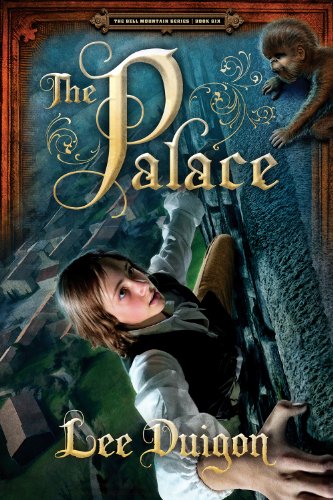
Bob Knight Reviews ‘The Palace’ (2014)

Image result for images of the palace by lee duigon

Every now and then I get edgy about whether my books are actually reaching any audience, so I post something to try and arouse readers’ interest in them. I’m happy to say there seem to be a lot of newcomers to this blog: maybe I can get you guys to try my books.

Here’s Robert Knight’s review of Bell Mountain No. 6, The Palace (https://leeduigon.com/2014/08/19/the-siren-song-of-treason-a-review-of-the-palace-by-robert-knight/).  Hint: I really could use some more Customer Reviews on amazon.com. Yes, I know–entirely shameless of me even to mention it.

The kid on the cover, by the way, is real. Artist Kirk DouPonce always uses live models in his covers for my books.

Who’s Your Favorite Character?

As I wait for the go-ahead to start writing my next book–and I never know what the “Hi” sign is going to be, the Lord always surprises me–I found myself wondering which characters in my books are the most popular. I also got onto that subject by showing my wife Travis Rodgers’ essay on “Obst the Missionary” (http://travisrodg.com/obst-bell-mountain/)–the only one of my characters who’s ever been written about by someone else, outside of a book review.

If you ask me which are my favorite characters, I can only answer, “Whoever I happen to be writing about at the time.” I think it has to be that way, if I want to make the characters come alive for the reader.

But which characters really are the readers’ favorites? Which are yours?

My youngest readers seem to like Jack and Ellayne the best, and everybody loves Wytt, the little hairy creature with the sharp stick and no capacity for fear. The old rat under the Baroness’ back porch has his contingent of fans, as does Cavall, the king’s big dog.

I know someone who liked Lord Reesh, the arch-villain, best; and I’m sure Helki the Rod, the wild man of Lintum Forest, has his cheering section. As for the old Abnak sub-chief, Uduqu–my wife and my editor were both ready to scalp me when they thought I’d killed him off.

Anyhow, I’ve got lots and lots of characters in my Bell Mountain books, and I’m intensely curious to know how readers feel about them. Besides, this discussion will be a lot of fun if everybody takes part in it.

And somewhere in one of your comments may be the seed of the next book. I never know where that’s going to turn up.

Aging Your Characters

As my Bell Mountain books go on, I find myself forced to acknowledge the fact that my characters are getting older. It just snuck up on me. I remember when the kid who starred in Lassie had to leave the show because he was growing a mustache and talking like Steve Reeves.

Well, I’m stuck with it now, and my two original protagonists, Jack and Ellayne, are just going to have to keep on getting older until they grow up (if the series runs that long). I missed my chance to dodge the issue.

What are my options now?

1. Stay with all the original characters and let them age naturally–at the risk of losing a big part of my small audience. I could let them grow up physically while remaining completely immature, but I don’t think my publisher would like it.

2. Replace these kids with other young protagonists as needed. Yeah, that would work. Only I’m attached to my original characters and would hate to part with them. But yes, new kids are going to have to come along.

I missed my chance to go with characters who never age, no matter how many books wind up being in the series. There are a few ways of doing that.

In his “Rick Brant Science Adventure” series that ran for some 20 years, J.G. Blaine (aka Hal Goodwin) simply ignored the whole issue. Rick, Scotty, and Barbie remain teenagers throughout the entire series. In fact, none of the regular characters ages at all. And readers didn’t seem to mind. Same with the Hardy Boys and Nancy Drew, come to think of it–teens forever.

When Agatha Christie first introduced Hercule Poirot to the reading public in 1920, in The Mysterious Affair at Styles, she presented him as a retiring police detective whose best days were behind him–a man of about 60. Little did she dream that she’d be writing about him for the next 50 years! She is said to have calculated that Poirot must have been some 130 years old when he finally died. While she was writing about him, she had to ignore the age issue. Again, the readers didn’t seem to mind.

Edgar Rice Burroughs tried to explain why his characters never seemed to age, not wanting anyone to remark that ERB’s need for money seemed to be as evergreen as Tarzan. So David Innes didn’t age because there was no means of telling time in Pellucidar, at the earth’s core. It would be hard to get around the treetops in a walker, so Tarzan didn’t age, either, and neither did his wife, Jane–the result of secret immortality pills invented by the Leopard Men. And John Carter of Virginia and Barsoon was just plain immortal: always was, no telling how or why.

I think I could have gotten away with not aging any of the Bell Mountain cast and crew, provided I’d stuck with it from the beginning. But it’s a decision the writer of a series has to make from the git-go.

Once the kids in your story start growing up, you really mustn’t try to make them stop.

A Rave Review for ‘Cellar Beneath the Cellar’

http://farm4.staticflickr.com/3692/9484507493_9063790802_z.jpg

[This review of the second book in my Bell Mountain series, The Cellar Beneath the
Cellar
, is by one of my esteemed colleagues on Chessgames.com, “Optimal Play,” who lives in Australia. I reprint it here with his permission.]

Lee, I have finished reading The Cellar Beneath the Cellar and am pleased to say that I found it to be as interesting and enjoyable as Bell Mountain.

I’m wary about posting any spoilers for those who have not yet read your second book in the series (or for that matter your first), so I’ll try to be circumspect regarding any significant plot details.

Picking up the story immediately following the ringing of King Ozias’ Bell by Jack and Ellayne, the journey of the two young protagonists, rather than coming to an end, instead continues beyond Bell Mountain, except that now, in contrast to climbing the heights of Bell Mountain, they must descend into the depths in the cellar beneath the cellar under the Temple of the old city; thus they go from one physical extreme to the other.

“From King Ozias’ bell to King Ozias’ Temple–it must be right,” Ellayne said. “It’s like an old story, in which all these things fit together in the end. A story about Ozias that began two thousand years ago and isn’t finished yet.”

The aftermath of the ringing of the Bell has echoes of a Pentacostal experience, with language barriers somehow miraculously overcome, a renewed prophetic energy now in evidence, and the fulfillment of Scripture coming to pass.

A common theme running throughout this second book is that of change.

Martis changes from an assassin to a protector.

Obst changes from a hermit to a missionary.

Helki changes from being solitary to being a leader.

The power released by the Bell emanates outward, signalling an end of sorts, though not as the children expected, but also heralding a new beginning.

The changes wrought by the ringing of the Bell empower each of these characters, and others, in their own particular way, although each experience is initially met with apprehension and doubt, and they only gradually learn to embrace their new lives as they begin to trust God and His mysterious ways.

Contrast their positive experiences with that of Lord Reesh and the Temple authorities in Obann, all of whom abhor change and desperately try to stop it, intent on maintaining the status quo at any cost.

The oncoming war with the Heathen maintains a tension throughout and the introduction of new characters such as Ryons and Szugetai, as well as those introduced in the first book, broaden the story further.

Ellayne seems more intuitive than Jack, but also more vulnerable, and perhaps more idealistic. Her thoughts, which are routinely provided throughout the story, often serve to enlighten situations, and even the personality of other characters;.

Jandra the little prophetess and her strange bird are unnerving, but to my mind, the real heroes of the story are the Omah, and of course especially Wytt!

“One day, all Omah everywhere shall dance at the same time.”

Wonderful!

The connotations with certain aspects of our own world are intriguing, such as the Empire with our own civilization, the Heathen tribes with the twelve tribes of Israel, and the Temple with institutional corruption and self-serving autocrats. Although I found it best not to try to draw any direct parallels which may not be there.

Other themes which come to mind are that of being on a journey which brings wisdom, courage, faith and a trust in the ever-present God of Surprises.

God’s providence is another constant theme throughout, most notably in saving the town of Ninneburky.

Despite the Bell now lying in pieces, it continues to ring metaphorically, such as “God says he will give this boy the throne of Ozias. We all heard it, as clear as a bell.”

I hope I’ve read your story correctly, but as Martis himself says, “What people think the writings mean can be much more important than what they really mean.”

And I hope I haven’t given away too much.

Thank you, Lee, for giving the world this wonderful story!

Keep up the good work!

Ten stars out of ten!

[All right, all right, I kept the last three lines–why not? It’s praise, but I worked hard to get it. Besides which, I know and you all know that whatever good is in these books, whatever truth, is of God and came from God. I just wrote it down.]

***Thank you, mate, for that nice review. ***