Time to Edit ‘Oceans of Time’

OceanTime

Ooh-ooh! Progress! Time to edit the next Bell Mountain book, Ocean of Time.

We’ll have several people working on that project, including me. When it comes to quality of editing, Chalcedon’s books are second to none.

So… What happens when the ruthless conqueror across the sea decides to ship his armies east… to conquer Obann? The peaceful, defenseless city of Durmurot lies directly in his path. Is there any way to save it?

Anyway, I’ve got to tackle that project this afternoon, so I’ll be busy for the next few hours.

But first, a cigar.

Five Favorite Novels

THE CHESSMEN OF MARS by Edgar Rice Burroughs (Mars Book #5)

Bob Abbett’s cover art is only one of many delights!

We’re living in an age of rampant cultural decay; and there are times when we need to NOT have it on our minds. We need escape! It’s as simple as that.

Here are five novels that I can always count on to provide escape.

The Chessmen of Mars by Edgar Rice Burroughs. Not only does ERB provide you with the rules of Martian chess; he also brings on Ghek the Kaldane, one of the most intriguing non-human characters ever created. Any description I might briefly offer would fall short by a long shot.

Freddy and the Ignormus by Walter R. Brooks. The Freddy the Pig books are marketed as children’s books, but they’re full of fun for adult readers, too–maybe even more so. In this outing, the legendary pig and his barnyard friends take on a haunted house. But is it really haunted, or just set up to look that way?

The Lord of the Rings by J.R.R. Tolkien. What can I say? I consider this the greatest fantasy novel of all time. Tolkien’s artistry with words will put you there. And although this tale is full of monsters, good is stronger than evil. Can’t hear a more welcome message than that, can you?

20,000 Leagues Under the Sea  by Jules Verne. A lot of modern readers don’t like this book, but I do–and always have, since I was a boy. It was written well before the invention of SCUBA gear and deep-sea vehicles… but it’s so easy to forget this, once the story sucks you in.

That Hideous Strength by C.S. Lewis. This is the climax of Lewis’ “space trilogy,” but it works just fine as a stand-alone story. Can the world be saved from a cannibalistic alliance of Science and Government? Better hope so! Lewis wrote it some 70 years ago, and it seems prophetic now.

So there’s five books to get you started on a summer of fabulous escape fiction. The idea is to step aside for a moment and take a breather, hose down your brain, and get ready for the next round. In that sense, these books are part of God’s divine, all-foreseeing providence. Be thankful for them.

I’ve Got to Get This Book Re-Started!

The Wind from Heaven (Bell Mountain, 13) - Kindle edition by ...

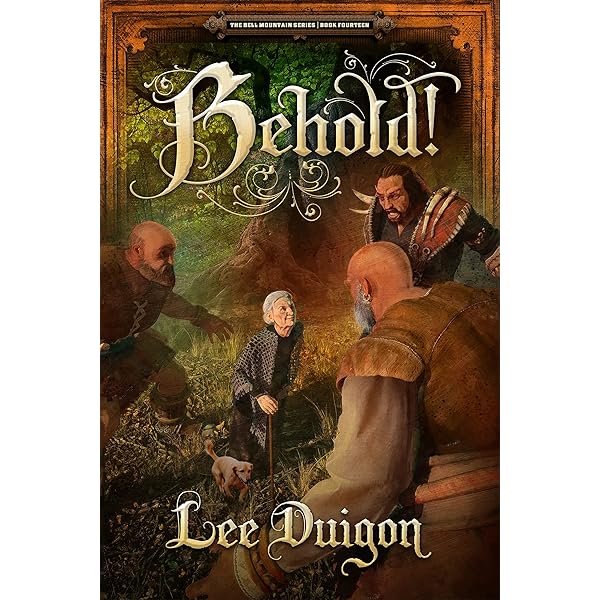
Behold! isn’t the end of the Bell Mountain series; but COVID screwed things up, and there are another two books waiting to be published–and half a book waiting to be finished.

Oceans of Time–Kirk DouPonce is busy with the cover art, editors are busy with the text, and I hope and pray it comes out this year in time for Christmas.

Ozias, Prince in Peril–Now we’re going back 2,000 years in Obann’s history to tell the story of King Ozias, King Ryons’ ancestor, who wrote many of the Sacred Songs and was Obann’s last anointed king until Ryons came along. The book has been written, but I have no idea when it’ll be published.

The weather around here, this spring, has been cranky–and there sits Ozias, Prince Enthroned, only half-written, waiting to be finished. So what I have is a bunch of notebook pages outlining the rest of the story. Weather permitting, I would very much like to start writing it tomorrow!

What’s with all this stuff about the weather? Well, I write my books outdoors. It helps me visualize what I’m writing about. And the physical therapy sessions chew up a lot of my writing time. Obstacles! I had to write a Newswithviews column today, and go to the supermarket–so no Ozias today, and only four blog posts. As my mother used to say, that’s the way the cookie crumbles.

I hope I can find the bakery tomorrow.

‘My Books Have a Mission’ (2012)

Bell Mountain Series

Gee, there’s a lot of them…

I admit this post sounds a little pompous, twelve years after it was written. But that’s something that can happen to you when you’re serious about your work.

My Books Have a Mission

I have half a book to write–Ozias, Prince Enthroned–and another lined up after that. And it’s nerve-racking to watch what happens to our culture while I feel like I’m only treading water.

Onward, anyway. Work and pray, and leave the outcome up to God.

‘Escape!’ (2012)

The Glass Bridge (Bell Mountain #7)

A glass bridge–how’s that for a fresh look at reality?

Gee, this post is 12 years old. Who’d have thought I’d last so long?

So… Why write fantasy? Why read fantasy? Well, one reason would have to be to get away from the nooze.

Escape!

I now understand that a fantasy novel–unless it’s just a load of pfud–can be a parable. It can teach us truths. We see ourselves and our world from unfamiliar vantage points; we see things that we usually miss.

And no, it’s not as easy as it looks.

‘Writing Believable Fantasy’ (2017)

Image result for images of fantasy

Don’t forget to provide your imaginary characters with an imaginary landscape.

I won’t add more helpful hints to this little essay. No–there’s something else I wish to add, which didn’t occur to me seven years ago.

Writing Believable Fantasy

Here’s another aspect to the question. Let’s say you can write believable fantasy. The next question: why do so? Why?

Increasingly I’ve come to view fiction as parables. They’re not factually true, not about real people–but they could be. Parables have to be believable: how else is a parable to teach the lesson it is meant to teach? Our Lord Jesus Christ knew that very well, and made abundant use of parables.

As did, for example, C.S. Lewis in his Chronicles of Narnia. It’s longer than Christ’s parable of The Good Samaritan, but they are obviously related to each other.

“‘I Don’t Read'” (2021)

I have family members who never, never, never read. As a writer, this distresses me. But it’s a very widespread phenomenon.

‘I Don’t Read’

Having achieved just about universal literacy, civilization proceeds to throw it away! Voila! The wisdom of centuries–gone! Just like in The Time Machine:

I pray that’s not our future. I can write books, but I can’t get anyone to read.

‘By Request, From “The Theologian and the Assassin,” (Bell Mountain Chapter 13) (2019)

The Cellar Beneath the Cellar (Bell Mountain, 2) - Kindle ...

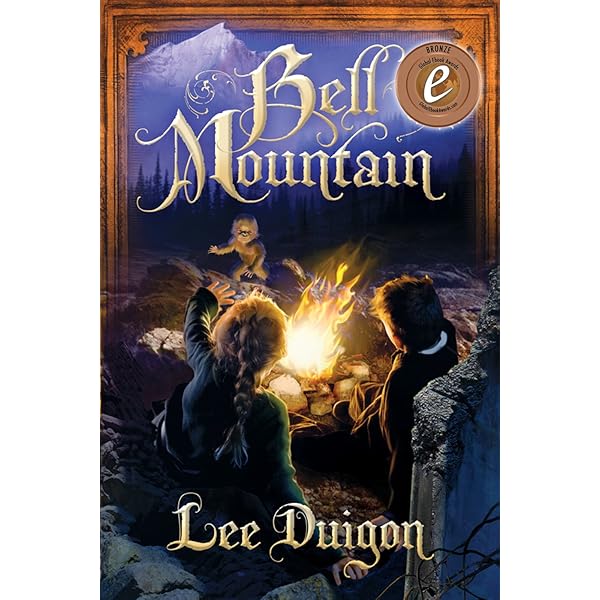
(The “e” is a Global E-Book Award!)

Every now and then I remember that this blog was set up to tell people about my books and hopefully sell some of them.

Here’s a sample taken from Chapter 13 of Bell Mountain (Vol. 1), requested by Joshua:

By Request: from ‘The Theologian and the Assassin’ (Bell Mountain Chapter 13)

Ah, Lord Reesh! What a wonderful villain he was.

Anyway, you can read up on the whole Bell Mountain series right here on this blog, and order them via amazon.com or http://www.chalcedon.edu/store  .

Epistle to ‘Somebody’, Part 2

Beautiful Child Typewriter Stock Photo 219763774 | Shutterstock

Somewhere in my family album is a picture of me, eight years old, sitting at my aunts’ typewriter. I think what it says is that writers are born to tell stories.

Our friend Amalia would like to know what kind of training you need to have, to become a writer. I’m here to tell you this: Mostly you have to train yourself.

I know, I know, there are all sorts of writing courses out there. I’ve never taken one. But if I were to teach one (I have some experience, teaching “writing” in an adult night school), I would say there are only two things the aspiring writer really needs to do and will get nowhere, fast, if he or she doesn’t do them:

Read, read, and read some more!

Write, write, and keep on writing.

Again, we now have self-publishing, which we didn’t have when I finally sold my first novel in 1986, and that takes away a lot of the frustration and the heartache. Even so, I can’t help feeling my work is nothing, really, unless someone out there is willing to pay to publish it. Not so many years ago, you would hardly believe how difficult that was to achieve!

I have known wannabe novelists who hardly ever read novels. They have no idea what a story looks like, let alone how to create one and tell it. They create characters who are thinly-veiled wishful-thinking avatars of themselves, and it’s a rare reader who won’t see through it.

Anyhow, it’s really pretty simple. If you want to be a writer, you have to read and write a lot. An awful lot.

You won’t be able to help getting better at it.

Epistle to ‘Someone’ (How to Become a Writer)

Bell Mountain by Lee Duigon - Picture 1 of 1

[Part I of II–I don’t want to be long-winded]

I have received an e-letter from “Someone” (WordPress didn’t give me his name) asking me how to become a writer who writes Christian novels (you can read it in yesterday’s comments). I don’t know about other writers, but I always want to hear from readers. So I’ll do the best I can to answer Someone’s questions.

*There is no college course that I ever heard of in how to write a novel. There are college courses which you may find illuminating and make them part of your worldview. I’ll probably never forget my Persian Empire course, taught by Prof. Maksoudian. No one wanted to miss his lectures! It never put a penny in my pocket, though.

**By far the most important, useful, and valuable thing a writer-in-training can do is… read! Find authors you like and devour their work. We learn by imitation–we grow out of it–in fact, it’s very necessary to outgrow it–but all the same, it’s a door through which any aspiring author must pass. Funny: the most telling lesson I learned from C.S. Lewis was to stop trying to imitate C.S. Lewis. But in the meantime I had added to my understanding of how to tell a fantasy story.

I went through periods of imitating Stephen King and J.R.R. Tolkien. What I learned from trying to write like they wrote was more about how I should write. I had to find my own voice. You do that by trying on other voices, one after another. All the time, whether you’re aware of it our not, you’re learning. And eventually you get there.

***Also critically important: Never give up! Never! This is a sore temptation.

When I was young there was no self-publishing, unless you were fabulously wealthy. You were in competition with thousands and thousands, if not millions, of other aspiring writers. And it was acutely depressing when you came across pure dreck that somehow got published when your work didn’t.

It might take you several decades to break into print. Meanwhile, never give up. Never, never, never. You will often feel demoralized. Fight your way through it.

Finally, you can indeed get help and encouragement from established writers who remember their own hard times and can easily sympathize with you. So thank you, T.E.D. Klein, Robert Jordan, Charles Grant, Gary Brandner, and Ramsay Campbell.

[Part II to come]