I’ve Been Reading My Books

The Glass Bridge (Bell Mountain, #7) by Lee Duigon | Goodreads

I’m in no condition yet to go back to writing novels, so I’ve been reading them instead. Today I finished The Glass Bridge. It’s Book No. 7 in my Bell Mountain series.

I’m doing this so I can refresh my memory. Fifteen of these books have been published–quite a load for any memory to carry. I don’t think I’m wrong if I say I’m proud of them.

Next, I have to type up No. 17, Ozias, Prince Enthroned; and after that, one more, from scratch: Ozias, Prince Betrayed. After that–well, I don’t know. It depends on what God will give me.

‘Writing a Novel Is Like…’ (2014)

The Glass Bridge (Bell Mountain, 7)|eBook

I’m currently trying to write Ozias, Prince Enthroned. Not having all the pieces is hard enough. Now I’m looking at–shall we call them “health challenges”?–looming up in front of me. I finished the fourth chapter set yesterday. Maybe it was a miracle. Distractions are not good for novel-writing.

Writing a Novel is Like…

So please pray for me: I just want to be able to carry on with my work, in an atmosphere of peace and normalcy. I have another Ozias book to write after this one. And after that–

Well, we’ll just have to see.

‘Escape!’ (2012)

The Glass Bridge (Bell Mountain #7)

A glass bridge–how’s that for a fresh look at reality?

Gee, this post is 12 years old. Who’d have thought I’d last so long?

So… Why write fantasy? Why read fantasy? Well, one reason would have to be to get away from the nooze.

Escape!

I now understand that a fantasy novel–unless it’s just a load of pfud–can be a parable. It can teach us truths. We see ourselves and our world from unfamiliar vantage points; we see things that we usually miss.

And no, it’s not as easy as it looks.

‘Writing a Novel Is Like…’ (2014)

The Glass Bridge (Bell Mountain, 7) by Lee Duigon | eBook | Barnes & Noble®

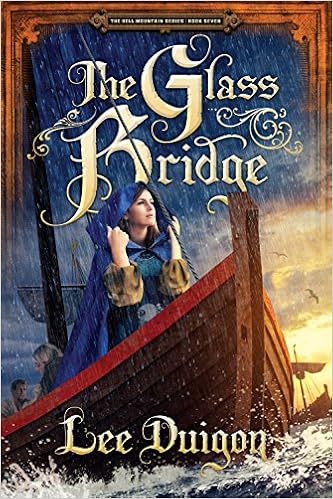
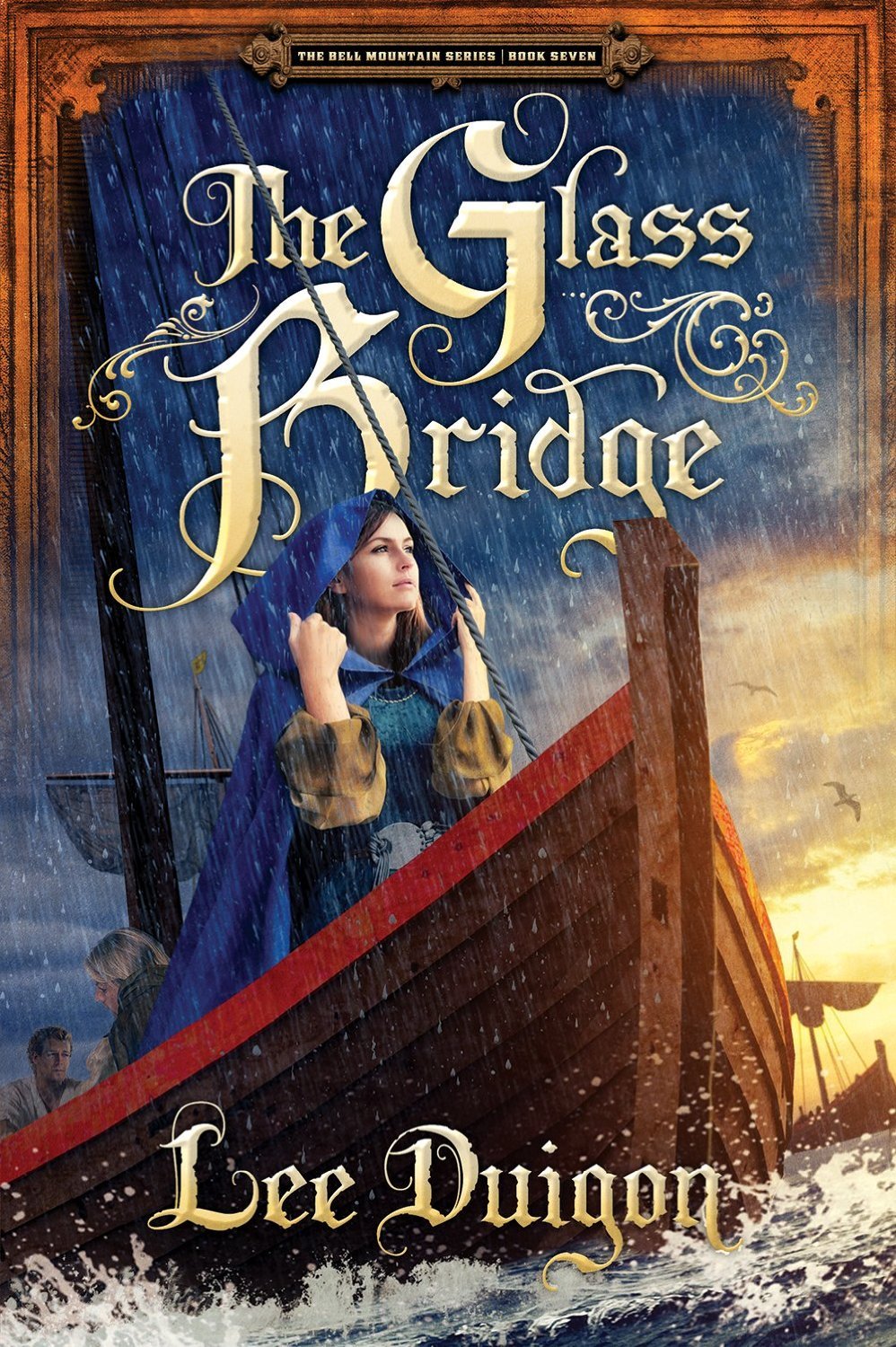
Book No. 7–that’s Queen Gurun in the bows.

Let me tell you what it’s like, writing a novel.

Writing a Novel is Like…

Probably almost everybody can learn how to put a novel together. And almost everybody thinKs he or she can write a novel. “If only I had the time!”

Lately a question has arisen in my mind: how many publishing execs, editors, marketing consultants, or reviewers could write a decent novel if their lives depended on it?

Do You Cry While You Write?

Ailish Sinclair: Books, Biography, Blog, Audiobooks, Kindle - Amazon.com

Ailish Sinclair

Scottish blogger and writer Ailish Sinclair asks a question which I can answer, sort of: “Crying While Writing: anyone else do this?”

Crying While Writing: anyone else do this?

The other day, as I read to my wife a chapter of my new book in progress, Ozias, Prince in Peril, I found my voice beginning to break as I came to the death of a major character to whom I’d already grown attached. I didn’t actually cry, but I came close: I already loved this character and writing him out of the saga was… well, hard.

Ailish makes a good point. If the writer can’t get emotionally involved with the story he or she is telling, why should the reader? You have to believe in your story. It has to seem real to you, at least while you’re writing it.

I won’t forget how upset Patty and my editor, Susan, got a few books ago when they thought I’d killed off the old Abnak warrior, Chief Uduqu. “I was ready to come up there and punch you in the nose!” Susan said. And Sir Walter Scott had to rewrite part of Ivanhoe because his printer was so upset over the death of Athelstane. I’m glad I didn’t have to rewrite The Glass Bridge.


Killing Uduqu

The Glass Bridge (Bell Mountain #7): Lee Duigon: 9781891375675 ...

If your characters don’t connect with your readers, your book won’t work, your story will fall flat.

I introduced the fierce old Abnak sub-chief, Uduqu, in Book No. 2, The Cellar Beneath the Cellar. I liked him and kept him around. And in Book No. 7, The Glass Bridge, he took part in a desperate battle.

I won’t forget how my wife and my editor reacted when they thought I’d killed off this character. They were about ready to scalp me. Sheesh, what was I thinking! But they only had to read a few more paragraphs before they learned Uduqu was all right, after all.

There are characters who walk into the story just to do some little thing and then wind up staying to do a lot of things, and growing, and getting you attached to them. With 12 Bell Mountain novels published so far, there are of necessity an awful lot of characters.

Why am I talking about this when I have to crank out a Newswithviews column? Oh, I don’t know. Do I feel a need to justify populating my books with all those characters?

Well, heck, it’s a history–like Livy’s history of Rome. Count up all the characters in Livy sometime. True, the history of Obann, in my books, is fictional. Some uncharitable souls have said the same of Livy. Not to mention Geoffrey of Monmouth, and Herodotus. I guess if you don’t like their histories, you won’t like mine, either. But there’s something to be said for a book that’s stayed in print since 400 B.C.

[Confidential to “Unknowable”: I hear you, brother!]
Byron the Quokka: Bell Mountain Trivia Question No. 7

See the source image

G’day! Byron here–and don’t mind the knife, I promised Mum I’d do a bit of whittling today. Sometimes we fall behind a little in our whittling, and then we have to help each other out.

Oh! But I’m supposed to give you the next question in the Bell Mountain Trivia Contest. This would be really great if a lot more people read the books, but oh, well… So here it is, Question No. 7:

In what book (not a Bell Mountain book! one of her books) did Ellayne find the story of The Glass Bridge?

Some of the quokkas are complaining that the questions are too easy; so I have to remind ’em that those questions are designed for humans, not for us.

‘Hobbits, Orcs Colonize New Jersey’ (2014)

See the source image

Actually, the Orcs aren’t so much interested in colonizing as they are in tailgating and honking at you to drive faster–especially when you’re stopped at a red light. When they’re not doing that, they’re operating leaf blowers.

Hobbits, Orcs Colonize New Jersey

But what I really wanted to do with this post, back in 2014, was to call attention to what was then my newest Bell Mountain book, the seventh in the series, The Glass Bridge. I still marvel at the way artist Kirk DouPonce brought Gurun to life.

I find it very hard to remember she’s not a real person. And sometimes I don’t bother trying.


If I Could See What You See

There’s something I would love to be able to do, which no writer can do–and that would be to get inside the reader’s head, as it were–and “see” the people and places and scenes I write about as the reader sees them. Ever since I announced the Bell Mountain Movie Contest, I’ve been thinking about that.

On two occasions–and even just one is extremely rare–my cover artist, Kirk DouPonce, working from live models who are just kids in his neighborhood, painted one of my characters exactly as I imagined her: Ellayne, on the cover of The Cellar Beneath the Cellar, and Gurun, on the cover of The Glass Bridge. It is as if these two fictional characters that I created were real people, after all: so much so, that somehow the words “I created” seem rather silly. I can’t create real people!

It would be eerie, to meld my own imagination with the reader’s and look with his or her mind’s eye on some place in Lintum Forest, or on the great Temple of Obann, or the cloud on the summit of Bell Mountain. What if they looked to the reader exactly as they “look” to me?

I hardly know what to make of that!

Did I Do That?

Image result for images of the glass bridge by lee duigon

These remarks may strike some of you as a little weird. But writing fantasy novels does tend to lean a bit in that direction. And there are always readers who are curious about what it’s like to be a writer. So here goes.

I’m editing Bell Mountain No. 11, The Temptation, which means I have to read it attentively. And although I do know I made up the characters that populate my books, it doesn’t feel anymore like I made them up! They feel like real people that I really know.

When I’m actually writing a book, I’m too deeply involved in writing it to respond to what I’ve written. So when I read it, much later, it’s a whole different experience–almost as if someone else wrote the book, not me. I read a passage that gets to me and find myself thinking, “Oh, I didn’t write that! Did I? Could I?” It feels like these characters, places, and events came into print through me and have a real existence that has little or nothing to do with me. As if I were more a chronicler than a creator.

I wonder if other writers feel these things. I know she isn’t, but at the same time I just can’t shed the notion that Gurun (that’s her, pictured above) is a real person who is even now doing things, experiencing things, that I don’t know about.

I believe the people I read about in the “news” are real, don’t I?

“Never heard of ’em,” says Gurun.