From the Unashamed of Jesus blog… We are not alone
This verse, Joel 2:28, was my first inspiration for the Bell Mountain books. –LD
From the Unashamed of Jesus blog… We are not alone
This verse, Joel 2:28, was my first inspiration for the Bell Mountain books. –LD
We know Allison as “Weaveningword.”
I John 3:1-3 (“Behold what manner of love the Father hath bestowed upon us..”) is one of my favorite passages in the New Testament. –LD

I really ought to have learned by now that consulting “Bible scholars” is usually a waste of time.
But I was reading Ezekiel Chapter 1 yesterday, the vision of the “living creatures,” and I wanted to enrich my understanding. Because that’s a very difficult chapter!
Ezekiel was a scholar, a trained man: but that chapter is written by a man who is deeply frightened and terribly confused. The “living creatures” are cherubims, a familiar motif in the art and literature of the Ancient Near East. Ezekiel would have known all about them. But the way the chapter reads, it hasn’t been written by someone who has studied cherubims… but by someone who has seen them.
Enter Bible Scholars Inc. They are quick to spot parallels between Ezekiel’s vision and St. John’s Revelation. Both describe cherubims. Other motifs are repeated throughout.
There are also some differences in details–six wings for the cherubims, for instance, vs. four–which the Bible Scholars account for by saying this was how John crafted them to suit his own purpose.
In other words, he made it all up!
Not only made it up, but also got away with it. Wink, wink, nudge, nudge. Watch us put one over on the plebs.
Because that’s what they would do, they assume that was what Ezekiel and John did. Like Lord Chutt, they attribute their own low standards of character to everyone. I’m a stinker, so everyone else must be, too. I make things up! Therefore the writers of the Holy Scriptures made up everything!
How contemptible is this?
There are reliable Bible teachers out there. There have to be.
As someone who gets paid for making things up, and has received awards for doing it well, I declare the Bible doesn’t read like fiction. And I do know something about fiction. Gilgamesh is fiction and folklore. Homer write historical novels heavily influenced by oral tradition. It’s great fiction, but it’s still fiction.
I am as sure as I can be that Ezekiel wasn’t inventing anything. And I’ll bet he would have turned cartwheels if God had released him from being a prophet.
False prophets and phony pastors: We’ve still got ’em.
From the UnashamedofJesus blog. We are not alone. –LD

Yesterday I stumbled upon a bunch of atheist websites that mock Christians for “believing snakes can talk.” See, if we believe the Bible is true, then we must believe that Adam and Eve, in the Garden, had conversations with a serpent.
Oooooh–they’ve got us there! If we were Smart, we’d believe in Progress and World Government and Education. Stuff like that.
There were some timorous attempts to defend the Bible narrative as “a metaphor.” Like, of course it didn’t really happen as described, this was just how ancient people thought and we don’t think that way anymore because we’re so Smart, blah-blah.
I don’t think it’s a metaphor at all.
Satan, a spirit, wished to talk to Eve and lure her into disobedience to God. He chose to use a serpent as his vessel. Why not? You can’t do it, I can’t do it; but we’re not spirits. Satan has no physical body of his own. He has to use a body that’s already there.
There are things spoken of in the Bible that are far beyond our experience and understanding. The same fleshly beings that produced Let’s Make a Deal are never going to be hip to all that happens in the Bible. Anyone who tells you that he understands it all is just gassing you.
Fear the serpent if it speaks to you: ’cause it ain’t Charlie the Garter Snake talking, and you’d better not listen.
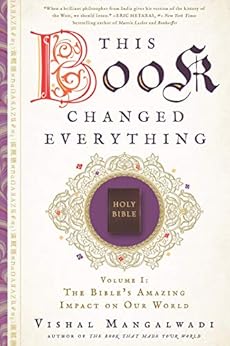
Sometimes the assignments I get from Chalcedon are just so good!
I’ve been asked to read and review This Book Changed Everything, by Vishal Mangalwadi. I’ve only just started reading it, but I can’t wait till I finish to tell you how wonderful it is.
Mangalwadi’s personal knowledge and experience of Hinduism and Buddhism, and life in India, have led him to Christianity–and given him a unique perspective on it. He profoundly understands the dangers of the “post-truth” game being played today by Western intellectuals, and analyzes and explains these dangers clearly and with grace.
The core of his thinking is easy to explain in just a few simple words. You won’t need a degree in philosophy to follow him. Let me briefly sum it up for you:
God is! And He has revealed Himself–and our own selves also–in a book that changed the world: the Bible.
Don’t wait for me to read it and write a full review of it, to be published by Chalcedon. Get it for yourself and read it now. Educating, edifying, and enlightening–Mangalwadi’s work is a gift of God to all the world–by way of India.
Can the West be brought back to Christ by the work of missionaries from countries that the Western missionaries visited so long ago, and taught the Bible to the people of those countries?
It seems like just the sort of thing God loves to do.
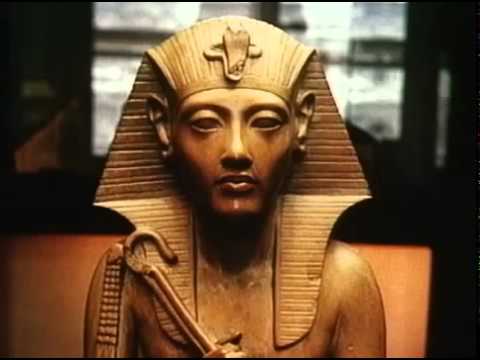
Apparently they don’t let you be a Bible Scholar unless you show them that you don’t believe a word of it.
Among the historical enigmas that the Bible serves up to us is the identity of Joseph’s Pharaoh, the one who made Joseph a ruler in Egypt. We don’t know why the Bible doesn’t give us this pharaoh’s name–although bear in mind that every pharaoh of ancient Egypt was known by several names: Ramses II, for instance, was also User-Maat-Re and several other names. Egyptian royal names were also, usually, religious statements: “Son of Ra,” “Son of Thoth,” “He with Whom the Goddess Mut Is Satisfied,” etc. Jewish scribes might not have been comfortable, writing down such names. Given all the difficulties that they faced, can you blame the scribes for just writing “Pharaoh”?
It would be interesting (to say the least) to know which particular Pharaoh made Joseph his prime minister. So every now and then I look it up, to see if any new discoveries have been made.
If they have, I haven’t been able to discover what they are. What I do discover–in Wikipedia, for instance–is an unquestioned assumption by “scholars” that the story of Joseph isn’t true. Indeed, they’re calling it a “novella,” a conscious work of fiction, a la Stephen King, cooked up by Jewish scribes living a thousand years after the events in the story.
Is it possible there was once a severe famine in Egypt, the record of which has not survived the passage of three or four millenia?
Is it possible that Pharoah, whoever he was, appointed a non-Egyptian, whom he trusted, to be the chief executive officer of his realm, with a special duty to prepare for the famine and try to ameliorate its effects? And is it possible that this high official, upon his appointment, was given an Egyptian name and title–so that no one in Egypt would have called him “Joseph” anymore? In fact, a number of pharaohs did make such appointments.
Of course those things are possible. There is nothing in the story of Joseph that makes it impossible. But what will ever satisfy Bible Scholars that any story in the Bible is true? A signed cuneiform affidavit by Hatzy Tatzy, high priest-king of Uruk, confirming his dealings with one “Joseph the Hebrew, son of Israel, prime minister of Egypt under Pharaoh Rutin Tutin III”? Would that do it for them?
Anyway, nobody was writing any “novellas” in 600 B.C. They hadn’t yet learned how.
From Kristi Ann’s Haven… We are not alone. –LD
Why should we read the Bible every day? Our friend SlimJim has an answer. –LD

If we believe the Bible, then the question doesn’t even need to be addressed: of course he was for real. But there are other questions we can ask, whose answers can further illuminate the Bible for us.
Pictured above is a set of Mycenean body armor from Greece, circa 1200 B.C.: this and others like it can be seen in museums. Goliath probably had similar equipment–only his would have been new, well cared-for, and would have shone brightly–one might easily say alarmingly–with reflected sunlight.
Was Goliath a giant? Earlier Biblical texts, such as the Dead Sea scrolls, give his height as “four cubits and a span,” or about six feet nine inches. The NBA is full of guys that tall or taller; but back in the Bronze Age, six-foot-nine would have been much taller than the average full-grown man. Our King James Bible says Goliath was “six cubits and a span,” or nine feet nine inches tall: but that comes from the later Masoretic Texts and may be a scribal error.
Either way, Goliath was probably by far the biggest man in either army; and the armor he wore would have made him look even bigger. Ancient armor had two purposes, not just one: to protect the wearer, and to intimidate his foes. Goliath in new armor would have intimidated most people. Indeed, he intimidated everyone but David.
There’s a lot that we don’t know about the Philistines, including where they originally came from. Their artifacts suggest the islands of the Aegean Sea, or Crete, or the southeastern coast of Asia Minor. The ancient Egyptians called them “Peleset,” one of the Sea Peoples blamed for wrecking Mediterranean civilizations at the end of the Late Bronze Age. We don’t know what the Philistines called themselves.
The Greeks of the Mycenean civilization, the ones who fought the Trojan War, had a custom of settling matters between armies by single combat between each army’s chosen champion: Menelaus vs. Paris, Ajax vs. Hector, in The Iliad (in which neither of those two combats was allowed to go to a finish). Goliath challenges Israel’s army to send out a champion to fight him. His procedure is the same as what we see in Homer–and suggestive of authenticity.
When David killed Goliath, the Philistines panicked and fled. The strictest rules of Bronze Age military etiquette–which were observed by virtually no one–called for the Philistine army to leave off its operations and peacefully retire. But because they ran, the Israelites chased them back to Philistia. We doubt the Greeks would have sailed home from Troy if Paris had succeeded in killing Menelaus… although the rules said they should have.
The Bible provides us with many glimpses into long-lost epochs of history, many of which wind up being further illustrated by archaeological discoveries.
There is nothing in the story of David and Goliath to prevent a reasonable person from believing it.