I’ve Been Reading My Books

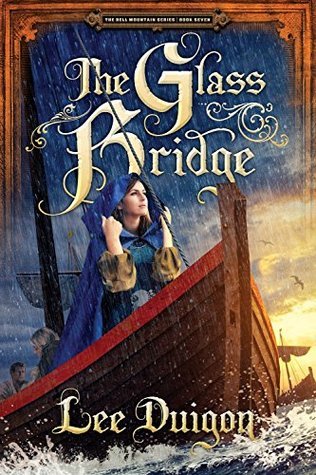
The Glass Bridge (Bell Mountain, #7) by Lee Duigon | Goodreads

I’m in no condition yet to go back to writing novels, so I’ve been reading them instead. Today I finished The Glass Bridge. It’s Book No. 7 in my Bell Mountain series.

I’m doing this so I can refresh my memory. Fifteen of these books have been published–quite a load for any memory to carry. I don’t think I’m wrong if I say I’m proud of them.

Next, I have to type up No. 17, Ozias, Prince Enthroned; and after that, one more, from scratch: Ozias, Prince Betrayed. After that–well, I don’t know. It depends on what God will give me.

Fun for the Dog, Not for You

I don’t know that I would ever reward a dog for tearing up a bunch of paper bags and leaving the room in a shambles… which I would have to clean up.

Then again, I always wanted my pets to have as much fun as they could. Even if it got a bit messy.

Just as long as the cat never learns how to open the refrigerator…

How Do I Do It? (Part 2)

The Thunder King

I have 15 Bell Mountain books in print, with three more planned, one of which is written and is currently being edited (Ozias, Prince in Peril).

I don’t know how many characters I had to make up to populate these books. At a guess, say three or four hundred. Some come back in book after book. Some appear only for a walk-on. But as they say, you can’t tell a story without characters.

Where do they come from, all these characters?

Some I create to carry out certain jobs demanded by the plot. Having done so, they either remain in the story to do more, or quietly fade away.

A few start out as just a cool name. I borrow a lot of names from various sources–Greek and Roman history, ancient Welsh stories, Norse folklore. And then, often, a character takes form around the name. You can’t let a handle like “Abombalbap” go to waste.

Even fictional characters, of course, have to live somewhere. I had to invent a bunch of countries to house my characters. Obann, Wallekki Land, Abnak country, Arachosia–oh, all sorts of countries! And cities, too.

To invent all this stuff, nothing will prove more valuable than years and years of reading. It’s fun hanging out with Herodotus or Sir Thomas Malory; but you can also learn from them. The more you read, the better. And it’s okay to concentrate on reading the kind of stories you would like to write someday.. I have no time for Serious Mainstream Literature. Give me The Lord of the Rings or The Worm Ouroburos any day.

And that’s enough of this for now.

‘The Lord Is My Shepherd I’ll Not Want’

This is the 23rd Psalm, adapted to be sung in English–by the Joslin Grove Choral Society.

Nice job they did, don’t you think?

Byron’s TV Listings, Jan. 4

Laura the Explorer | “Just a quokka-tastic moment! 🦘📸 Who ...

Happy New Year, boys ‘n’ girls! Byron the Quokka here… in a kind of paradise of bicycles. I’m here to bring you a sample of Quokka University TV .

8:30 a.m.   Ch. 15   ICED TEA WITH WILMA–Talk, talk, talk

Join Wilma Zavoody as she babbles and cackles with guests you’ve never heard of and will never see again! Today: Professor Dylan McMillan, who makes mud pies and tries to get his students to eat them. You’ll be surprised how often he succeeds!

8:36 a.m.   Ch. 26   TALES FROM THE BUSTED COCCYXHistorical romance

Magnus Spagnus (Robert Shaw) operates an 18th century inn where very strange things happen! Today: The ghost of a sadistic highwayman (Bela Lugosi) haunts the luxury bedroom on the second floor. He also plays Yahtzee. Just in time for Britain’s Imperial Yahtzee champion (Joan Collins) to challenge him to a match.

9:00 a.m.  Ch. 06  HAMBONE! THE RETURN–Philosophy

Sandy Becker played Hambone in the 1960s. Now the torch is passed–to Janice Ksheev, latest in a long line of Hambone imitators. Watch her dance her way through dangers that would demoralize an ordinary man. And absorb the wisdom of Hambone (“Wet wood burns the best,” and other wise sayings).

Well, that’s that. I’m so happy that they’re bringing Hambone back to TV. I was running out of Cisco Kid reruns.Here’s a video cut to whet your appetite.

Byron the Quokka, signing off (don’t want to miss Hambone)!

‘How to Ruin a Fantasy’ (2015)

Laying it on a bit thick, dontcha think?

I guess you could say writing fantasy novels is my day job. I’ve been writing them since I was 12 years old, always learning, beating my head against the stone wall of publication until I finally achieved it… Anyway, I know what I’m talking about.

Why do I find so many fantasy novels sabotaged by their own writers?

How to Ruin a Fantasy

What’s with some of these writers? They want you to think you’re in an imaginary world, they want it to seem real to you–and then the Elf turns to the Dwarf and sez “We have to learn to value each other’s lifestyle.”

Run screaming to the sidewalk. Toss book into the nearest fire.

Never, never, never do this! Your created fantasy world must have integrity!

And that’s it for me, I have to rush off to the doctor’s office…

Five Favorite Novels

THE CHESSMEN OF MARS by Edgar Rice Burroughs (Mars Book #5)

Bob Abbett’s cover art is only one of many delights!

We’re living in an age of rampant cultural decay; and there are times when we need to NOT have it on our minds. We need escape! It’s as simple as that.

Here are five novels that I can always count on to provide escape.

The Chessmen of Mars by Edgar Rice Burroughs. Not only does ERB provide you with the rules of Martian chess; he also brings on Ghek the Kaldane, one of the most intriguing non-human characters ever created. Any description I might briefly offer would fall short by a long shot.

Freddy and the Ignormus by Walter R. Brooks. The Freddy the Pig books are marketed as children’s books, but they’re full of fun for adult readers, too–maybe even more so. In this outing, the legendary pig and his barnyard friends take on a haunted house. But is it really haunted, or just set up to look that way?

The Lord of the Rings by J.R.R. Tolkien. What can I say? I consider this the greatest fantasy novel of all time. Tolkien’s artistry with words will put you there. And although this tale is full of monsters, good is stronger than evil. Can’t hear a more welcome message than that, can you?

20,000 Leagues Under the Sea  by Jules Verne. A lot of modern readers don’t like this book, but I do–and always have, since I was a boy. It was written well before the invention of SCUBA gear and deep-sea vehicles… but it’s so easy to forget this, once the story sucks you in.

That Hideous Strength by C.S. Lewis. This is the climax of Lewis’ “space trilogy,” but it works just fine as a stand-alone story. Can the world be saved from a cannibalistic alliance of Science and Government? Better hope so! Lewis wrote it some 70 years ago, and it seems prophetic now.

So there’s five books to get you started on a summer of fabulous escape fiction. The idea is to step aside for a moment and take a breather, hose down your brain, and get ready for the next round. In that sense, these books are part of God’s divine, all-foreseeing providence. Be thankful for them.

‘By Request, From “The Theologian and the Assassin,” (Bell Mountain Chapter 13) (2019)

The Cellar Beneath the Cellar (Bell Mountain, 2) - Kindle ...

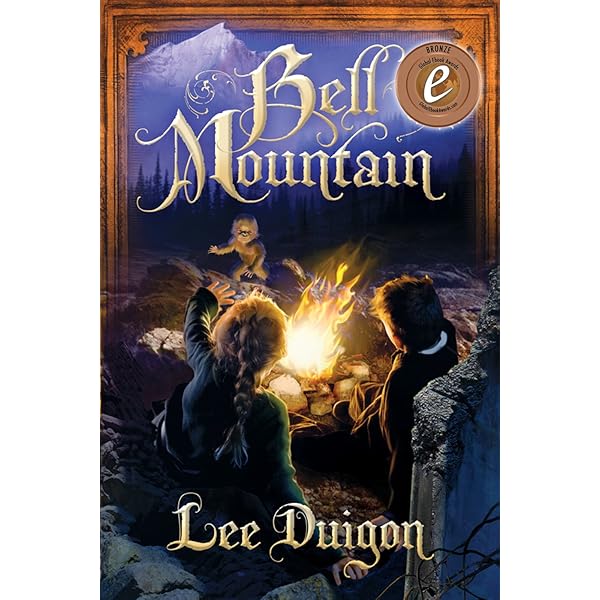
(The “e” is a Global E-Book Award!)

Every now and then I remember that this blog was set up to tell people about my books and hopefully sell some of them.

Here’s a sample taken from Chapter 13 of Bell Mountain (Vol. 1), requested by Joshua:

By Request: from ‘The Theologian and the Assassin’ (Bell Mountain Chapter 13)

Ah, Lord Reesh! What a wonderful villain he was.

Anyway, you can read up on the whole Bell Mountain series right here on this blog, and order them via amazon.com or http://www.chalcedon.edu/store  .

Epistle to ‘Someone’ (How to Become a Writer)

Bell Mountain by Lee Duigon - Picture 1 of 1

[Part I of II–I don’t want to be long-winded]

I have received an e-letter from “Someone” (WordPress didn’t give me his name) asking me how to become a writer who writes Christian novels (you can read it in yesterday’s comments). I don’t know about other writers, but I always want to hear from readers. So I’ll do the best I can to answer Someone’s questions.

*There is no college course that I ever heard of in how to write a novel. There are college courses which you may find illuminating and make them part of your worldview. I’ll probably never forget my Persian Empire course, taught by Prof. Maksoudian. No one wanted to miss his lectures! It never put a penny in my pocket, though.

**By far the most important, useful, and valuable thing a writer-in-training can do is… read! Find authors you like and devour their work. We learn by imitation–we grow out of it–in fact, it’s very necessary to outgrow it–but all the same, it’s a door through which any aspiring author must pass. Funny: the most telling lesson I learned from C.S. Lewis was to stop trying to imitate C.S. Lewis. But in the meantime I had added to my understanding of how to tell a fantasy story.

I went through periods of imitating Stephen King and J.R.R. Tolkien. What I learned from trying to write like they wrote was more about how I should write. I had to find my own voice. You do that by trying on other voices, one after another. All the time, whether you’re aware of it our not, you’re learning. And eventually you get there.

***Also critically important: Never give up! Never! This is a sore temptation.

When I was young there was no self-publishing, unless you were fabulously wealthy. You were in competition with thousands and thousands, if not millions, of other aspiring writers. And it was acutely depressing when you came across pure dreck that somehow got published when your work didn’t.

It might take you several decades to break into print. Meanwhile, never give up. Never, never, never. You will often feel demoralized. Fight your way through it.

Finally, you can indeed get help and encouragement from established writers who remember their own hard times and can easily sympathize with you. So thank you, T.E.D. Klein, Robert Jordan, Charles Grant, Gary Brandner, and Ramsay Campbell.

[Part II to come]

‘Not Only Dumb, But Evil’ (2015)

Back in 2015 I was reading and reviewing a lot of teen-lit. Eventually I had to stop: those books were creeping me out.

Not Only Dumb, but Evil

I wonder if I ought to start again. Has young adults’ fiction gotten any better, or is it even more sinister and toxic than it was ten years ago? Waddaya think?