Trying to Understand ‘Ecclesiastes’

King Solomon Images – Browse 2,563 Stock Photos, Vectors ...

King Solomon (what’s he thinking?)

I’m re-reading this book. Maybe I have too many things going on in my life, just now, to follow King Solomon’s musings. Maybe my theology isn’t up to the task.

“Vanity and vexation of spirit.” I’m not going to go back and count the times he uses those words; it’s pretty much everywhere in the book.

What is he teaching us? To me it often looks and sounds like he’s throwing in the towel. Well, we’ve all be there, haven’t we? But that would hardly go hand in glove with the rest of the teaching in the Bible. Can you imagine Paul telling new Christian converts, “It’s all just vanity and vexation of spirit”?  Obviously I’m not seeing into the heart of the matter.

Some of you out there must be much farther along the Way than I am. What’s your take on Ecclesiastes? Why is it in the Bible? What’s it there to do?

It’s something to think about. While I get ready for another visit to another doctor’s office.

Martin Selbrede: ‘Architects of Disorder’

Martin Selbrede | heroinamerica

Martin Selbrede

Shall the throne of iniquity have fellowship with thee, which frameth mischief by a law?  —Psalm 94:20

Martin Selbrede has provided us with an in-depth examination of Psalm 94–a psalm that deals head-on with corruption in the government.

https://chalcedon.edu/resources/articles/architects-of-disorder-framing-mischief-by-statute

Put simply, corrupt governments enact corrupt laws. Their “justice” plays out as injustice. And the psalmist is not looking for justice somewhere in the end times, but rather, says Martin, “is looking for action in the here and now” (emphasis added).

That would be God’s action. Not “someday,” but now. And not “revenge,” which is an activity of fallen man, but “vengeance”–which is God’s prerogative.

Martin explores the Psalm verse by verse from beginning to end–a major project, but well worth reading. What could be more relevant to the state of our world today than sinful, power-hungry government that seeks to replace God’s laws with its own self-serving decrees? Are you listening, World Economic Forum? (Hint: of course not.)

If only we could unite judgment to justice!

Invest half an hour or so in reading Martin’s essay. You’ll find it’s right on target.

Why Did Jesus Curse the Fig Tree?

In Mark 11: 12-25, on his way into the Temple, Our Lord Jesus Christ wished to pick some fruit from a fig tree. But there were only leaves on this tree… and Jesus cursed it, and the tree withered. It was dead when He and His disciples next saw it.

This incident has puzzled many Bible readers (including me) over the centuries; but in fact it was part of something much bigger.

After he cursed the tree, Jesus entered the Temple and cleaned house, overturning the tables of the money-changers and the merchants, smacking them with a makeshift whip, and condemning the Temple as a house of prayer transformed into a den of thieves. What ever happened to that meek and mild Jesus that we thought we knew?

This 10-minute sermon by Brandon Robbins explains the critical significance of this action by Our Lord. “Finally I get this!” my wife exclaimed, after she watched it.

Really, it’s rather brilliant–and at the same time, clear and understandable. I wondered why I hadn’t seen it myself.

‘The Spirit of Caleb’ (2020)

Tiny grasshoppers on the top of a morning glory leaf at first ...

When they finally came to the borders of the Promised Land, the spies sent out by the Children of Israel made reports that drained the life out of the nation. “The country’s full of giants! We’re only grasshoppers, compared to them! We’re doomed–doomed, I tell you!” And so on and so forth.

But then Caleb spoke.

The Spirit of Caleb

Caleb believed God would keep His promise to give the land to Israel.

We need a large helping of his spirit!

Rushdoony: ‘Giving Fear Too Much Power’ (2020)

Rushdoony3

R.J. Rushdoony

This little message takes less than a minute to deliver; but you can think about it all day.

https://chalcedon.edu/resources/videos/giving-fear-too-much-power

God knows there is a lot to scare us in this world today. But wasn’t that always the case?

Rushdoony said, “We are to proceed in the trust that God is God.” Amen. They aren’t going to defeat God. They aren’t going to erase His word. They will try to do those things, and fail.

We are cautioned against recklessness. We aren’t to abandon common sense. But how crazy did David sound when he volunteered to fight Goliath?

His faith was his knowledge.

‘The Lost River of Eden’ (2015)

This is one of my all-time most popular posts. It’s easy to see why.

The Lost River of Eden

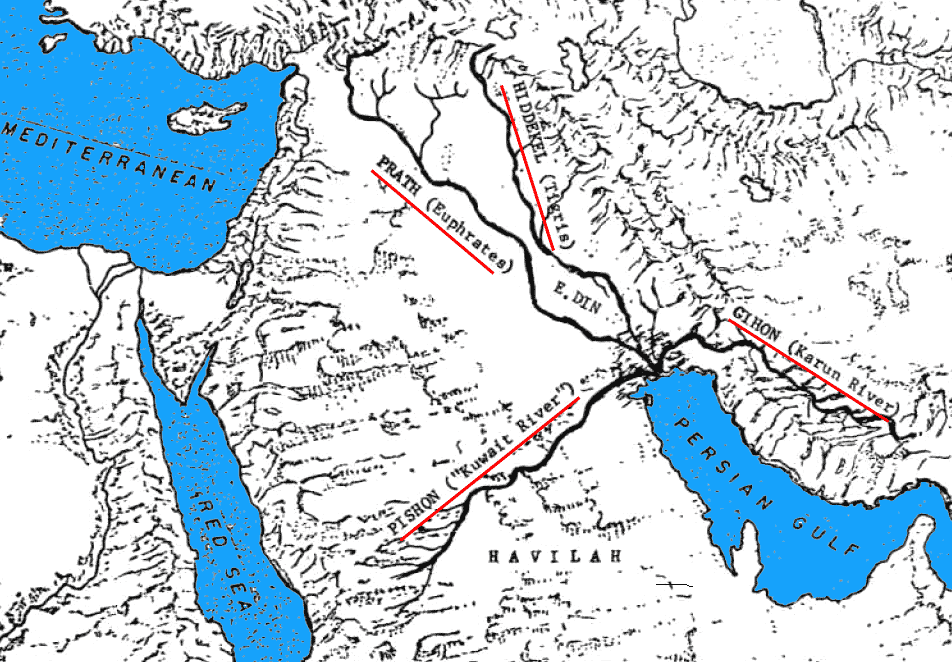
Once upon a time–as recorded in the Book of Genesis, and nowhere else–a mighty river ran across Arabia to flow into the sea when it reached Kuwait. The remains of the river, buried under desert sands for at least 40 centuries (geologists’ best guess) could not be seen until photo-taking satellites came into use.

Yes, we can trust the Bible.

Unless we don’t want to trust our scientific instruments which confirm what the Bible has told us.

‘Who Was Joseph’s Pharaoh? (2019)

See the source image

Joseph’s Pharaoh? We still don’t know.

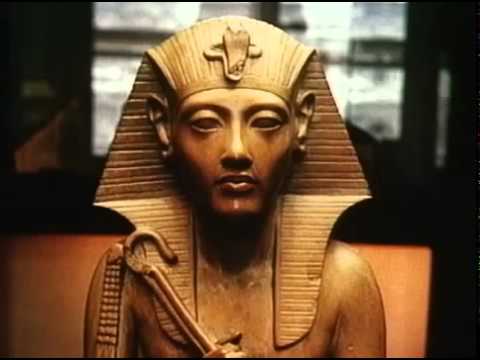
We keep asking the question, but we still don’t have an answer: Who was Joseph’s Pharaoh?

Who Was Joseph’s Pharaoh?

Bear in mind that the art of history, as we know it, was not known in ancient Egypt. They specialized in rubbing out names and incidents that those in power chose to forget. We still do that, don’t we?

We would like to know the name of the pharaoh who appointed Joseph his prime minister. God has not decided that we need to know.

(The computer has been battling me tooth and claw this morning. You’re lucky to be reading this.)

‘Biblical Archaeology: An Interview with Hershel Shanks’ (2005)

Hershel Shanks - Wikipedia

Hershel Shanks (d. 2021)

One of the percs of my job with the Chalcedon Foundation is the opportunity to interview noteworthy people–like Hershel Shanks, founder of the Biblical Archaeological Society and long-time editor of Biblical Archaeology Review. I interviewed him in 2005 .

https://chalcedon.edu/resources/articles/biblical-archaeology-an-interview-with-hershel-shanks

“Archaeology brings the Bible to life in a special way,” Shanks said. “It’s a theological document, but it’s also a very human document, set in a time and place and peopled by real human beings.”

It was a long and very interesting discussion. Don’t look to archaeology, he warned, to “prove” the Bible. “If you need archaeology to prove your faith, you must have a pretty weak faith.”

Shanks didn’t mind discussing some of the hottest controversies in the field; but I couldn’t pin him down to making a faith statement of his own. All I can say to that is, his body of work brought a stronger faith in God’s Word to a multitude of readers.

The interview is long, but give it a whirl. I’m sure you’ll find it interesting.


A Troubled Church in Corinth

2,866 Apostle St Paul Images, Stock Photos, 3D objects ...

Paul preaching–maybe this time we’ll listen.

Where is the church in which the members enjoy perfect harmony? St. Paul would have given much to find it. But he was stuck in Corinth, the Las Vegas of the Roman world.

I’ve been reading 1 Corinthians, and a few things have jumped out at me–things I hadn’t noticed before. They show us what Paul was up against.

*Although the church was only a few years old, it was already splitting into factions. “Now this I say,” wrote Paul, “that every one of you saith, I am of Paul, and I of Apollos, and I of Cephas, and I of Christ. Is Christ divided? Was Paul crucified of you? Or were you baptized in the name of Paul?” (Verses 12-13). We’re so glad that sort of thing doesn’t happen in churches today, aren’t we?

*In Chapter 5 Paul notes, “It is reported commonly that there is fornication among you, and such fornication as is not so much as named among the Gentiles, that one should have his father’s wife.” All sorts of bad behavior going on…

*And in Chapter 6 he has to chide the church members for suing each other in the Greek and Roman courts–pagan courts–rather than submitting their disputes to the church for mediation.

Yes, they kept him busy.

We don’t check human nature at the door when we go to church. It comes in with us, and we all know of churches that fell apart because of jealousy, contentiousness, and strife among the congregation. Church fights can be nasty.

Paul urged forgiveness, forbearance, patience and a resolve to keep their eyes on the objective: to preach the Gospel, to know Christ, and to serve God. We’re still learning how to do that. And still bickering. In spite of human failings, the Church continues its mission in a fallen world. Paul’s work was hard on him, but not in vain. And thanks to the Bible, he still speaks to us.

Let’s listen.

‘So There Never Was an Israel?’ (2016/2020)

See the source image

Assyrian propaganda, 9th Century B.C.: the guy licking the dirt is identified–by the Assyrians–as a representative of Omri, King of Israel… Ahab’s father.

Something tells me we’re going to hear a lot of this, this year… as the Democrat Party ties itself in knots trying to support the Hamas terrorists without seeming to be willing to throw Israel to the wolves.

‘So There Never Was an Israel?’ (2016)

The Biblical kingdoms of Israel and Judah interacted with many of the other states and peoples of the Ancient Near East–and are mentioned in those other peoples’ records: diplomatic arrangements, trade, etc.  Which is to say that those who deny Israel in history don’t have a leg to stand on.

But this is the 21st century and The Smartest People In The World oppose the very idea of truth. Which of their insane and evil policies could ever survive a collision with truth?