A Troubled Church in Corinth

2,866 Apostle St Paul Images, Stock Photos, 3D objects ...

Paul preaching–maybe this time we’ll listen.

Where is the church in which the members enjoy perfect harmony? St. Paul would have given much to find it. But he was stuck in Corinth, the Las Vegas of the Roman world.

I’ve been reading 1 Corinthians, and a few things have jumped out at me–things I hadn’t noticed before. They show us what Paul was up against.

*Although the church was only a few years old, it was already splitting into factions. “Now this I say,” wrote Paul, “that every one of you saith, I am of Paul, and I of Apollos, and I of Cephas, and I of Christ. Is Christ divided? Was Paul crucified of you? Or were you baptized in the name of Paul?” (Verses 12-13). We’re so glad that sort of thing doesn’t happen in churches today, aren’t we?

*In Chapter 5 Paul notes, “It is reported commonly that there is fornication among you, and such fornication as is not so much as named among the Gentiles, that one should have his father’s wife.” All sorts of bad behavior going on…

*And in Chapter 6 he has to chide the church members for suing each other in the Greek and Roman courts–pagan courts–rather than submitting their disputes to the church for mediation.

Yes, they kept him busy.

We don’t check human nature at the door when we go to church. It comes in with us, and we all know of churches that fell apart because of jealousy, contentiousness, and strife among the congregation. Church fights can be nasty.

Paul urged forgiveness, forbearance, patience and a resolve to keep their eyes on the objective: to preach the Gospel, to know Christ, and to serve God. We’re still learning how to do that. And still bickering. In spite of human failings, the Church continues its mission in a fallen world. Paul’s work was hard on him, but not in vain. And thanks to the Bible, he still speaks to us.

Let’s listen.

‘So There Never Was an Israel?’ (2016/2020)

See the source image

Assyrian propaganda, 9th Century B.C.: the guy licking the dirt is identified–by the Assyrians–as a representative of Omri, King of Israel… Ahab’s father.

Something tells me we’re going to hear a lot of this, this year… as the Democrat Party ties itself in knots trying to support the Hamas terrorists without seeming to be willing to throw Israel to the wolves.

‘So There Never Was an Israel?’ (2016)

The Biblical kingdoms of Israel and Judah interacted with many of the other states and peoples of the Ancient Near East–and are mentioned in those other peoples’ records: diplomatic arrangements, trade, etc.  Which is to say that those who deny Israel in history don’t have a leg to stand on.

But this is the 21st century and The Smartest People In The World oppose the very idea of truth. Which of their insane and evil policies could ever survive a collision with truth?

Tower of Babel–All Over Again

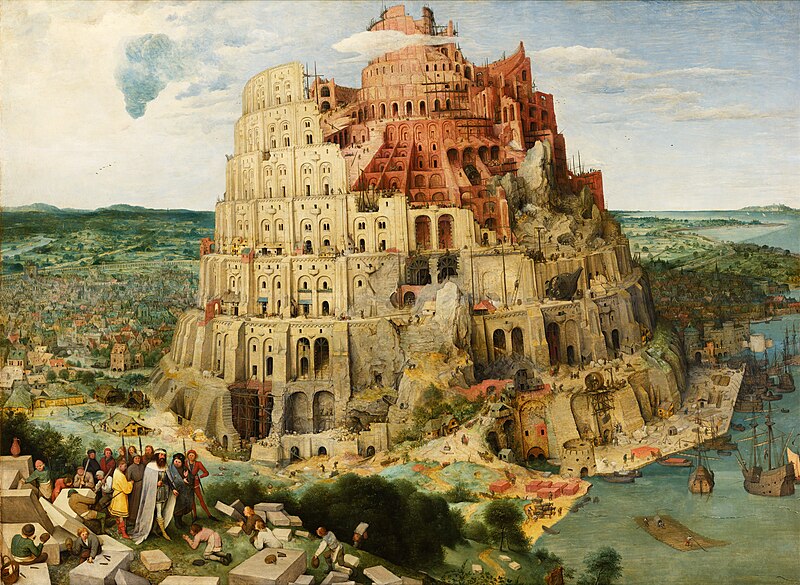
File:Pieter Bruegel the Elder - The Tower of Babel (Vienna ...

The tower that was supposed to reach to Heaven

The pipe-dream of global government is as old as sin itself.

In Genesis 11: 1-9, the proto-civilization, descendants of the survivors of the Great Flood, got together in the plain of Shinar to build a tower that would reach to Heaven.

Why? “[L]et us make us a name, lest we be scattered abroad upon the face of the earth.” And this was hubris. God countered their ambition by confounding their language, “that they may not understand one another’s speech.” And why did He do that? Because if He were to let it go, “now nothing will be restrained from them, which they have imagined to do.” Sounds just like globalism sounds today. This first time, the project fell through because the builders had lost the power to communicate.

Throughout history, would-be world empire builders relied on force to carry out their scheme. One after another, they rose and fell. But after the two world wars of the 20th Century, they replaced brute force with seduction. Now we’re told that a global government will bring us to Utopia.

As in the past, the globalists’ empire will grow to a certain point and then God will collapse it. Because there is only one Person with the right to rule the world: Jesus Christ, the Son of God, King of kings and Lord of lords. All the others are but thieves and porch-climbers.

How will the world state collapse? Folly and incompetence will do it.

“Ah, but man’s reach must exceed his grasp, or what’s a heaven for?” (Robert Browning) I am reminded of a very young child trying to take a plate out of a cabinet, just out of reach, and the whole mass of crockery crashing down to the counter. Sinners and fools will fare no better–no matter how much power we allow them.

The Bible counsels us, “Put not your trust in princes… in whom there is no help” (Psalm 146:3).

Yeahbut, yeahbut! Our princes are The Smartest People In The World! What could possibly go wrong?

The answer to that question will be painful.

‘Who Was Joseph’s Pharaoh?’ (2019)

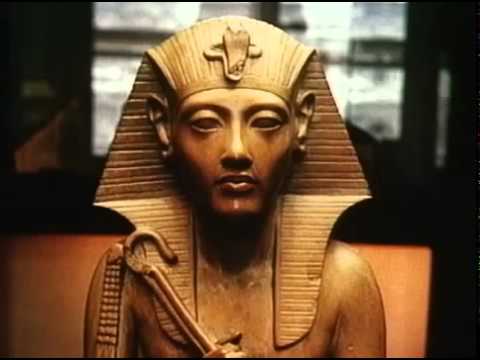
See the source image

Who was the Pharaoh who took Joseph out of jail and made him the prime minister? We’d love to know that, but the Bible doesn’t tell us.

Who Was Joseph’s Pharaoh?

Each member of ancient Egypt’s royalty had a number of names for different occasions, many of which incorporated the names of their false gods. “He in Whom Senmut Is Satisfied”… is coming for dinner. It gets confusing after a while! Jewish scribes may not have cared to write out all those pagan names. And maybe they thought it didn’t matter.

“Scholars” who don’t believe a word of the Bible get the Wikipedia welcome mat. But that doesn’t mean we have to listen to them. “We don’t know the name of Joseph’s pharaoh, therefor none of those things happened!” They can take that and stuff it.

The Valley of the Dry Bones (My Newswithviews Column, Dec. 7)

Ezekiel And The Valley of Dry Bones - (Bible Stories Explained)

I’ve been wondering lately whether we’ve properly understood the prophecy in Ezekiel 37: the vision of the valley of the dry bones. It’s as if a voice cries to me, “Listen! Listen!”

The Valley of the Dry Bones

There are a lot of dead spots in our culture. “Higher education,” for one. And lower education. You can name as many as I can. They all need God’s attention. He asks us, “Can these bones live?” But He already knows the answer.

The Two Unfaithful Wives (Ezekiel 23)

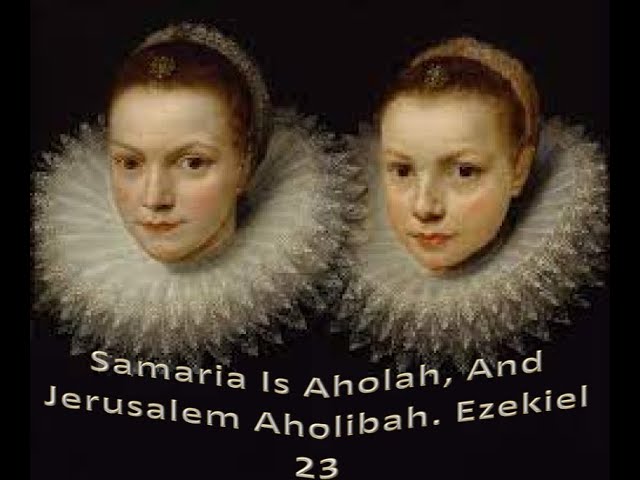
Samaria Is Aholah, And Jerusalem Aholibah Ezekiel 23 - YouTube

In an extended parable (Ezekiel, Chapter 23), God speaks of two unfaithful wives, sisters: Aholah and Aholibah. He makes it clear to Ezekiel, and to us, that the elder sister is Samaria (capital of the northern kingdom of Israel) and the younger is Jerusalam. They have been unfaithful, and they’ll be severely punished for it.

Why didn’t God just call them by their names?

“Aholah” means “my tent,” and “Aholibah” means “My tent is in her.” “Tent”, of course, means the home: the Hebrews of Ezekiel’s time were all descended from tent-dwellers. Some, like the Rechabites, still lived in tents.

So God here is personalizing the issue, likening his relationship with the two kingdoms to that of a man who has two wives who bring their lovers into his tent while he’s out on business. That’s about as personal as it gets–and it brings on God’s wrath.

The peoples of Israel and Judah were guilty of all sorts of sins–idolatry, profaning the sabbath, and even stooped to human sacrifice (v. 37)–all of which God condemns as adultery practiced against Him by his “wives,” the two kingdoms.

And the point is–this is my opinion–that God takes sin personally: all sin is sin against Him. We moderns would rather not hear that! We are none of us as good as we think we are, and it took Jesus Christ the Son of God coming to earth as a baby, and dying on the cross as a man, to save us.

Something to keep in mind as Christmas approaches.


What Does the Bible Mean by ‘Speak Leasing’?

3,300 King James Images, Stock Photos, 3D objects, & Vectors | Shutterstock

O ye sons of men, how long will ye turn my glory into shame? How long will ye love vanity, and seek after leasing?  Psalm 4:2

Thou shalt destroy them that speak leasing…  Psalm 5:6

For us, “leasing” means renting. But in the King James Bible, in Psalms 4 and 5, “leasing” obviously must mean something bad. This odd use of an otherwise ordinary word actually derives from an Old English word meaning “lying” or deceit. It doesn’t mean God will be angry with you if you lease a car.

Living languages change over time. It’s been some 500 years since the scholars who produced the King James Bible opted to use an archaic term like “leasing.” It was archaic even that long ago. I don’t think we know why they did that.

I still prefer the King James over modern translations, even if that Bible’s age makes a few passages unclear to modern readers. I mean, heck, we’ve got computers, you can always look it up.And I’ve always found that worth the trouble.

And I like the beauty of the language.

‘A Word to Christians: Endure’ (2013, 2019)

See the source image

Sometimes it feels like we’re trapped aboard a runaway train, with homicidal maniacs in the locomotive speeding toward the edge of the cliff. God understands. That’s why He gave us 1 Corinthians Chapter 1.

‘A Word to Christians: Endure’ (2013)

We are weak, but He is strong. Much stronger than those idiots who want to rule the world! And His delight is in using weak things to overthrow the strong. Weak things like us, in fact.

All great worldly empires are supposed to live forever. None of them do. Some of them go down in flames within a single lifetime.

But God’s word lasts forever.

‘When Elisha Saw God’s Army’ (2018)

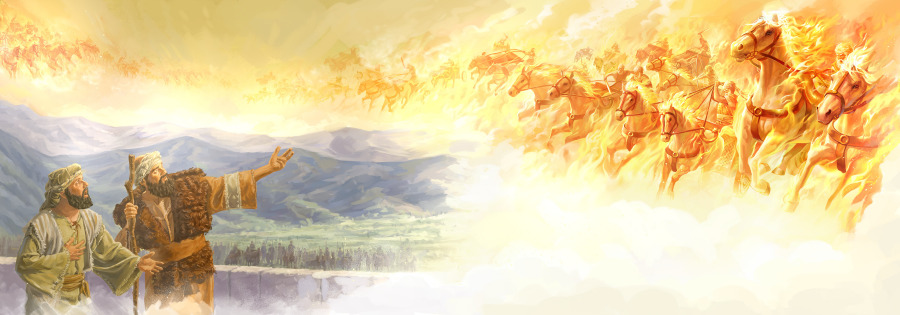
Image result for images of God's army of fiery chariots

Here’s something I wish I could see–God’s army: chariots of fire, hosts of angels. Elisha found it necessary for this servant to see it; God granted his prayer (2 Kings 16: 17-18).

When Elisha Saw God’s Army

It’s so easy to lose heart! There’s so much bad nooze out there, I’ve had to call a moratorium on it, for Sundays.

Oh, to see God’s army! But it is not given to our eyes to see it. We have to believe God’s Word.

For God is not a man, that He should lie.

The Lesson of Manasseh, King of Judah

King Manasseh - Enter the Bible

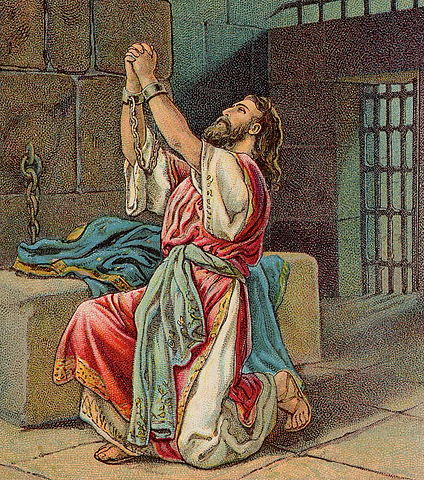
Manasseh praying and repenting in his prison cell

Hezekiah was one of the best kings Judah ever had. His son and successor, Manasseh, did not take after him.

Manasseh overturned his father’s religious reforms and brought back idol worship and human sacrifice–passing children through the fire to give them to Moloch. His sins are told in detail in 2 Kings 21.

In 2 Chronicles 33, the story takes a dramatically different turn. In v. 11 the king of Assyria has Manasseh arrested and hauled off to Babylon as a prisoner. There Manasseh “humbled himself greatly before the God of his fathers” (v. 12), prayed, repented, and was eventually allowed to return to Jerusalem (v. 13). He kept his word to God and took away the idols, and restored right worship.

“Now the rest of the acts of Manasseh, and his prayer unto his God, and the words of the seers that spake to him in the name of the LORD God of Israel, behold, they are written in the book of the kings of Israel” (v. 18). But that portion of the book seems to have been lost. 2 Kings makes no mention of Manasseh’s repentance. That doesn’t mean he didn’t. The two books’ accounts augment each other; they don’t contradict each other.

The lesson for us is surely that however far this man went down the road to perdition, he did not go so far that God’s grace couldn’t save him. In prison Manasseh realized what he’d done, prayed, and offered up sincere repentance. He changed his ways. He stopped doing the evil he’d been doing. God saved him, he wound up reigning over Judah for 55 years (longest reign ever), and was buried in his own garden.

If Manasseh’s heart could change… so can ours.