‘A Helpful Hint for Writers’ (2013)

Just the other day Chagadai, the captain of King Ryons’ Ghols, his bodyguard, walked into the Bell Mountain movie I’m going to make someday, when my ship comes in. I recognized him immediately as Burt Kwok, who played Mr. Entwhistle in Last of the Summer Wine.

Image result for images of burt kwouk

A Helpful Hint for Writers

This little game helps me to see and write about my fictional characters as if they were real people. I know, I know–movies and TV? You think that’s real? But I’m writing fantasies, not accident reports.

One of these days I’d like to try writing up a character who’s incompetent, foolish, scared of his own shadow, and worth absolutely nothing in a crisis.

On second thought…

‘Not-so-Minor Characters’ (2015)

See the source image

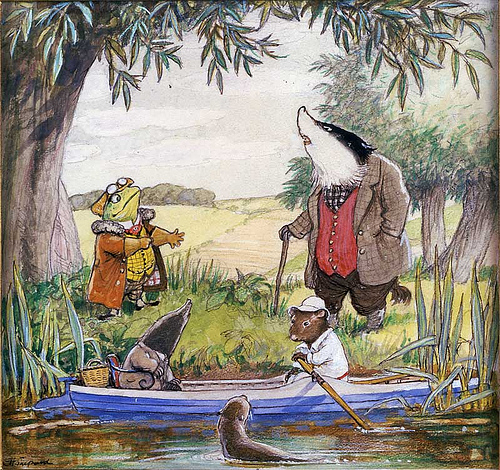
Just try telling Toad that he’s a minor character…

How would you like to be told, “You’re just a minor character”? Well, fictional people don’t like it any more than you would.

Not-So-Minor Characters

Just image someone telling you that you only exist to make him look good. What could be more insulting?

In writing fiction, as in life, treat your so-called minor characters–I prefer to think of them as supporting roles–as you would want them to treat you.

Because without them, you haven’t got a story.

‘My Fantasy Tool Kit’ (2014)

Image result for images of bbc narnia series

There are people who don’t like fantasy; but what they really don’t like is bad fantasy, and there’s always more than enough of that to go around.

A lot of the problem is simple to see: the writers just haven’t made their fictional characters seem real.

My Fantasy Tool Kit (1)

There’s really no point in writing unoriginal fantasy featuring cardboard characters who talk and think and act like everybody else’s cardboard characters.

If you’re doing that, you haven’t created a fantasy.

You’ve created a college campus.

‘How One of My Characters Grew: Old Uduqu’

Image result for images of the last banquet by lee duigon

Two years after I wrote this post, Uduqu’s still here, still pursuing his dream to be the first Abnak to write a book (or read one, for that matter).

https://leeduigon.com/2016/03/27/how-one-of-my-characters-grew-old-uduqu/

I can only speak for myself, but this is one of the most fun things about writing fiction: the way characters walk into the story for just a page or two, and the next thing you know, they stay! You should see what Redegger the vice boss gets up to in His Mercy Endureth Forever. And I knew no better than Lord Chutt what Zeriah was going to do after she was elected Judge of Obann.

I think the unexpected is a sign that you’ve made your characters real.

Loving a Fictional Character

King Theoden, from the Lord of the Rings movie (which I didn’t see, but never mind)

There are hundreds of characters in J.R.R. Tolkien’s The Lord of the Rings, but only one that stirs me to the point of tears: old Theoden, King of Rohan. I love this guy! And I do mean love–as if he were my grandfather. How in the world did Tolkien do that?

When we meet him, Theoden is a broken-down old crock who has been skillfully manipulated to sap his morale and make him feeble before his time. But he comes back from that. The hero inside him, once he has been healed by Gandalf, bursts out like a fireworks display. At the same time, he is gentle, kind, and even humble: and everything he does, everything, is motivated by just one thing–by love. Love for his family and friends, love for his allies in the war, love for his country and its traditions. And love for every little thing with which he has been blessed. Love that is willing and able to sacrifice himself for what is right, for what is true.

Tolkien doesn’t tell us so. That never works. He shows it in what Theoden says and does, in his every word and action. Easy to say, but hard to do. If great art was easy, everyone would do it. It really is an amazing feat of art to create a character that a reader can actually love. Lots of authors can create characters that amuse us, or annoy us; but to inspire love is something special.

Hard to do: but for any writer, well worth trying.

Makin’ It Real

The thing about writing a fantasy story is, you’re trying to get the reader to believe in people, places, and things that aren’t real. And not just to believe in them, but also to see and hear and have certain feelings about them.

I have been told that reading one of my books is kind of like watching a movie, which I consider high praise. It only took me almost 50 years to learn how to do that kind of writing.

Knowing that some of you have already tried to write a fantasy, or would someday like to try it, is there anything I can share with you to help you on your way?

Only this: before your reader can believe in it, you have to believe in it. If you can’t see it, they won’t be able to see it. If the story doesn’t stir up your emotions, it won’t arouse any feeling in your reader.

And the tricky part is, if you try to tell the reader too much, if you give him too much information, you might as well not tell him anything at all. This is where the writer’s art comes in–knowing when you’ve said enough, and knowing when to say no more.

Believe in your characters as if they were real people whom you’ve seen and talked to. Even the villains. Believe in their places and settings as if you’ve visited them yourself.

In The Glass Bridge, for instance, when God works through Gurun–without her expecting anything remotely like it–to perform a miraculous healing, she, who so far has been brave and uncomplaining, bursts into tears and gives way to a spasm of homesickness. I wish I could tell you why I wrote it that way, but it’s not something I can intellectualize about. It was just Gurun being herself. Being real. Because by then I knew her so well, all I had to do was step aside and let her respond to the experience as she was bound by her character to respond. Because by then she had become real to me.

Confusing, isn’t it? Well, if it was easy, it wouldn’t have taken me so blamed long to learn how to do it. Maybe in another 50 years I’ll be able to explain it better.

How One of My Characters Grew: Old Uduqu

One of the delights of writing fiction is, when you introduce a character, you really don’t know where he’s going to wind up.

Uduqu, the old Abnak sub-chief with a scar from a stone axe on his forehead, walked onto the stage early in Book No. 2, The Cellar Beneath the Cellar, and is still here, seven books later. He was just a walk-on, but soon began to fill a major role in the stories.

Once or twice the story put him in such peril that both my wife and my editor were convinced I’d killed him off–and were they mad at me for that! But I’ve come to have such an affection for this hard-fisted old man that I don’t see how I can carry on the tale without him.

He befriends King Ryons and comes to look on him as a kind of grandson. He discovers God and comes to love Him, always striving to know Him better. He rescues Helki from a charging army, and wins a giant’s sword as a trophy, becoming the king’s personal champion. And as his overworked legs begin to fail him, Uduqu discovers reading and writing–the very first Abnak ever to make a serious go of literacy.

He has been within sight of the great sea in the West, crossed the mountains in the East, and marched all the way out to the Thunder King’s fortress in Kara Karram. Along the way he fights a desperate duel that avoids a bloody battle and makes peace between enemies.

What he’ll do next, I have no idea.

But I can hardly wait to find out!

Not bad for a walk-on character.

Where Do My Characters Come From?

The simplest and most honest answer to that question would be, “I don’t really know. They just come.” But let me try to do better than that.

Years ago, I learned an important lesson by reading Dick Francis’ mystery novels: Every character in your book, no matter how minor, you must view and write of as a real person. Even if the character is in the story so briefly that you don’t even have to give his name.

A common feature in a lot of books that stink is failure to observe this rule, because the author is interested only in himself. You wind up with some improbable hero or superwoman showing off at the expense of all the other characters, who are only there as stage props. Books like this should never be published, but some always make it through the net, and too bad for you if you’ve bought one.

I don’t sit down and write up a thorough biography of every character in the book. If the plot demands that someone come along to be the new captain of Lord Chutt’s Wallekki bodyguard, then I introduce a character to do just that. I give him a name. And then some funny things begin to happen.

Often, once he or she has appeared in a few scenes, I take an interest in this character. So it was with a man named Bassas in The Throne, Lord Chutt’s new captain. To my surprise, it turned out that Bassas doesn’t like Lord Chutt and has but little respect for him. As the circumstances around him changed, and he came to see more things that he hadn’t seen before, Bassas grew discontented with his lot: in fact, he didn’t much care for working for the bad guys. He hasn’t been able to shed the old tribal sense of honor that was drilled into him as a boy.

See what I mean? Bassas went on to do some things I never thought of when I first introduced him. He’s very different from his predecessor, who was a thorough-going rogue. I wonder what he’ll do next.

This all sounds very easy to do. All it takes is thousands of hours of reading quality fiction and thousands of hours of trying to write it. How do you get to Carnegie Hall? Practice, man, practice!

But it all starts with a determination to see your characters as real people. Just because they’re fictional doesn’t mean they can’t be real. They have to be, or your story won’t work.

Fictional Characters as Real People

We haven’t been talking much about fantasy-writing on this fantasy-writing blog. Oh, we discuss plenty of out-and-out fantasy–like the campus rape culture, Global Warming, microaggression, income equality achieved by the brute force of government: stuff that has no basis in reality whatsoever. Why, just today, one of the Red Pope’s henchmen blasted “Climate Change deniers.”

Sometimes I just can’t stand it anymore. So on to something more constructive.

The picture above (if it comes out!) is from The Wonderful World of the Brothers Grimm, showing Jakob Grimm (Laurence Harvey) sick in bed, to the point of death, being visited by all the characters in his fairy tales. This is what I’m getting at today.

If you’re writing a fantasy (or any other kind of story) that you want your readers to believe in, you have to believe in it. And the thing that makes any novel fly is characters. You have to believe in your characters.

Teach yourself to see each and every one of them as a real person–someone who has a whole life in addition to the tiny bit of it that you’re writing about.

That does not mean you have to map out a cradle-to-grave biography for every walk-on character. That’s a primitive technique that can easily lead to overloading a story with irrelevant information. You don’t have to actually know that character’s whole life: just be fully aware that he or she has one.

The needs of the plot, if you allow it, will generate characters as needed. They come walking into your story from Character-Land, ready and willing to do a piece of work for you.

For instance, in my just-started book, The Throne, I needed a new commander of the Thunder King’s bodyguard–and in walked a big, fierce, superstitious lout named Bassas, fast with his fists, greedy for gold, but with no real idea of how to spend it, and some small scrap of honor left in his soul. I already know I’m gonna love this guy!

True, this is not the easiest thing in the world to do. It takes years and years of practice.

But once you’re able to do it–boy, can you have fun writing!
My Fantasy Tool Kit (8): Butt Out!

http://www.realtownblogs.com/members/Judith2/files/98%20pound.jpg[Every now and then I remember the purpose of this blog is to get you interested in my books–so please feel free to click “Books” and look them over.]

If you ever want to write a fantasy novel–or any other kind of novel, for that matter–that’ll be sheer torture to read, be sure to make a thinly-disguised version of yourself the hero of the story.

Not that the reader is going to recognize you. But most readers can recognize pure poppycock when they see it. And few are so dense that they can’t detect irrelevant personal issues from the writer barging in between the reader and the story.

When you’re telling a story, butt out! I take it for granted that no one wants to read about me–not when they could be reading about Wytt or Helki. [You’ll have to read my books to get to know these characters.] Nor do they want to read my opinions on politics or the problems of this modern world that I’m supposed to be taking them away from.

To any writer, the same advice: Get out of the way! Don’t be like the jidrool who gets up and shambles around in front of the screen in the most exciting part of the movie.

If you want your readers to believe in your characters, you have to believe in them first. Don’t make them extensions of yourself or of the people in your lives. Think of them as real. Don’t try to control every little thing they say or think or do. Get so deeply into them that they start to say and do things you never expected.

Yes, I know–if it was easy, everyone would do it. A lot of published authors can’t do it. But you don’t even want to imagine the mountain of wasted paper produced by those would-be authors who don’t even try to keep themselves out of the story. That no one ever spent any money to publish their work goes without saying.

We are always being advised, “Write what you know.” But that’s no way to go about creating imaginative fiction.

Caveat: Let no one take this to mean I endorse the practice of lazily omitting to do research and just “intuiting”–that is, making up–false information about something for which real facts are easily available. For Pete’s sake, do not write about tribal customs of the Navaho unless you first read up on it: the ghost of Tony Hillerman will show the Navaho exactly where to find you.