Why I Fear for Britain

From February 18, 2016

I try to stay abreast of world events, but I pay particular attention to Canada and Britain. Canada, of course, is right next door. But why Britain? Because, like many Americans, I feel affection and affinity for the Mother Country: we are, as Churchill once said, two countries divided by a common language. But it also seems to me that the ills which affect Britain are common to all the Western countries, including my own; and that things that happen in Britain and Canada wind up happening here, too.

I have never been to England. I watch a great deal of British TV and movies, just about every day. I read a great deal of fiction by British writers, past and present. And I happen to think you can learn a lot about a nation by becoming familiar with its popular culture.

So I fear for the state of Christianity in Britain. What else am I to think, when episode after episode, in show after show, depicts Christians as at best irrelevant, at worst backward, evil, and dangerous? When actors like Hugh Laurie (atheist) and David Suchet (Christian) both say, in interviews, that Christianity in Britain isn’t what it used to be? Why should they lie about it?

As a Christian, I cannot think any good can come to a nation that turns away from Jesus Christ–especially a nation that’s been Christian for some 1,400 years.

Do I take TV shows and crime novels as literal truth? Of course not. Do I believe every article I read in British newspapers online? No, despite what you may have heard. And I do stay in touch with email friends in Britain and Canada.

From all these different sources, I’m getting the same message: Britain is rejecting her Christian heritage, and–like our own–her culture is coarsening, largely as the result of self-destructive leadership.

Of course, if you’re a fan of “gay marriage,” growth of government, multiculturalism, political correctness, speech codes, and all the rest–well, you’re getting it. In all the Western countries you’re getting all that stuff, and then some.

And so I fear for Britain, as I fear for my own country, and for the same reasons. We as nations have sinned, and we need to repent. Instead, our leaders draft and pursue policies which seem to be based on the principle that evil is good, and good is evil; and the people seem content to have it so.

But not all of us.

No, not all of us.

Crazy Jane, the Queen of Spain

From September 18, 2015

It isn’t always a picnic, being a member of a royal family. Consider the case of Juana la Loca–meaning “Crazy Joanna” or “Crazy Jane”–the first rightful queen of what was to become modern Spain.  She died in 1555 after being kept under close confinement for going on 40 years ( .https://en.wikipedia.org/wiki/Joanna_of_Castile ).

Juana was among the most cultured and well-educated women of her time, mastering philosophy, classical languages, and music. She was also beautiful, and a royal heiress–all in all, a fine catch for any ambitious prince.

So why was she diagnosed as mentally ill, given that “Crazy Jane” nickname that’s lasted some 450 years, and locked up for most of her life?

First her father put her away, so he could continue to rule as a king in Aragon. That didn’t work out too well. Then her husband died, and the Hapsburg dynasty had her locked up so they could keep Spain for her infant son, the future Emperor Charles V. It seems everyone who had anything to gain in `16th century European politics was out to keep poor Juana locked up in a nunnery. And in every event the explanation given was her supposed mental illness–a diagnosis which is met with strong skepticism by today’s historians.

But of course Juana’s great exhibition of craziness was her reading and studying the work of Martin Luther, her defense of him and of his doctrine, and the suspicion that she had become a secret Protestant. With that to be held against her, there was no help for her.

And so she comes down to us as Crazy Jane–just as Richard III has come down to us as a hunchbacked monster who murdered the poor little princes in the Tower, his own nephews. The case against Richard is weak, and the case against Queen Juana even weaker.

I guess you can’t believe everything you read in the history books.

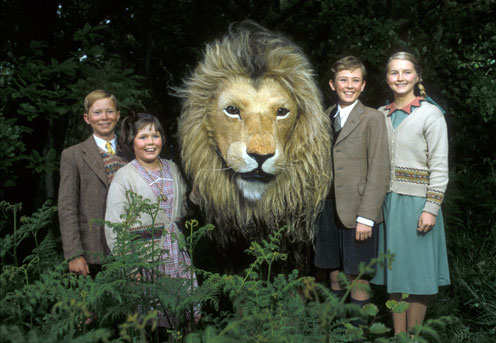
BBC’s Old ‘Narnia’ Series Was Better Than the Movies

Not for the first time, and I hope not for the last, I’ve begun to watch the old BBC-TV production of C.S. Lewis’ Chronicles of Narnia.

So far I’ve seen and reviewed all the new Narnia movies–and this old production from the 1980s runs rings around them. Yes, some of the costumes and special effects are primitive, even a bit silly–no fancy computer graphics, back then. But it doesn’t matter! These old shows captured the spirit of Narnia; and the new movies, for all their expensive and up-to-date production values, do not.

There’s plenty of good acting in the movies, and wonderful camera-work; but the writing is strictly third-rate. The movie-makers made any number of ridiculous decisions. It would be hard to say which was worst. Trying to turn Prince Caspian into a smouldering hunk? Turning Susan and Lucy into warrior princesses? Presenting Reepacheep as a kind of furry Bart Simpson? Or rewriting the whole doggone story, as they did with Voyage of the Dawn Treader? I find the effect of the beautiful cinematography of these films soon wears off, but my distaste for the multitude of follies still lingers.

Watching the old BBC version of The Lion, the Witch, and the Wardrobe, I was struck by how Peter (Richard Dempsey) starts out as a high-handed little prig who never loses an opportunity to lord it over his younger brother, Edmund (Jonathan Scott); and by Edmund as a nasty little piece of goods, sly and smarmy and totally self-centered. Their experiences in Narnia–most importantly, their coming to know Aslan, the Great Lion, Lewis’ fantasy avatar for Our Lord Jesus Christ–change them to the core. The real Peter emerges as a merry, brave, and great-hearted boy on his way to manhood, while the real Edmund shows sober, wise, and courageous: he, too, will grow up into a great man.

But what stirred me most, as it always does, was Aslan himself. When Peter is knighted and blessed by Aslan, I could almost imagine what bliss it would be for me, if I could kneel before Christ, and lay my eyes on Him, and receive His blessing in person. It stirs me just to write about it.

And that most of all, I think, is what C.S. Lewis had in mind.

PS–You can get these old Chronicles via amazon.com.

From April 9, 2012

The Top Real-World Wacko Fantasies of 2011

We fantasy writers are supposed to have vivid imaginations, but ours pale beside the imaginations of our public leaders and intelligentsia. Their imaginings border on the delusional.

This was very clearly demonstrated all throughout 2011. Below are some of the most lurid examples of it.

1. The government can–and should–enforce “income equality.” Where does fantasy end, and sheer madness begin? Probably here. Furthermore, politicians who try to get ahead by inciting class warfare are playing with fire.

The aims and rhetoric of Occupy Wall Street and its sponsors among the politicos and movie stars are so insanely fantastical as to be self-evident.

2. “Gender is a spectrum.” Expect to see a lot more of this movement in the near future, especially in the public schools and colleges. It’s coming down from the top, having been enthusiastically endorsed and pushed by the likes of the European Court, the National Education Association, the Canadian government, and Satan.

To sum it up in a very few words, children are to be taught, “You can be a boy one day and a girl the next–it all depends on how you feel!”

Oh, Boy! ‘Post-Truth’ Politics

[S]hall their unbelief make the faith of God without effect? God forbid: yea, let God be true, but every man a liar…   –Romans 3:3-4

The Oxford English Dictionary has selected, as its Word of the Year for 2016, the charming little term, “post-truth,” as in “post-truth politics” ( http://www.rollingstone.com/culture/news/oxford-english-dictionary-names-post-truth-word-of-the-year-w450650 ).

Somehow I missed that one. Post-truth politics is defined as repeated appeals to emotion, continuous repetition of talking points, and not bothering to answer facts offered in rebuttal. Disingenuously, this term has been applied mostly to the Brexit movement and to Donald Trump’s presidential campaign–as if it were any kind of truth at all that Britain ought to remain in the European Union no matter what, and, even more preposterous, that Hillary Clinton should have been elected president.

I’m pretty sure “post-truth” ought to refer to anything said by any member of the Democrat Party, anytime, anywhere.

Let us not forget that, for the past 20 yours or so, the sages at our collidges have been teaching that there’s no such thing as truth, there’s only “your truth” and “my truth” (even though their “truth” is always insisted upon as the only permitted point of view)–and this teaching has borne fruit.

Go ahead, just try to get some true truth out of the nooze media, the government, Hollywood, or any public school or university. Let everybody know if you succeed!

But we are sure God wishes us to tell the truth, and value it, and resist the post-modern fetish for lying.

From 2016

REPRINT Harry Potter and the Deathly Hallows, Part I Jan 14, 2011

Movie Review by Lee Duigon

It’s hard to review a piece of a movie-which, for all its nearly three-hour length, is what this is. If you haven’t seen the earlier Harry Potter movies, or read the books, watching this movie will be like entering a roomful of strangers all talking about people and incidents you have never heard of. There’s no flashing back to make things clear, no explanations provided for anything. If you’re not a Harry Potter fan, you can forget about understanding this film.

So why review it, then?

J. K. Rowling’s Harry Potter novels have sold millions and millions of copies, and millions of movie tickets, too. This is the most successful series of books ever published, and it has revolutionized young readers’ fiction. It would be irresponsible to ignore it.

Because Harry Potter is such a cultural phenomenon, and this movie is a slice of it, we can look at it to see what it can tell us about our culture. What has Harry Potter taken out of our culture, and what has it put in?

Magic and Science

In the alternative universe of Harry Potter, everything important gets done by magic-or “wizarding,” as they sometimes call it. Witches, wizards, and warlocks are the elite of that world.

As a thought experiment, plug in “science” for “magic”-and you’ll see that the Harry Potter world pretty closely approximates our own. By “science” we mean what Jean-Marc Berthoud calls “the cultural domination of our whole culture by a purely mathematical model of the universe (the so-called scientific worldview, valid in fact only in its strictly limited domain, that of the measurable) as normative of every aspect of reality.”1

Materialistic “science” in our culture has excluded God. In Harry Potter-land, “magic” does the same. Given the awesome power of magic in that world, there would appear to be no place for God.

Despite various efforts to spin the Potter books as some obscure kind of Christian enterprise, we see no evidence at all in Deathly Hallows I that there is any Christianity at work in any of the characters’ lives, or any other recognizable religion, for that matter. Yes, there is one brief scene in which we see a village church with people inside it singing Christmas carols. What of it? Millions of Americans celebrate Christmas as a generic holiday and are dead to its religious significance. And every now and then, a character in the movie says, “my God.” But that doesn’t mean that they believe in God. For millions of Americans, “God” and even “Jesus” are just words to be tossed casually into a sentence, stripped of all meaning.

J. K. Rowling has been accused of promoting witchcraft. But I think it important to note that in Deathly Hallows I, there is no hint of any power higher than that of the magician. Paganism is supposed to feature pagan gods and goddesses, but we see no gods here. The world of Harry Potter much more closely resembles the fantasy world of The Humanist Manifesto II than it does anything in paganism. Take the Humanist Manifesto and substitute “magic” or “wizarding” for words like “science” and “technology,” and you will instantly find yourself in Harry Potter’s universe.2

Thus we discover that Rowling is not promoting paganism. Wittingly or not, she is promoting humanism.

Important Crapola: The Evolutionary Fallacy

Ornithomimus dinosaur running computer artwork Ornithomimus meaning  'bird-mimic' was agile ostrich-like omnivore about 1 8-2 4 Stock Photo -  Alamy

When I was growing up, dinosaurs were depicted as primitive, sluggish, brainless hulks doomed to extinction; but now we know better. They weren’t primitive at all.

We’ve outgrown our assumptions about the dinosaurs (adroitly replacing them with new assumptions!), but we haven’t outgrown our evolutionary fallacies concerning just about everything else.

“New! Improved!” What 1950s commercial failed to promise that? It captures the fallacy rather well: Whatever is new is better than whatever preceded it.

This way of thinking explains a lot of Far Left Crazy. All any idea has to be is new–and of course the more shockingly new, the better. So we went from shacking up to homosexuality to transgender and are on our way to pedophilia, and every poor doofus who hasn’t outgrown college is hopping on board the lunatic express, destination unknown.

As they see it, everything naturally evolves to perfection, everything is constantly improving. It’s better if an all-powerful government helps it along by crushing everything and everybody that’s “old.” And sometimes what you need to hustle the process along is a violent revolution followed by a reign of terror. (We are now looking at sickeningly familiar patterns of history.) Best of all, “everything” started just by means of some cosmic accident–so there’s no God, no immutable moral laws, no throne of righteousness. Just evolution. New is always better.

So, yeah, we tried that freedom stuff, it got old and doesn’t work anymore, it’s time to move on… we’ll set up a social credit system, you’ll own nothing and be happy, socialism will make the flowers grow–(please, mommy, make it stop!).

The hilarious thing about it is that nothing is older, staler, more worn-out, more old-hat, more flagrantly false than all the Far Left horse-schiff. If anything resembles the old stereotype of the dinosaur, it’s all forms of leftism. The fallacy contains a paradox.

Gee, what’ll they attach their brains to after they get bored with pedophilia?

‘An Interview with Western Civilization’ (2020)

Image result for images of new york in ruins

Some readers were kind enough to call this Newswithviews piece one of the best things I’ve ever written. I thought we might revisit it.

An Interview with Western Civilization

Does 2020 seem a long time ago to you? It does to us. America and other countries have been forced to eat a lot of **** since New Year’s 2020.

Honk if you think the globalists are doing a great job of running the show.

‘Goodbye, Adulthood’ (2020)

Living As An Adult Baby - YouTube

Who wants to be a toddler forever? How much freedom are we willing to give up in order to be “safe”?

Goodbye, Adulthood

Isn’t this shameful? Unworthy? What’s happened to our self-respect? Do we really want The Government to “take care of us,” as if we were just children?

Guaranteed: a government that powerful will turn into a predatory beast, constantly seeking whom it might devour.


Question! Question!

Halloween, naked man caught in spider web Stock Photo by ©outsiderzone  32578743

Patty has been watching all these YouTube videos about new technologies and Artificial Intelligence, etc., that are going to eliminate millions and millions of jobs, worldwide, and eventually do away with the need for almost all work, leaving tens of millions of people… idle. And so there’ll have to be some kind of universal handout, a basic income doled out by a gigantic all-powerful government. [He pauses to shudder theatrically.]

Question!

If we can do something, does that mean we have to do it? Do we have to get rid of all those jobs, just because we can?

Oh, well! Work blows, as the collidge wallahs say. Not having to work anymore will leave almost everybody free to Be Creative, writing operas and works of philosophy…

Fat chance.

Take away work from men and women, and they won’t be men and women anymore. They’ll be overgrown children at best: sluggards, dullards, and dummies at the worst. Maybe criminals.

This will be the widest door to mischief ever opened.

Don’t say we didn’t warn you.