A Wasted Opportunity REPRINT

See the source image

From November 4, 2018

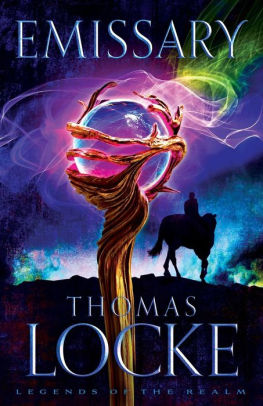
“Thomas Locke” is Bunn’s pseudonym .

So you’ve got an already-successful Christian author with a large fan base, writing in a popular genre with a wide readership, and a major publisher to produce and market the book–golden opportunity, right? An opportunity to win ground in the culture for Christ’s Kingdom.

Wrong. Instead, all these resources came together to make, well, a bunch of nothing.   (Click link below to read the full review  PD)

https://chalcedon.edu/resources/articles/review-of-christian-novel-emissary

T. Davis Bunn had all this going for him when he set out to write his first fantasy novel, Emissary, three years ago. So he decided to write a “completely mainstream, totally secular” fantasy novel–that is, he cobbled together a thorough collection of fantasy cliches: and the big huge Christian publisher, Zondervan, published it.

Waste, waste, waste.


‘An Open Letter to My Critics’ (2013)

I used to get a fair amount of heat from readers who objected to “all the religious stuff” in my Bell Mountain fantasy novels. As in, “Leave us alone to be our own gods!”

See that raspberry up there? That’s for you.

An Open Letter to My Critics

Sorry, but I just never got the hang of “winsome.” I don’t like their books any better than they like mine. I don’t like what they’re doing to my country, and I don’t like what they’re doing to the world. As for their fantasy novels, they can take their Invincible Female Warriors, All-Knowing (crusty but benign) Wizards, and Insatiably Oversexed Barbarian Big Guys and conduct them in a long walk off a short pier.


Fantasy Cliches I Have Tried to Avoid

It’s almost enough to send you back to Serious Mainstream Literature. Or reading the backs of cereal boxes.

I think we ought to have a chat: which fantasy cliche do you find the most odious, the most soul-deadening, imagination-killing, boring old pap? The crusty but benign wizard? The invincible female warrior? The thief with the heart of gold?

(He runs screaming to the sidewalk…)

Fantasy Cliches I Have Tried to Avoid

One of the purposes for which this blog was originally set up was to advertise my fantasy novels and hopefully to get people to buy them.

But we should have a chat. Which fantasy cliche really frosts your buns? Here’s your chance to vent! Which particular cliche moved you to drop-kick that book across the room? C’mon, tell me–I really want to know.

‘Murdering Fantasy’ (2016)

Aleve® Headache Pain (Naproxen Sodium) Tablets | Aleve®

You might need this while you read the book.

I know a lot of people who say they never read fantasy. Not much fun for a fantasy writer to hear. The most common reason given is that fantasy isn’t worth reading.

Where did they get that idea?

Murdering Fantasy

Well, boys ‘n’ girls, if you’re gonna fill your fantasy novels with cliche characters whose every word and action is 100% predictable… and then go one step farther by naming these characters after popular headache remedies… then I guess that’s what they mean by not worth reading.

Ah, the Invincible Female Warrior! The Crusty But Benign Wizard! The Know-It-All Elf with pointy ears!

I wouldn’t read it, either.

My Writer’s Vows (With Karate Kick Fails)

I have taken writers’ vows today. Let me list them. We also have video of failed karate kicks.

As a fantasy novelist in good standing, I promise:

Never, ever, to resort to jumpin’ spinnin’ kicks in any action sequence I describe.

Never, ever, to use “they” as a substitute for “he” or “she.”

Never to allow any of these stock characters to appear in my books: the hulking barbarian hunk who gets a lot of sex; the crusty but benign old wizard; the invincible female warrior; the know-it-all elf… or any others that might occur to me later.

Never to create really stupid and incompetent villains, just to let my main character easily get the better of them.

Never, ever, to write “ya” for “you.”

Never to borrow quotes or expressions from contemporary politicians and celebrities.

I am highly motivated to keep these promises, even if readers beg me to do otherwise.


The Adult Fantasy’s Not So Hot, Either

Emissary by Thomas Locke, Paperback | Barnes & Noble®

Yesterday we looked at a review of an appallingly bad fantasy novel pitched to children.

Today’s mouldering pile of rubbish was marketed to adults.

https://chalcedon.edu/resources/articles/review-of-christian-novel-emissary

Question! When in America did “mainstream” come to mean “completely outside the Christian world-view,” and how did we ever allow that to happen?

Christian fiction author T. Davis Bunn, with a string of best-sellers on his resume, decided a few years ago to write “a wholly secular fantasy”, Emissary, under the pseudonym of Thomas Locke; and a major Christian publisher decided to publish it.

Emissary contained every fantasy cliche known to man; it was a veritable thesaurus of cliches. Why in the world do fantasy writers do this??? I mean, it’s “fantasy,” right–and that means it’s supposed to be imaginative. Like, what is the freakin’ point of a thoroughly unimaginative fantasy? Why bother to write it? Why bother to read it? If you’re an experienced fantasy reader, you’ll already know precisely what sort of characters will appear in the story, you’ll know exactly what they’ll say and do on any occasion, and the only surprise you’ll ever get is if you drop the book and fall out of your chair trying to pick it up. If you even bother.

Also, many of these fantasy cliches, in addition to their thorough predictability, are basically pagan–not “Christian” in any sense of the word. Why did Mr. Bunn waste his talents on such bilge?

Fantasy matters because it has access to regions of the heart and mind not easily explored by other kinds of stories. It matters because it ought to be included in Christ’s Kingdom and put at the service of that kingdom, not reserved as a province of neo-paganism.

And I wonder if Mr. Bunn just stopped caring about such things.


‘Writing Believable Fantasy’ (2017)

See the source image

“The writer who can’t look into another person’s heart, and find some kinship with it…” might as well go on to Congress. Or join the nooze media.

So what does it take to write believable fantasy?

Writing Believable Fantasy

I only get to see books that are actually published; and a lot of those are bad enough to dry up a good-sized pond. After many years of studying the matter, I don’t know why that should be. Unless it’s simply that so very few people can actually write a good novel, the supply can never catch up to the demand and a lot of pfud gets published because they don’t have anything better.


‘How Not to Write Dialogue’ (2014)

See the source image

Trying to figure out how she got in without opening the door…

Fantasy probably features more misbegotten dialogue than any other genre of fiction. Maybe the hard-boiled private eye comes a close second. Or a fantasy about a hard-boiled private eye.

How Not to Write Dialogue

Suddenly the idea of a fantasy about a hard-boiled private eye is starting to look pretty good to me. I’ll betcha Anthony Boucher or Henry Kuttner could’ve done it standing on his head. “The dame came through my office door in a rustle of that fancy crinoline stuff like you see in the movies. Real class. But she didn’t open the door to come on…”

I mean, as long as we’re going to be writing bad fiction, it might as well be funny!

‘A Really Stinky Book’ (2011)

See the source image

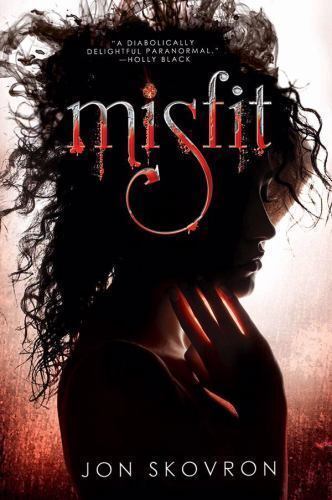
I read this book, and a couple other clangers, in preparation for an interview. I think it was with Joshua’s uncle, Kevin, on his internet radio show. I look back with amazement that any published book could be this bad.

A Really Stinky Book!

Sometimes when adults write about teenagers, they come off as space aliens trying to write about human beings without having the slightest understanding of humanity, they might as well be writing about catfish. A book like this is an insult to every poor devil who ever tried and failed to get published. A monkey could write a better one, if you gave him a keyboard.

You owe it to yourself to give this book a wide berth.

‘Literary Crimes’ (2015)

Image result for images of fantasy cliches

I read a lot of fantasy, and a lot of it is poop. That’s usually because it’s full of literary crimes.

Literary Crimes

The Know-It-All Elf and The Invincible Female Warrior–what would certain writers do for characters, if they didn’t have these worn-out cliches to fall back on?

Then there’s crazy dialogue. There’s only one thing worse than long passages of speech written in what the author images to be dialect. That’s long passages of speech in which the author wanders in and out of dialect.

The mystery of it all! We wouldn’t know these cliches for cliches if they weren’t crammed into books that actually got published–thousands of ’em.