‘My Enhanced Bio’ (2015)

See the source image

You name it, I’ve been there

I’ve been saving this post for a time when something just has to be done to pump up this blog’s readership; and that time is now.

My Enhanced Bio

You may think that this is all of my biography. You’d be wrong! I can invent more as needed. If certain presidential candidates can do it, then why not me?

I’d just like to think I do it better.

‘I Need Thee Every Hour’ (in Welsh)

In Welsh it’s “Mae d’eisiau di bob awr,” and we know it as I Need Thee Every Hour. Don’t you find that if you know the melody, the hymn will speak to you no matter what language it’s sung in?

King Arthur and St. David would have understood these lyrics.

Was King Arthur a Winner or a Failure?

See the source image

I reviewed J.R.R. Tolkien’s posthumously published book, The Fall of Arthur, for Chalcedon a few years ago–one of my better articles, if I do say so myself.

https://chalcedon.edu/resources/articles/review-of-tolkiens-the-fall-of-arthur

Much as I cringe at having to take issue with Tolkien, I can’t help it. I think he’s wrong for looking at the fall of Arthur rather than his long-term legacy. Our own time, that we live in every day, would be very different, had there been no Arthur in the 6th century. We do have many serious problems; but it would be worse, I think, much worse, had Arthur never lived.

What–am I crazy?

Read the review and see.

A Rainy Sunday, and King Arthur

Image result for beram saklatvala

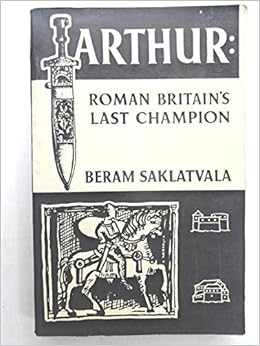
I ordered this book last week, and have been devouring it. Just can’t put it down.

All right, I’m a King Arthur buff. It’s my mother’s fault for telling me stories of Sir Lancelot. She could’ve had no idea how intently I was listening–what was I, three years old? When I was a few years older, I read my King Arthur picture book over and over again until it fell apart.

Two things make Mr. Saklatvala’s 1967 book stand out from the crowd.

First, it’s really cool! He delves into the messy, jumbled records of Dark Age Britain and the Middle Ages and ties things together that I never saw tied together before. The fragmentary records left of the last gasps of the Western Roman Empire are especially illuminating. True, the confused state of the record makes it impossible to prove any definite conclusions about Arthur. But Beram Saklatvala makes me nod my head and say to myself, “Hmm! Y’know, it really might’ve been that way!” Anyhow, who doesn’t love an enduring historical mystery?

The other thing is the mystery of Saklatvala himself. He’s almost as shadowy a figure as King Arthur. All I’ve been able to find out about him is a) he wrote some two dozen books, mostly on English history, and b) he sometimes used the pseudonym, “Henry Marsh.” Oh–and his middle name was Shapurji–is that Indian, Parsee, or Iranian? But his writing style is a comfortable read. It makes me wish his book were longer.

So it’s raining really hard today, but I’ve got a door into the year 500 A.D. and I can easily escape before the Saxons get me, just by closing the book.

I am amazed by the number of primary or close-to-primary sources Mr. Saklatvala brings to bear, some of which I’ve seen no other writer use.

This has got to be the coolest book I’ve read this year.

‘In Search of Merlin’ (2014)

Sometimes being a scholar means you can just say any old thing you want, and still get it published.

Go ahead–try and track down Merlin somewhere in the wilderness of history, with Professor Norma Lorre Goodrich as your guide. Hoo, boy!

https://leeduigon.com/2014/07/19/in-search-of-merlin/

The Sword in the Stone: True Story

See the source image

Marge has asked me to explain how I figured out the story of young King Arthur drawing the sword from the stone, and thus becoming king, was a true story. Here’s my argument:

Herodotus said the nomadic peoples of South Russia, who had no real temples, used to worship their gods by heaping up a pile of stones and thrusting a sword into it. Among these peoples were the Sarmatians.

The Romans stationed Sarmatian cavalry in Britain. When the Romans abandoned Britain in 415 A.D., some of the soldiers chose to stay. The Sarmatian cavalry stayed.

All the old sources portray Arthur as a war-leader who won victories all over Britain. He must have relied on cavalry; foot soldiers couldn’t have reached such widely-separated battlefields in the time allowed. Hence the tradition of Arthur and his mounted knights.

Now imagine a young Christian war-leader, desperate to defend his homeland from invaders, casting his eyes on the Sarmatian cavalry troops, pagans, but also the best and most experienced cavalry in Britain–and seeing them praying to a sword thrust into a pile of stones. What would happen if he walked up and pulled the sword out of the stones, and called on these horse-soldiers to rise up and follow him?

I think they would have either killed him on the spot, or else been swept away by his boldness and become his men.

It could’ve happened that way.

I had this figured out early in the 1980s but hadn’t a clue as to how to publish it, or where. A few more years went by; and then, alas, I discovered that someone else had since come along with the same theory, published it in an academic journal, and left me twiddling my thumbs.

Memory Lane: Sir Lancelot

My mother was a voracious reader with a love of history and legend, and she passed it on to me. I grew up on stories of King Arthur and his knights, especially her two favorites, Sir Lancelot and Sir Galahad. My brother and I had toy knights by those names: they wound up having a lot of adventures with animals, dinosaurs, cowboys, and cars.

In 1956-57 there was a TV show, Adventures of Sir Lancelot, which I made sure to watch. I remember particularly well an episode in which Sir Lancelot discovered an out-of-the-way Roman fort manned by legionaries who didn’t know the Roman Empire ended some hundred years ago. Very cool!

All these years later, thanks to my mother’s stories, I’m still a King Arthur buff, still reading and writing about him and his times. Someday I’ll have to tell you how I figured out how the story of the Sword in the Stone was very likely true, albeit somewhat garbled by the passage of centuries.

Oh, to put on my armor, sling that shield across my shoulder, hop up onto my mighty steed, snatch up my lance, and ride out on adventures! My mother lived long enough to see my Bell Mountain books in print: I hope she knows that she was the one who got me started.

Encore, ‘A Soldier of the Cross’

I’m posting this hymn again because the times cry out for it: Am I a Soldier of the Cross, words by Isaac Watts, sung by Andy Kenway.

Listen to the lyrics. I’ll bear the sword, endure the pain, supported by Thy word. We need this spirit now, in the church. It is with us now as it was in the days of Arthur.

May God revive His people’s martial spirit.

The Beast of Bodmin–Is It Real?

e

Is there a dangerous wild cat stalking the moors of Cornwall, Bodmin Moor in particular, preying on livestock–and the odd hiker?

Here in New Jersey we have the Jersey Devil, but over there they’ve got the Beast of Bodmin, said to be a large cat like a leopard: although maybe it’s something much more exotic than a leopard. Something prehistoric, even.

The authorities looked into it and in 1995 reported that there was no evidence that such a creature existed anywhere in Britain. Almost immediately a boy found a leopard skull in Cornwall, in a river. Examination confirmed that it was indeed a leopard skull–that had once been part of an imported leopard-skin rug.

But wait, there’s more!

Have they all forgotten the great medieval legend of Palug’s Cat ( https://en.wikipedia.org/wiki/Cath_Palug )? Yeah, I’ll bet they have! According to old Welsh and French sources, this was a great big cat that lived on the Welsh island of Anglesey and ate knights for breakfast until King Arthur’s foster-brother, Sir Kay, came along and killed it.

Now, what ever made those people tell that story, eight hundred to a thousand years ago?

Meanwhile, please feel free to hike on Bodmin Moor at night, all alone. Just whistle a happy tune and tell yourself, “There ain’t no Beast of Bodmin, there ain’t no beast of Bodmin…”

And everything will be all right.

A Leader Who Murdered His Country

As our own leaders scramble to see how many illegal aliens they can jam into America in time for the next presidential election, it reminds me of an ancient king who actually succeeded in destroying his own kingdom… by much the same method.

In 5th century Britain, in the wake of the departure of the Roman government, a man named Vortigern became High King. Jealous and fearful of the lesser kings, Vortigern tried to build up his position by importing mercenaries from the European mainland–warriors from Germany and Denmark, men who would be known to us as the Anglo-Saxons. The warriors came with their extended families, young and old.

Vortigern might have stopped when his position was secure, but he didn’t. He kept bringing in pagans until whole sections of Germany were depopulated. Everyone had gone to Britain, where the living was easy and the looting was good. Had Social Security benefits been invented in the 400s, Vortigern would have handed them to new arrivals.

Once the floodgates were opened, and whole populations began pouring into Britain, the native British found themselves outnumbered and forced to fight for their lives. The Anglo-Saxon chiefs stopped pretending to obey Vortigern and set about grabbing everything they could. As for Vortigern himself, his British subjects rallied against him and burnt him alive in his own tower.

As for the native, Christian Britons, Divine Providence gave them a leader named Arthur who stopped the bleeding. Within 100 years, most of the pagan Anglo-Saxons had been converted to Christianity. Before the year 700, there were Anglo-Saxon saints. The Britons survived in Wales, in Brittainy, in Cornwall, and in the North. And God blended these different peoples into a new nation, England–whose role in world history, and in the growth of Christianity, has been considerable.

But between Vortigern and St. Bede was a mighty rough ride and many years of tribulation.

Because we will not hear God’s word, He has handed us over to leaders who seem determined to emulate Vortigern in nearly wiping out their own country. Vortigern’s fate was well-deserved–but it came too late to do the British any good.

He who has ears to hear, let him hear.