A Lesson from Way, Way Back

Herodotus Stock Photos, Royalty Free Herodotus Images ...

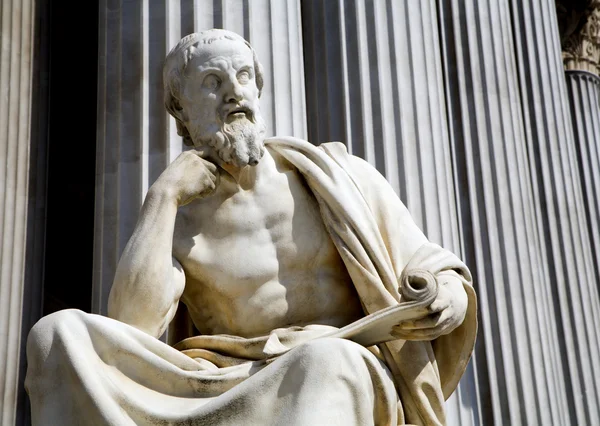
Herodotus, “The Father of History”

I got caught in a heavy rain today; and as I huddled under my umbrella, an incident of history crept into my mind. It was first reported by Herodotus–aka “The Father of History” to some, “The Father of Lies” to others–and later adapted by Livy, who changed some of the details. But the point of the story did not change.

The tyrant of Syracuse wished to pass on his power to his son; but his son said, “How am I to rule this country, father? I don’t know!”

“Come with me,” said the tyrant. “I’ll show you.”

He led his son out of the city, stopping in a poppy field. There he took his cane and began to lop off the heads of all poppies that had grown to a certain point.

“That’s how you rule Syracuse,” he said. “Anyone who grows too high, you cut him down.”

Some things never change. Donald Trump would understand this lesson: he’s getting the royal poppy treatment.

My Writing Mentors

Livy (3) - Livius

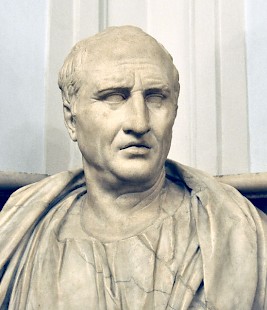
Titus Livius–a great historian

[Let’s see how much I can get done before taking Robbie to the vet.]

It might be asked of me, “Hey, you’ve got a book to write! What the dickens are you doing, sitting there and reading Livy?”

For those who don’t know, Livy, aka Titus Livius, was an historian who lived in Augustus’ Caesar’s time and wrote a history of Rome going all the way back to the beginning. I read the edition published in several volumes by Penguin Books. Livy was suspected of having republican sentiments at a time when maybe it wasn’t such a good idea to have them; but as Augustus himself often said, “I’m a republican at heart,” he was hardly likely to persecute Livy for sharing them.

When I’m working on a book, it helps me a lot to select another writer as my mentor. For my previous book, Ozias, Prince in Peril, my mentor was Geoffrey of Monmouth, whose History of the Kings of Britain (including King Arthur), was a runaway best-seller… in the 12th century!

Now I’m writing Ozias, Prince Enthroned, and Livy has stepped forward as my mentor. Not that I’m imitating him; rather, I see in his work an inspiration for my own. Livy wrote real history, while I have to invent a history for a fantasy world. His vivid descriptions and keen analysis of early Rome’s one-after-another social, political, and military crises suggest to me the kinds of things that King Ozias would have to deal with. How should he respond to crisis? Livy knows! In fact, he knows about not only successful responses, but also failures.

Prince Enthroned is going forward rather slowly, from my end; but my editor, having read my most recent set of chapters, says “You’ve got your foot on the gas pedal, haven’t you?” I take that as encouragement.

I now suspect that maybe the Lord wants me to slow down a little. Okay. I’ll try that. A good book is worth taking risks for. Not to mention the abundant distractions we’ve had this year: Patty’s hernia, new computer, refrigerator dies and we lose a raft of frozen food, and my accident that badly damaged Patty’s car, and now Robbie’s sick. Oh–and tons and tons of really bad weather, lots of workdays lost.

So I hope it’s sunny and clear tomorrow, and that Robbie will get better, and that I can start another set of chapters. For “hope” read “pray.”
In Defense of the Liberal Arts

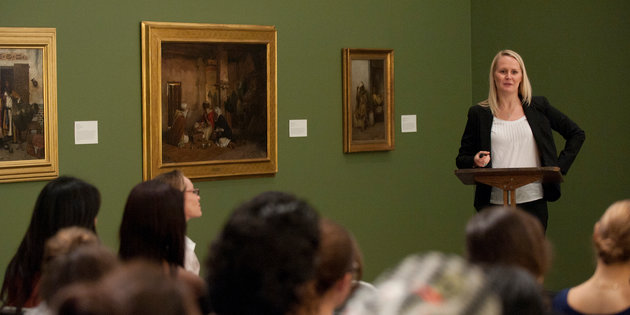
Fine Arts Lecture Series | Student Opportunities | Seaver College

It’s not as silly as it looks!

Art History is often held up as the supreme example of a totally useless college course. I took two semesters of it and wished I could take more. Those lectures were always well-attended.

It wasn’t going to help me “do” anything. It wasn’t going to put one more nickel in my pocket. It was probably as “useless” as that honors course on Dante that I took. Or those lectures on the Persian Empire by Prof. Maksoudian–no one missed those if he could help it.

Today “higher education” itself is held up as an epitome of uselessness–held up so by me, at least. What happened? “Everybody goes to college!” That’s what happened. Which means two things at once: 1) They dumbed it down for the millions of students who were not going to be engineers or computer experts; 2) except for those few who are enclosed in “STEM” like hermits, they turned college into a Far Left indoctrination factory.

A reader sent me an article which expresses it better than I can.

https://washingtonstand.com/commentary/the-assault-on-liberal-arts-and-why-you-should-care

Do we not know that we shall not live by bread alone? Sure, we can learn many valuable, even precious, things with no help from any college. But there is something to be said for scholarship! For Shakespeare, for Thomas Jefferson, for Burke and Locke and St. Gildas on the Ruin of Britain. The collective experience of the human race has value. My stars! I’m re-reading Livy now–and the Rome of Livy’s time, and the earlier Rome he brought back to life in his writing–oh, these cry out to me! I can’t see the nooze and not see history.

The lack of a formal education didn’t stop my grandfather from operating a business, publishing a newspaper, and pursuing his own education at his own pace. Yeesh, that man was wise! (Raised six daughters, too.) Highly self-motivated. But I’m sure there were college courses he would have enjoyed–knowledge and understanding that he could add to his store.

The university is not your county vo tech. It was never meant to be devoted to Far Left brainwashing, either. I agree with the author cited above: If you’ve never studied anything but how to make a buck doing some technical thing or other, your mind will be practically defenseless when the Far Left wackos come for it. Livy can’t tell you how to fix your air conditioner; but he certainly can tell you how to recognize it when they undermine your constitutional republic. Things like that don’t change; and a well-rounded liberal arts grounding can help you understand them.

I continue my own education. No more college–college has pretty much destroyed itself. But the classics of literature, history, theology, philosophy, etc., etc.–they’re still here. You can still let them teach you.

Until they make a “law” against it.

It Was Raining Fish in Texarkana

Fish rain from sky in Texarkana | KTALnews.com

Too small to have for dinner–but what do you expect when it rains fish?

It’s not unknown for fish or frogs to get swept up by a waterspout or some other drastic meteorological event and rained down on somewhere else, miles away. Not unknown–but still rare enough that most people will live their whole lives without once seeing it rain fish.

I missed this, first time around; but on Dec. 29, 2021, it rained fish on Texarkana (https://www.southernliving.com/travel/texas/texarkana-texas-rained-fish). In the words of one eyewitness, first one fish fell, and then “fish were droppin’ here and everywhere!”

Livy loved this stuff, and always included that year’s “prodigies” in his history of Rome. When, say, a calf was born with two heads and wings, the Romans thought that meant something. They’d never be blase about a rain of fish. Sages would be under pressure to tell the city what it meant.

Next time I’m in Texarkana, I must remember to ask.

Killing Uduqu

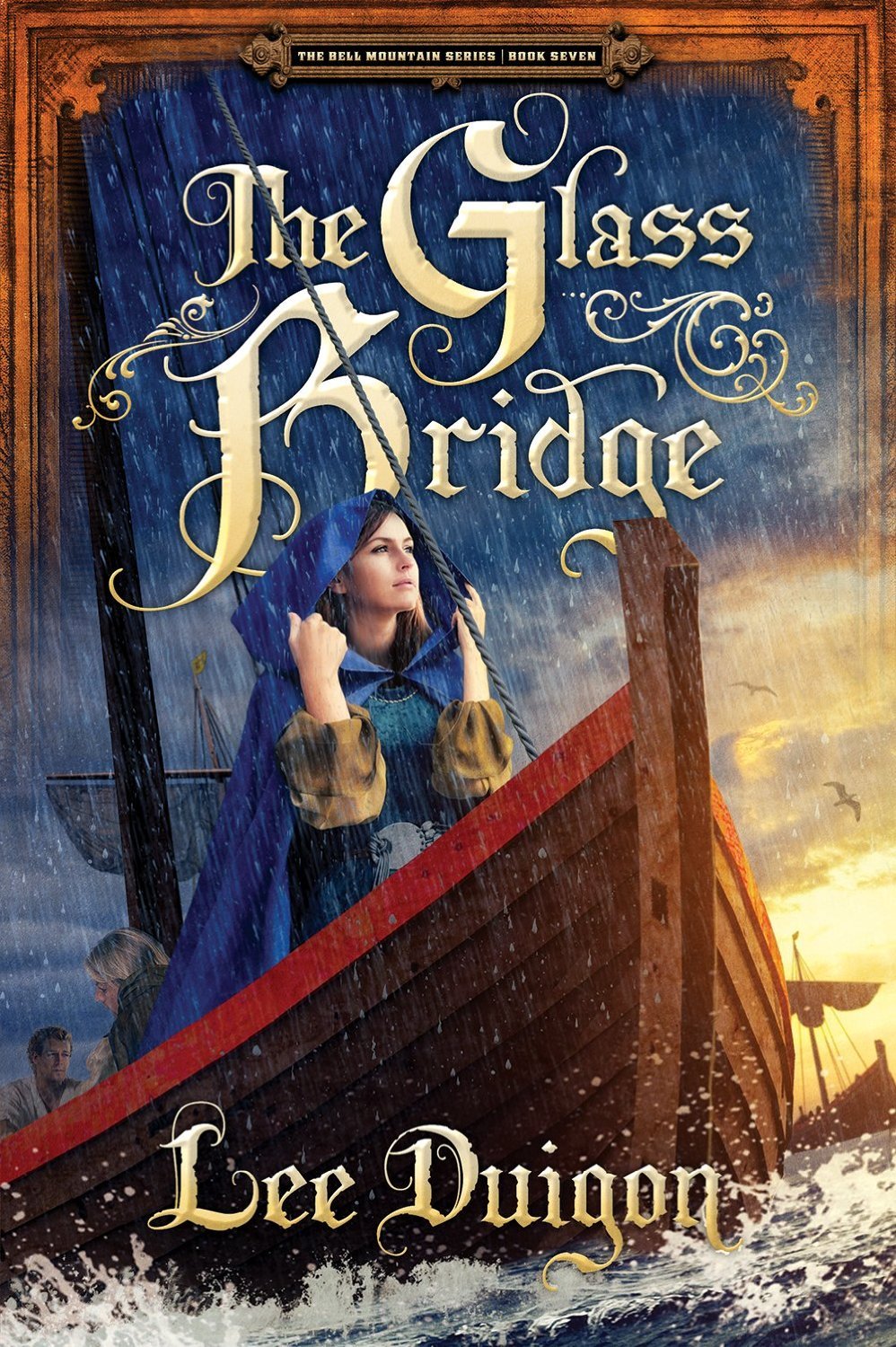
The Glass Bridge (Bell Mountain #7): Lee Duigon: 9781891375675 ...

If your characters don’t connect with your readers, your book won’t work, your story will fall flat.

I introduced the fierce old Abnak sub-chief, Uduqu, in Book No. 2, The Cellar Beneath the Cellar. I liked him and kept him around. And in Book No. 7, The Glass Bridge, he took part in a desperate battle.

I won’t forget how my wife and my editor reacted when they thought I’d killed off this character. They were about ready to scalp me. Sheesh, what was I thinking! But they only had to read a few more paragraphs before they learned Uduqu was all right, after all.

There are characters who walk into the story just to do some little thing and then wind up staying to do a lot of things, and growing, and getting you attached to them. With 12 Bell Mountain novels published so far, there are of necessity an awful lot of characters.

Why am I talking about this when I have to crank out a Newswithviews column? Oh, I don’t know. Do I feel a need to justify populating my books with all those characters?

Well, heck, it’s a history–like Livy’s history of Rome. Count up all the characters in Livy sometime. True, the history of Obann, in my books, is fictional. Some uncharitable souls have said the same of Livy. Not to mention Geoffrey of Monmouth, and Herodotus. I guess if you don’t like their histories, you won’t like mine, either. But there’s something to be said for a book that’s stayed in print since 400 B.C.

[Confidential to “Unknowable”: I hear you, brother!]

We’ll Never Know Why

See the source image

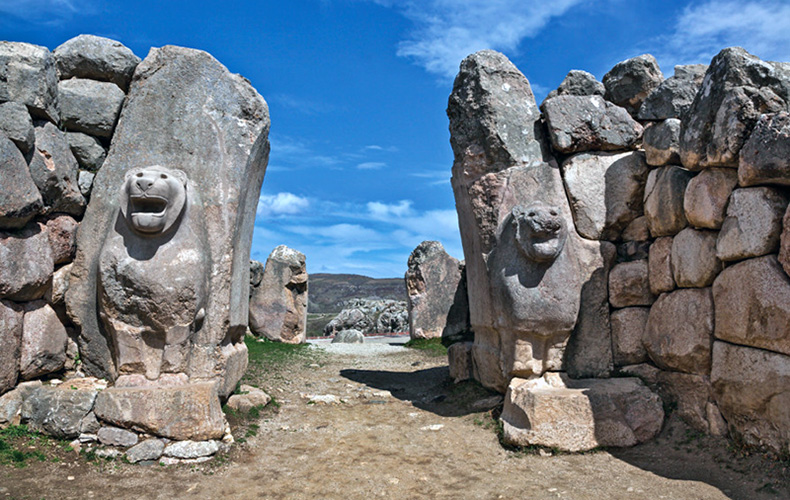
Once the center of a Great Power

History is full of momentous events, shocking events, that can’t be fully understand because so little of the record has survived. What does survive is mysteries. Here’s one of them.

Sometime around 1595 B.C. the king of the Hittites, Mursili I, marched his army all the way down Mesopotamia from what is now Turkey, all the way to Babylon, then the greatest city in the world. The Hittite ruler sacked the great city, putting an end to the dynasty made famous by Hammurabi, radically disrupting the international political system of the Ancient Near East.

But he didn’t stay long. Babylon was much too far from the Hittite center of power, for any Hittite government to be established there. Mursili looted the place and then marched home. He wasn’t back for very long before he was assassinated.

We don’t know why he attacked Babylon. It was about as far as you could go from Hittite lands and still find any cities at all. There were no roads. Bringing an army all the way down there must have been a colossal undertaking.

In Babylon they must have known the Hittites were coming; but a) their own country was undergoing civil strife, and not in a good position to defend itself; and b) “The Hittites? Did you say Hittites? Don’t they live somewhere way the hell up there in the mountains? What do you mean, ‘The Hittites are coming’?” It would have been very hard news to believe.

History is the collective memory of mankind. With it we can hope to understand our own time. We can at least try. Livy and King Solomon would agree: what has been done before is what is being done now; there is no new thing under the sun.

Inquire of the Lord for wisdom, and for understanding.

Those were in short supply, in Babylon.

A Parable of Forced Equality

See the source image

New York wants to abolish programs and schools for gifted and talented students. There is a parable from the ancient world which seems to tell us why.

This story was told by both Herodotus, a Greek, and Livy, a Roman who lived some centuries after Herodotus. But I don’t think Livy lifted the story from Herodotus. Both presented it as a historical event, but it has much more the feel of a well-known parable.

The tyrant who ruled a certain city had one son to succeed him; but the young man didn’t know how he ought to go about being an effective tyrant. He asked his father, “How do you govern the city? How have you managed to stay in power for so many years?”

“I’ll teach you; it’s quite simple,” said the father.

Taking his son to a poppy field outside the city, the tyrant said, “Watch.” And with his cane he proceeded to knock the heads off all the poppies around them.

“This is how you rule the city,” he explained. “Even as I have cut all these poppies down so that none is higher than another, so have I maintained my power: by cutting down any man who rises to a certain height above the others, so that none is any greater than another, but all are equal; all are weak. I am the only one who towers over all. There is no one else whom they can turn to for a leader.”

You can see this sort of “diversity” has a very ancient pedigree. Tyrants have been cutting people down for thousands of years.

Fallen human nature hasn’t changed.

Why Study History?

https://l7.alamy.com/zooms/9324a45c24e44507b588b8c51f36a8fe/titus-livius-roman-historian-and-writer-also-known-as-livy-date-59-g39wna.jpg

No one ever answered this question better than Titus Livius, whom we know as Livy, who wrote his History of Rome during the time of Augustus Caesar. And here is his answer.

“The study of history is the best medicine for a sick mind; for in history you have a record of the infinite variety of human experience plainly set out for all to see; and in that record you can find for yourself and your country both examples and warnings; fine things to take as models, base things, rotten through and through, to avoid.”

Any questions?

‘King David’s Military Genius’

See the source image

Some of you might enjoy this article I wrote for the Chalcedon magazine in 2005, on King David’s generalship. He really was quite good at it.

https://chalcedon.edu/magazine/king-davids-military-genius

It’s a little long, but so what? It’s Bible history.

‘Redistributing Poverty’ (2012)

I still find it hard to believe that anyone would ever think the government could “redistribute the wealth.” Government does few things well, and many things badly.

https://leeduigon.com/2012/12/29/redistributing-poverty/