I’ve received no hymn requests today so far, so I’m on my own again. I’ll go with one that came into my mind last night–Lead On, O King Eternal. Here we have it sung by the Hastings College Choir.
(Where is everybody? Did I miss a day?)
I’ve received no hymn requests today so far, so I’m on my own again. I’ll go with one that came into my mind last night–Lead On, O King Eternal. Here we have it sung by the Hastings College Choir.
(Where is everybody? Did I miss a day?)

We watched this yesterday–Scrooge, the 1951 retelling of Dickens’ A Christmas Carol, starring Alistair Sim. I don’t know how many times I’ve seen this. Dozens? At least forty, given that Patty and I watch it every Christmas. But it won’t matter if we see it forty times more: it has never failed to melt my heart, and never will.
Why? Because it’s about redemption! What could possibly be more important? And who doesn’t need it?
By the time we were halfway through the story yesterday, I was shaking my head: this was a man who had seriously made a hog’s ass of his life. He’d started out with real disadvantages–his mother died, his father never loved him–which he parleyed into enduring character flaws. If ever a man was bound for Hell, it was he.
And by the power of Jesus Christ, acting through Christmas… he’s saved.
Think about that. Saved! Think of the bad things that you’ve said and done in your life. Truly awful, isn’t it? Oh, what was I thinking!
But God’s sovereign grace, in Jesus Christ, has wiped them all away. They won’t count against us. They won’t even be mentioned.
That’s what this story is about. That’s why it never gets old.
If you haven’t seen it, or been a long time without it–well, it’s easy enough to find on line. Find an hour and a half to give to it. You’ll be abundantly repaid.
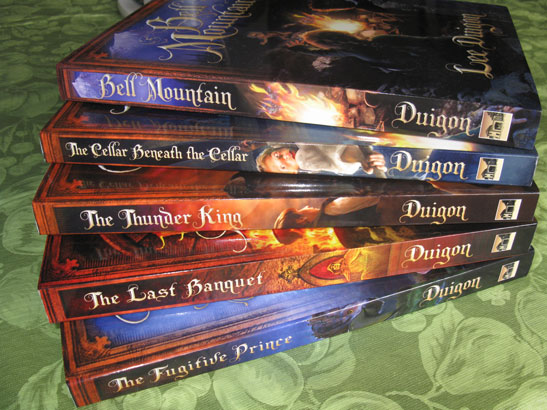
It was going to be my big break. My books were going to be reviewed by a big-name critic I had actually heard of.
Until he decided they were so crawling with subliminal Calvinism, he shouldn’t even mention them.
These are fantasy novels. They depict an imaginary world. I detest fantasies that remind me I’m only looking at words on paper. For me to load Bell Mountain with sly Calvinist insinuations would be to break my own rules.
Who we are is always going to have a bearing on what we write. Otherwise we wouldn’t be writing in the first place. If I wanted a Greek Orthodox slant to my story, I’d have to work and study hard to acquire it. Much of who we are is what we’re used to.
I don’t think my books are biased against one particular branch of Christianity or another. I try not to be. This blog serves readers of many different denominations–or no denomination. I rather hoped my books would do the same.

Sorry I’m running so late today, but it was unavoidable: four errands to run this morning, including grocery shopping–and then I had to take advantage of the sunny weather to work on my book, The Witch Box.
As I work my way into the book’s double climax, the people settled around the ruined castle of Carbonek are about to yield to a temptation: not to trust entirely in God’s promise, but to try to beef it up with something more. Something of this world. They can’t help it. We’re always looking for some kind of insurance policy.
I have to do as much as I can this week, before cold weather really settles in. At the same time, I have to be careful not to force the story. I have to trust in God’s guidance–and that’s not always easy to do. Carbonek, I know how you feel.
I’m being drawn into the story. I don’t know how to say it any other way.
My friend and editor, Susan, has requested prayers for her cousin, Kenny, who needs a serious heart operation. Please join in prayer for him.
O Lord our God! Have mercy on our brother, Kenny, and see him safely through this present danger. Protect him, preserve him, and heal him, Lord: in Jesus’ name, Amen.
I’ll never get over the thrill I experience when a story I’m writing takes on a life of its own and pulls me along with it.
It’s going to be tricky, putting the book into a coherent whole, but I’m sure the Lord will guide me. Like, waddaya know! Suddenly I have a pre-climax that not only leads into the double climax of the story, but also ties the two together. I never expected that, although it’s not the first time it’s happened. The story unfolds and I just write it down! How cool is that?
I’m already working on a second chapter of the pre-climax, with another chapter waiting in the wings. It’s really going to mess up my legal pads–but once I’ve got all the pieces written, I’ll be able to put them together as they should be.
Meanwhile… who knew Wytt had a streak of clairvoyance in him?

Well! That little piece of The Witch Box that I woke up with today turned out to be a big piece.
Let me see if I can explain this to you. If you’re thinking of writing a novel of your own someday, you might find this interesting. Maybe even useful.
I had reached a point in the story where I was, in a word, stuck. Ahead of me lay unknown territory which I would have to cross to get to the double climax of the plot. How much territory, I had no idea. I didn’t want to pad the story (heaven forbid!), but I didn’t want to wind up with a short book, either.
And then, as I sat down to write this morning, the skies, as it were, opened.
I interrupted the ordinary writing of the story to jump ahead to a point just before the climax–and suddenly I had a nice big chunk of plot! I had an incident that shed light on everything that had to come next. A piece of the story that had to be told. So now I’m telling it.
The idea is to write this all up and then work backward to reach that point at which I’d interrupted the chronological flow of the story. In fact, I could then also work forward from that point, until the two plot streams met somewhere in the middle and joined into one.
I’ve never done this before, but it’s an exciting challenge, artistically. Sort of like solving a hard jigsaw puzzle by stopping work on one section and starting on another; and if I can bring those two sections together, I’ll have most of the puzzle finished.
I can only pray it works. But I’ve learned over the years to trust those bolts that come out of the blue: because I think they come from God.
%2C445%2C291%2C400%2C400%2Carial%2C12%2C4%2C0%2C0%2C5_SCLZZZZZZZ_.jpg)
One thing about writing a continuing series: it gives your characters scope to grow and change.
And of course it’s always fun when new characters enter the story.
Any day now The Wind from Heaven will be published, No. 13 in the Bell Mountain series. I have no idea how it’ll be received.
If you’re reading Bell Mountain for the first time (a lot of people read it more than once), I’d love to hear from you!
Yesterday we looked at a review of an appallingly bad fantasy novel pitched to children.
Today’s mouldering pile of rubbish was marketed to adults.
https://chalcedon.edu/resources/articles/review-of-christian-novel-emissary
Question! When in America did “mainstream” come to mean “completely outside the Christian world-view,” and how did we ever allow that to happen?
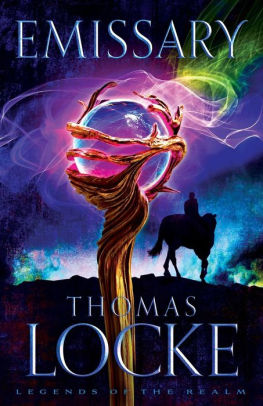
Christian fiction author T. Davis Bunn, with a string of best-sellers on his resume, decided a few years ago to write “a wholly secular fantasy”, Emissary, under the pseudonym of Thomas Locke; and a major Christian publisher decided to publish it.
Emissary contained every fantasy cliche known to man; it was a veritable thesaurus of cliches. Why in the world do fantasy writers do this??? I mean, it’s “fantasy,” right–and that means it’s supposed to be imaginative. Like, what is the freakin’ point of a thoroughly unimaginative fantasy? Why bother to write it? Why bother to read it? If you’re an experienced fantasy reader, you’ll already know precisely what sort of characters will appear in the story, you’ll know exactly what they’ll say and do on any occasion, and the only surprise you’ll ever get is if you drop the book and fall out of your chair trying to pick it up. If you even bother.
Also, many of these fantasy cliches, in addition to their thorough predictability, are basically pagan–not “Christian” in any sense of the word. Why did Mr. Bunn waste his talents on such bilge?
Fantasy matters because it has access to regions of the heart and mind not easily explored by other kinds of stories. It matters because it ought to be included in Christ’s Kingdom and put at the service of that kingdom, not reserved as a province of neo-paganism.
And I wonder if Mr. Bunn just stopped caring about such things.