“Erased From History (2011)”

See the source image

Once upon a time there was a great civilization with numerous cities and probably inhabited by millions of people.

Today nothing is left but the hollow shells of buildings. No names, not a word of their language, nothing to tell us of their gods…

https://leeduigon.com/2018/12/

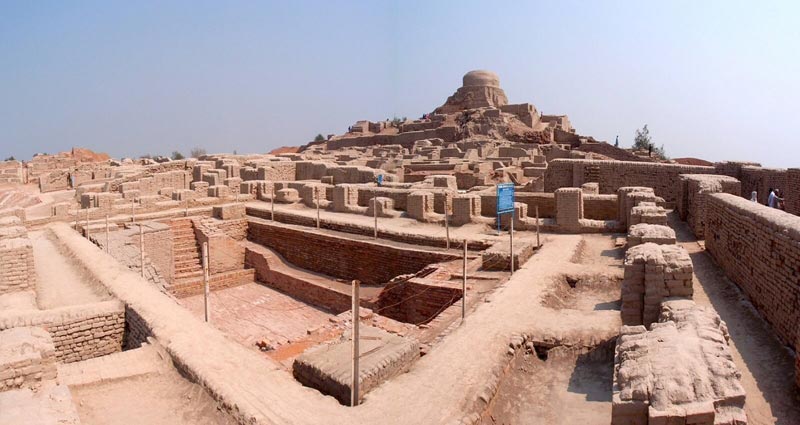
This was the Indus Valley Civilization, circa 2,000 B.C. The ruins are spectacular, suggesting an efficient, skillful nation. But we can’t read a single word of their language; we don’t even know what language it was. All those people–and we don’t know the name of a single one of them. Not one.

How thoroughly can we and our works disappear!


Enough, Already! (Nooze Is Driving Me Crazy)

What was the Indus Valley Civilization? | Live Science

Nothing left of this but ruins!

Once upon a time, millions of people lived in a multitude of cities in the Indus River Valley. We do not know the name of a single one of them. By 1300 B.C., the whole civilization there went belly-up after a highly successful run of some 2,000 years. Nothing left but very impressive, nameless ruins.

I can’t read or write up any more nooze today! I’ve had it. Got to rest!

Savants like to say the Indus Valley Civilization went bye-bye because of Climbit Change. But that can’t be right, because we have no evidence that these people had SUVs or air conditioning. We do not know what happened to it.

Is our civilization going to wind up like this? Our leaders seem to be doing everything in their power to make it so. Hey, let’s wipe out our nation’s borders! Let’s indoctrinate our children into “transgender”! And let criminals loose without bail! And teach them that there is no God but that’s okay because there’s always government!

O Lord our God! We need a course correction! Bring us to our senses, Lord–in Jesus’ name, amen.

‘Solving the Riddles of Ancient History: A Whole New Approach’ (2018)

Image result for images of harappan priest king statue

Remember a short-lived academic fad for “intuiting” stuff–that is, making it up as you go along–as a substitute for research and the collection of facts? I said “short-lived,” but really it’s still being done, big-time. They just don’t call it “intuiting” anymore.

Solving the Riddles of Ancient History: A Whole New Approach

There’s a whole lot of intuitin’ going on in government, these days. My stars, if they had to rely on facts to  back up public policy, they wouldn’t last a day.

But this is how certain professors said we ought to study history, not so long ago–just “intuit” it. Who needs facts? They sort of muted that down when people starting asking who needs professors.

Sick of Hanging Planters?

10 Best Hanging Planters for 2018 - Unique Hanging Baskets & Planters

I’m so sick of hanging planters, I could plotz! And here I am, using up valuable time that ought to be devoted to reporting the nooze, bellyaching about hanging planters. (See “Byron’s TV Listings,” today, for more about hanging planters that bore you to tears.)

Look at those planters in the photo! How can you help but be reminded of the way the ancient Celts made trophies of their enemies’ heads? It’ll ruin your supper.

Was it Ralph Kiner who said “I don’t want to talk about hanging planters”? But Solon said it first! He made a law against hanging planters, but as soon as his back was turned, the Athenians went hog-wild with the freakin’ things.

The Indus Valley people had really dull hanging planters–and where are they now?

H.P. Lovecraft was briefly driven mad by his mother’s hanging planters.

I’m too upset to cover any more nooze today. Blame it on those hanging planters.

A P.I. with a Pedigree (‘Oy, Rodney’)

39 Romance novel cover parodies ideas | romance novel covers, romance, book  humor

Introducing Chapter CDLXXIV (missing two chapters–what gives?) of her epic romance, Oy, Rodney, Violet Crepuscular writes, “As I introduce Chapter CDLXXIV of my epic romance, Oy, Rodney, I sense snide snickerings among jealous illiterates who think I’ve missed two chapters. Nothing could be farther from the truth! I have merely skipped those chapters because nothing happened in them!”

So, three chapters ago (I think), Lord Jeremy Coldsore hired a private enquiry agent named Donald Duct, who looks and talks like Donald Duck, but isn’t. Furthermore, because Lord Jeremy always likes to go first-class, Mr. Duct is a member of the nobility.

“My ancestor came here on the Mayflower,” he boasts, when he arrives at Coldsore Hall. To avoid attracting undue notice, he is disguised as a wedding cake.

“Don’t you mean he came to America on the Mayflower?” asks Lord Jeremy.

“No, not at all. He came to England on the Mayflower when it sailed back to England. He couldn’t stay in America. He was afraid of Pilgrims. They seemed to be everywhere.”

Unfortunately, somewhere in those two elided chapters is the reason why Lord Jeremy hired a private enquiry agent.

“It’s not something to dilapidate about,” Ms Crepuscular remarks in a footnote on Page 2,443. “All will be revealed in due time.

“Remember what happened to the Indus Valley people!” she adds. “It was precisely this kind of intrusive readership that brought their civilization to an unpronounceable end!”

‘And Now… The “Mad Pooper”‘ (2017)

See the source image

“Look inside yourself” may not be good advice for some people.

(Hello? Anybody here? Zero comments this morning. Was it something I said?)

Remember this? Although they had lots of witnesses, plus videotape, police in Colorado Springs couldn’t catch this woman who liked to enhance her morning jog by crapping on people’s lawns.

And Now… the ‘Mad Pooper’

Do you ever get the impression that our culture is coming unglued? How much full-blown lunacy does it take to put a civilization down for the count?

I wonder what the Indus Valley people were “celebrating” and “affirming” when their whole civilization went bust.

‘Solving the Riddles of Ancient History: A Whole New Approach’ (2017)

Image result for images of harappan priest king statue

I haven’t been the same since I read the remarks of a certain college professor, who said students could acquire deep insights into history without having to learn any facts of history.

And here I thought Professor I.B. Loony was just a satirical buffoon.

Solving the Riddles of Ancient History: A Whole New Approach

I do remember, back in the 1990s (or was it the 80s?), an academic fad for “intuiting” things–that is, not bothering to research a subject, but just making it all up as one went along. I knew professors who actually spoke of “intuiting” as a substitute for factual knowledge.

Our culture rot has deep roots.

‘Erased from History’ (2011)

See the source image

Nothing left but ruins

Lest we forget…

Once upon a time, long ago, a great civilization throve along the banks of the Indus River.

It has been so thoroughly erased from history, it might as well not have existed at all.

Erased from History

This civilization existed contemporaneously with those of Mesopotamia, Egypt, and China. We know they traded by land and sea. But we don’t know their language, we can’t read their writing, and we don’t know the name of a single person among the millions who must have lived there. We don’t even have a legend or a folk-tale.

Will the same thing be said, someday, of our globalist fat-headed humanist civilization?


Where was Ophir?

Psalm 45:9 Kings' daughters were among your honorable women: on ...

Once upon a time, King Solomon sent an expedition to a place called Ophir, which brought him back 450 talents in gold (2 Chronicles 8:18). In 9 Chronicles 13, we are told the king’s total revenue amounted to 666 talents. Solomon was the richest king of his time, and that one trip to Ophir netted him about two-thirds of a year’s revenue.

But where was Ophir?

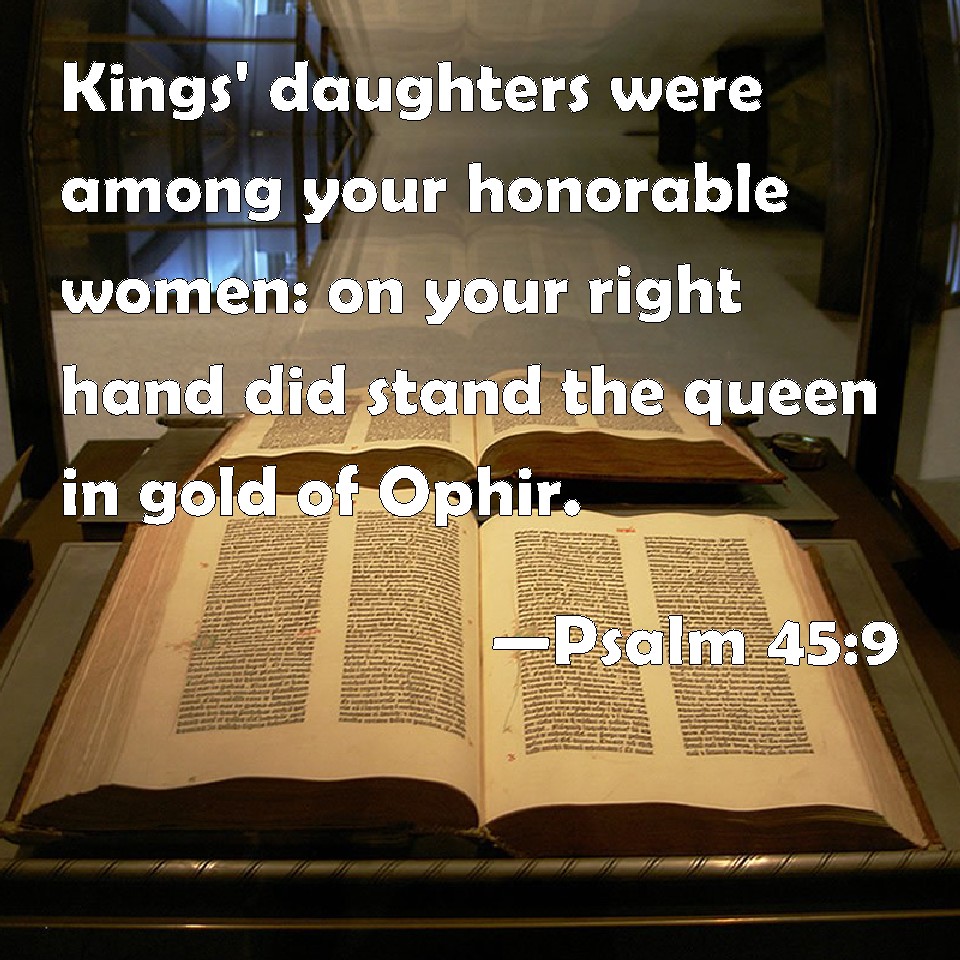
We don’t know. The Bible doesn’t tell us–probably because, at the time it was written, people knew where Ophir was and didn’t have to be told. And it was famous for its gold. Psalm 45 speaks of “the queen in gold of Ophir.”

There is no mention of Ophir in the New Testament. Was that because the name had changed? Or maybe Ophir’s civilization had collapsed.

Where was it?

Speculation as to the location of Ophir takes Solomon’s ships as far afield as the coast of America, the Philippines, India, Sri Lanka, and Central Africa. There’s no archaeological evidence to support any of those theories.

But we do know–and have evidence for it–that the ancient Indus Valley civilization sent trading ships up the Persian Gulf to Arabia and Mesopotamia. Probably Mesopotamia sent ships to the Indus. Personally, that’s where I think Ophir was. It’s a long way from the Gulf of Aqaba on the Red Sea, where Solomon’s ports were. But Alexander the Great was able to send ships from the Indus back to the Persian Gulf; they surely could have continued around Arabia and up the Red Sea. There were plenty of ports along the way, for rest and re-supply.

If Solomon flourished around 900 B.C., the Indus Valley civilization was already out of business by then; but other civilized people now lived there.

We do tend to sell the ancients short, and think they couldn’t possibly have done things that no one else did till modern times. Thor Heyerdahl made a pretty good career out of poking holes in this doctrine. Of course, nobody believes anymore in any of the things he said or wrote; but no one can deny that he built accurate re-creations of several kinds of ancient vessels and successfully sailed them on long voyages. If he could cross the Atlantic on a boat made of reeds, then at least it was possible for someone in the ancient world to do it.

But we still don’t know where Ophir was.
 

‘Erased from History’ (2011)

See the source image

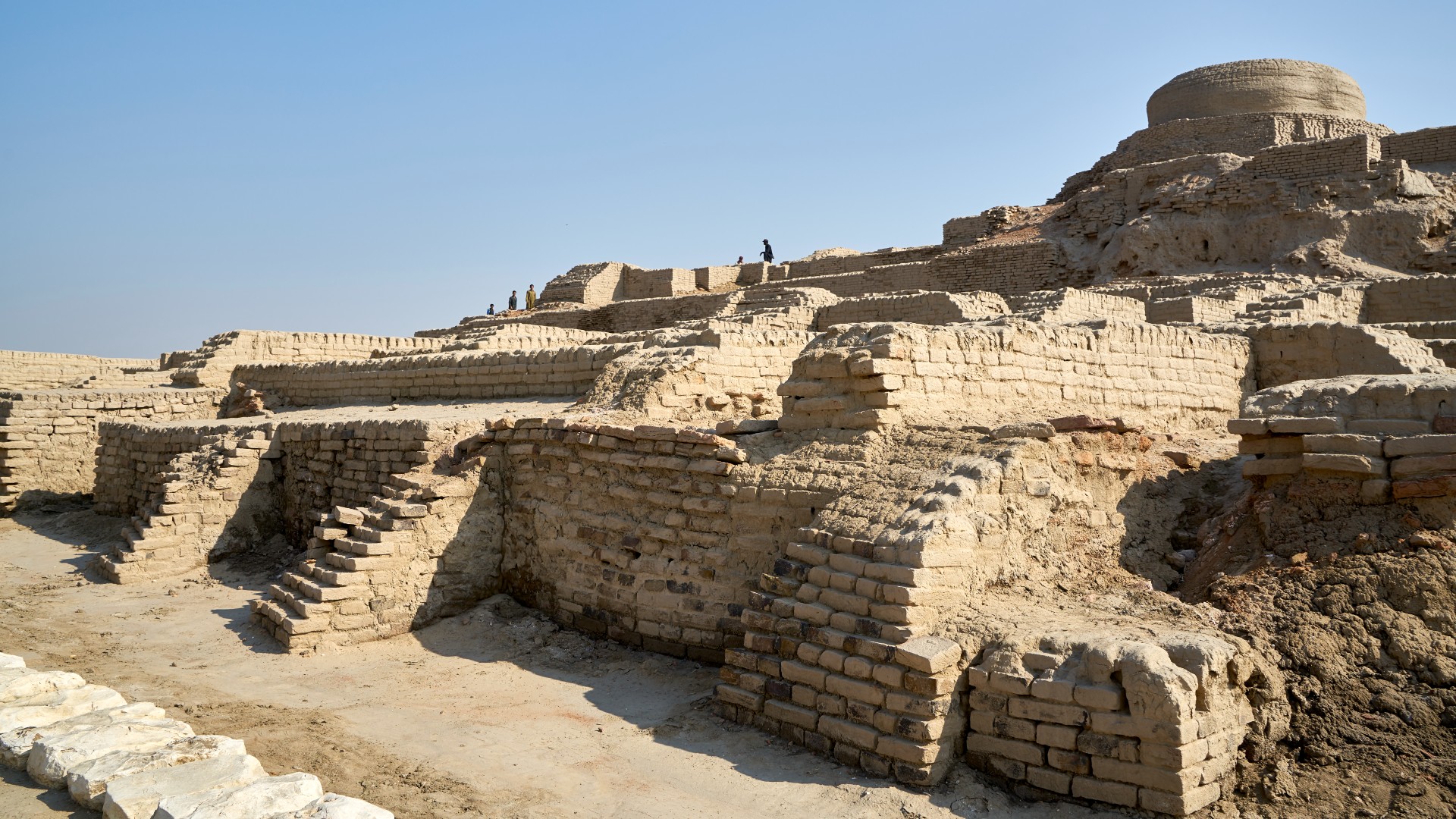
Public baths? Municipal swimming pool? We’ll never know.

The end of any year is a time for reflection. Historical reflection is allowed.

Imagine a real civilization with hundreds of cities, millions of people, international trade, fine architecture… about which we today know virtually nothing: a civilization so totally erased from history that not the name of even a single one of its people has come down to us.

https://leeduigon.com/2011/05/31/erased-from-history/

Think about it. The Indus Valley civilization. The names of its rulers and artists, its cities, its gods–all lost. We cannot read their writing. Surely the Sumerians, with whom they traded, should have written about them; but if they did, we haven’t found it. Not one voice, not even one, speaks to us for the Indus Valley people. One look at their buildings is enough to convince us of their greatness. But buildings don’t talk. Not when you can’t read the inscriptions.

Think about it.